
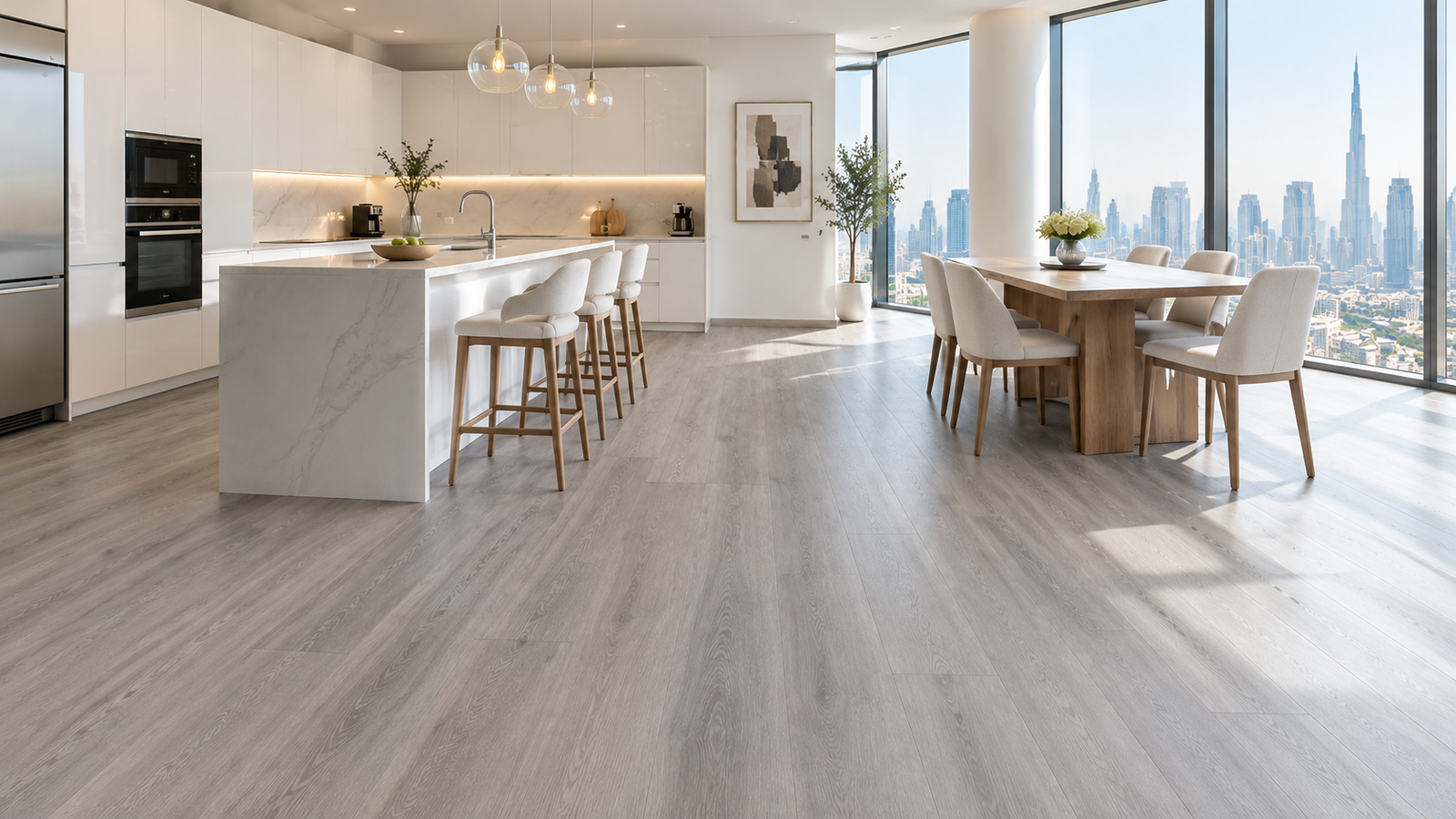
SPC flooring is a rigid type of vinyl flooring made from Stone Plastic Composite, which is the full form of SPC. Its core combines natural limestone powder with PVC, so the planks stay hard, flat and waterproof. People in the UAE choose it for homes and businesses because it resists water, copes with heat and humidity, lasts for years with simple care and can be installed quickly. You can see the available designs on our SPC flooring page.
If you are still deciding whether this material suits your space, this guide covers everything in plain language. It explains the meaning and full form, how the floor is made, the real benefits and the real drawbacks, how it compares with other floors, where it works well, where it does not, what affects the price and how to choose a good product and supplier.
Readers who want the short version can use these key facts, and the sections after this one explain each point in detail.
SPC stands for Stone Plastic Composite. When people search for the SPC flooring meaning or the SPC flooring full form, this is the answer they are looking for. Each word in the name describes part of the product, which makes it easy to remember once you see how it works.
The word stone refers to the limestone powder that makes up a large share of the core. Limestone is a natural mineral, and it gives the board its hardness and its resistance to bending. The word plastic refers to PVC, the polymer that binds the mixture together and makes the board waterproof. The word composite means that these materials are blended and pressed into one dense board instead of being stacked as separate pieces.
Some catalogues write Stone Polymer Composite, and you may also see the term rigid core. These names point to the same kind of floor, so a supplier who uses either one is describing SPC. The label matters less than the specification, so always ask for the thickness, the wear layer and the warranty in writing.
Standard vinyl is flexible, and you can bend a thin plank in your hands. An SPC plank does not bend like that, because the limestone core is firm and dense. That firmness is the reason the term rigid core is used, and it explains most of the strengths and weaknesses of the material. It stays flat over small imperfections, it holds its shape when the temperature changes, and it feels harder underfoot than a soft vinyl floor.
Understanding the construction helps you judge quality when you compare samples. Every SPC plank is made from several layers that are bonded together under heat and pressure, and each layer has a clear job.
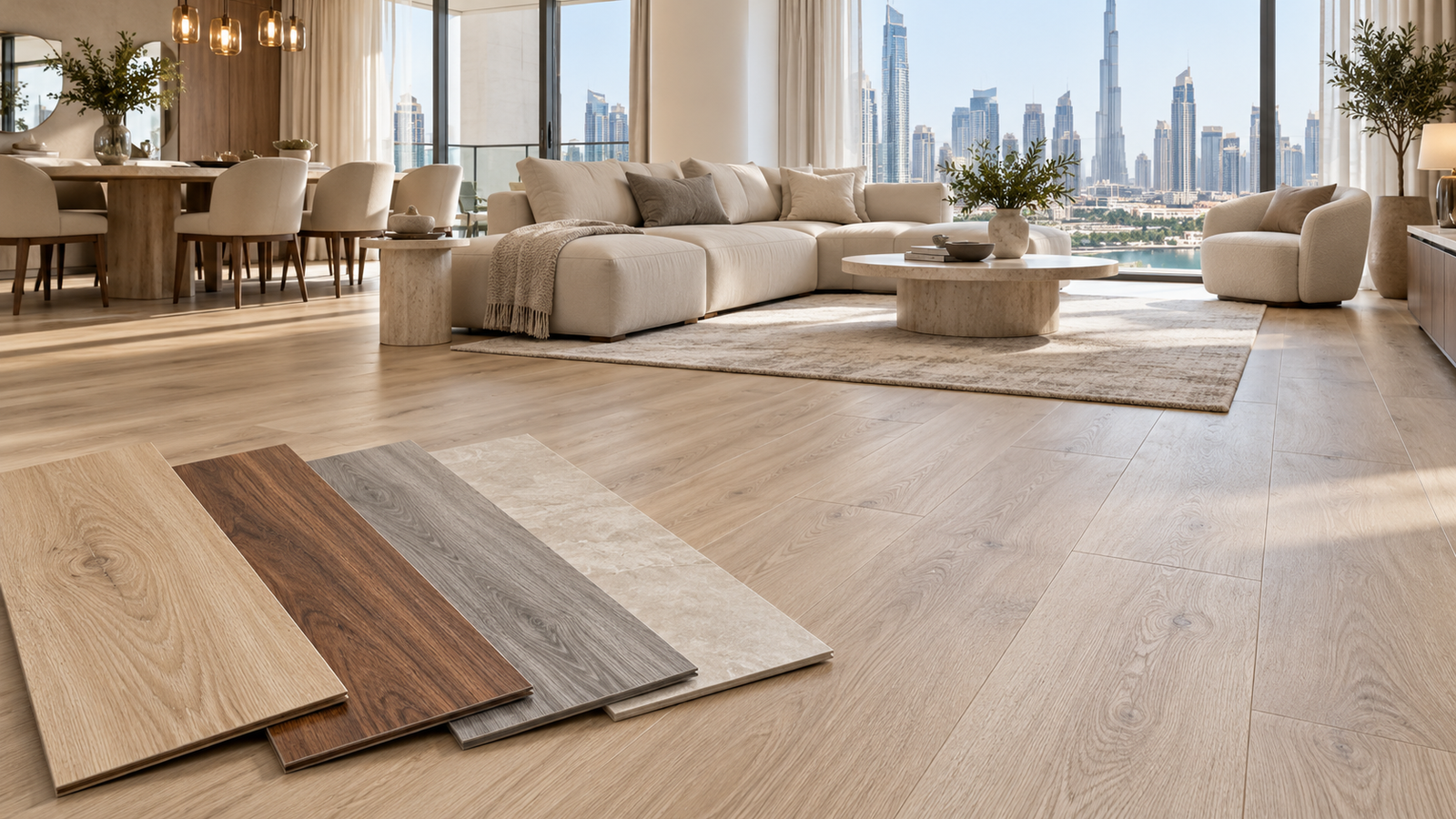
The top layer is a clear wear layer, often finished with a protective coating. It takes the scratches, scuffs and stains from shoes, furniture and pets, and its thickness is one of the biggest factors in how long the floor stays looking new. Under it sits a printed decorative film that gives the plank its look, whether that is oak, walnut, grey stone or polished concrete. Below the film is the rigid limestone core, which provides strength and stability. Many planks also carry an attached backing pad made of foam or cork, which adds comfort and reduces the hollow sound that hard floors can make.
Limestone powder is dense, stable and inexpensive, and it does not react to moisture. When it is mixed with PVC and pressed, it forms a board that barely expands or contracts when temperatures change. This is very useful in a climate where a sunlit room and an air conditioned room can be several degrees apart on the same afternoon.
A flexible vinyl plank follows the shape of whatever lies beneath it, including bumps and dips. An SPC plank is stiffer, so it bridges small imperfections and keeps the surface flat. It will not fix a badly uneven subfloor, but it forgives more than thin vinyl does, which helps in older buildings and in new apartments where the screed is not perfect.
The benefits of SPC flooring come mainly from its rigid core and its sealed surface. Here are the advantages that buyers in the UAE mention most often, and the reasons behind each one.
The planks do not soak up water, so a spilled pot, a leaking dishwasher hose or a wet bathroom floor will not cause the swelling and warping that you see with wood fibre boards. This is a real comfort in apartments, where a leak from the unit above can reach your floor without warning. For a closer look at rooms with a lot of moisture, see our guide to waterproof flooring for bathrooms and kitchens.
Dubai summers are long, and indoor temperatures change through the day as air conditioning cycles on and off. Materials with a soft core can expand and contract enough to open gaps at the joints, while the dense SPC core moves very little. Lighter shades also tend to stay more comfortable underfoot near large windows. We explain more in our article on choosing flooring that stays cool in summer heat.
A good wear layer protects against furniture, pet claws and fine grit. This matters in the UAE, where sand arrives indoors on shoes and acts like sandpaper on softer surfaces. Our guide to flooring that resists humidity and desert sand shows why a hard wearing surface is a sensible choice in this region.
An attached backing pad softens each step and reduces the sound of footsteps, which helps in apartments where neighbours live below. The surface is also warmer and gentler than tile, so it feels better for children playing on the floor and for people who stand in the kitchen for long periods.
Click planks can be laid much faster than tiles, with no mortar, no grout and far less dust. For landlords and business owners, this means a shorter gap between tenants or a shorter closure. Daily care is easy too, because a sweep and a damp mop are usually enough.
An honest guide should also explain the limits. SPC is an excellent floor for many spaces, but it is not perfect, and knowing the drawbacks helps you avoid disappointment.
The first drawback is the firm feel. Because the core is rigid, SPC is harder underfoot than a soft vinyl or a carpet, and the backing pad only partly changes that. Some people prefer a softer product in bedrooms for this reason. The second drawback is that it is meant for indoor use, so open terraces and areas exposed to direct rain or constant sun are not suitable.
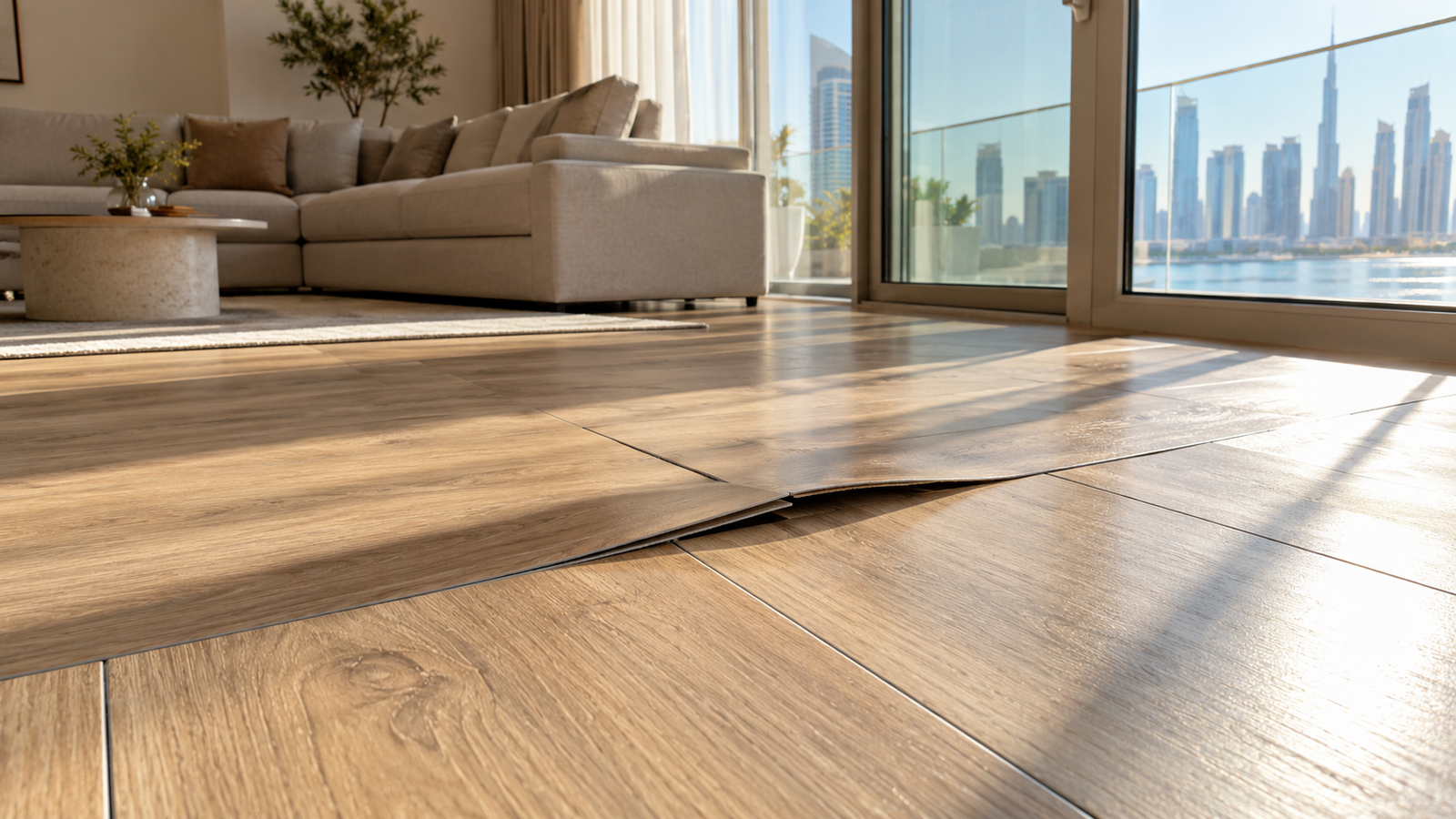
The third is that the subfloor still matters. SPC bridges small flaws, but large dips, loose screed or trapped moisture can cause joints to separate or the floor to sound hollow. Quality also varies a great deal between products. A thin wear layer or a poor click system will show problems sooner, and the price difference between a basic range and a good one often reflects exactly these details. Finally, a deep gouge cannot be sanded out like solid timber, although a damaged plank can often be replaced.
Buyers rarely look at SPC alone. Most compare it with flexible vinyl, laminate, WPC and tile, so this table shows the everyday differences in one place.
| Feature | SPC | Flexible vinyl (LVT) | Laminate | WPC | Tile |
|---|---|---|---|---|---|
| Core | Limestone and PVC, rigid | PVC, flexible | Wood fibre | Foamed, softer | Ceramic or porcelain |
| Water resistance | Very high | Very high | Moderate | High | Very high |
| Feel underfoot | Firm | Soft | Firm | Soft and warm | Cold and hard |
| Dent resistance | High | Lower | Good | Lower | Very high |
| Installation speed | Fast | Fast | Fast | Fast | Slow and messy |
SPC is a type of vinyl flooring, so the real question is whether you want the rigid core or the flexible one. Flexible vinyl is softer and often cheaper, while SPC is firmer and more stable. Our overview of vinyl and LVT flooring explains how the two formats behave in daily use.
Laminate has a wood fibre core, so moisture is its main weakness, while SPC ignores water at the plank level. Laminate can look excellent in dry bedrooms and is often cheaper to buy. Our comparison of SPC and laminate for UAE homes goes through durability and moisture in detail, and you can view our laminate flooring range if you want to see both side by side.
WPC stands for Wood Plastic Composite. It has a softer and more cushioned core that feels warmer, but it dents more easily under heavy furniture. The SPC and WPC comparison explains why the denser SPC core suits busy areas. Tiles are extremely durable, but they feel cold, the grout needs regular cleaning and repairs are messy. Our article on vinyl flooring and tiles in the UAE looks at the cost side, which helps when you decide which rooms deserve which material.
SPC suits most indoor spaces, and the right choice of design and thickness depends on how the room is used. Looking at each property type shows where the material gives the most value.
Villas have large living areas, long corridors and staircases, which adds up to a lot of floor. One SPC product can run through the whole ground floor, giving a calm and continuous look, and the rigid core handles large open spans without gaps. Our page on vinyl flooring for villas in Dubai adds helpful background for bigger homes.
Apartments bring concerns about noise and building rules. A plank with an attached backing pad reduces footstep sound, and many communities ask for written approval before any floor change. We compare both property types in our article on flooring choices for villas and apartments.
Landlords need a floor that survives a changing set of tenants and can be refreshed quickly. Because a damaged plank can often be replaced without redoing the room, SPC fits this need well. Our guide to the best flooring for rental properties in Dubai explains how to balance cost and durability across several units.
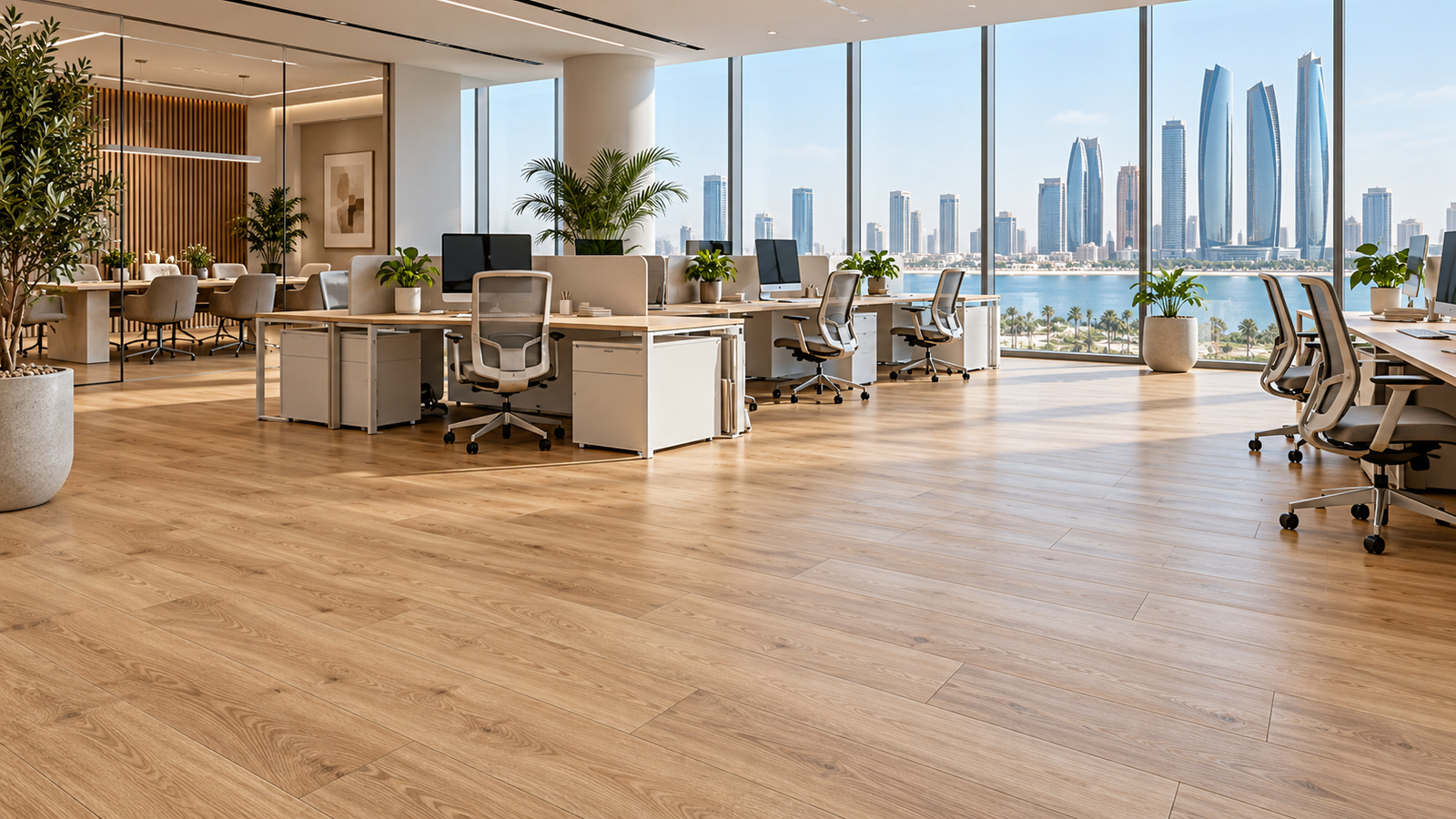
Commercial spaces need a strong wear layer, easy cleaning and a quick installation that keeps downtime short. In offices, the backing pad softens the sound of chairs and footsteps. For layout and durability ideas, read our article on office flooring solutions in the UAE, and for food and drink businesses see our guide to the best flooring for restaurants and cafes. Commercial buyers should always ask for a wear layer rating that matches their traffic level, because a home grade plank wears out much faster in a busy shop.
SPC is designed for indoor spaces, and using it in the wrong place leads to problems that no warranty will fix. Open balconies, rooftop terraces and gardens face direct rain, strong sun and large temperature swings, and these conditions call for materials made for the outdoors. If you are planning a terrace, our guide to outdoor decking flooring for Dubai terraces explains the better options.
The inside of a shower tray is another place to avoid. SPC works well in a bathroom outside the wet zone, but standing water in a shower is different from an occasional splash, and it should be handled with tile or a product approved for that use. When in doubt, ask your supplier to confirm the approved uses in writing.
The cost of SPC flooring depends on several things, so there is no single figure that is correct for every project. Understanding the factors makes it much easier to compare quotes fairly. If you are searching for the SPC flooring price in Dubai, the most useful step is to know what you are comparing.
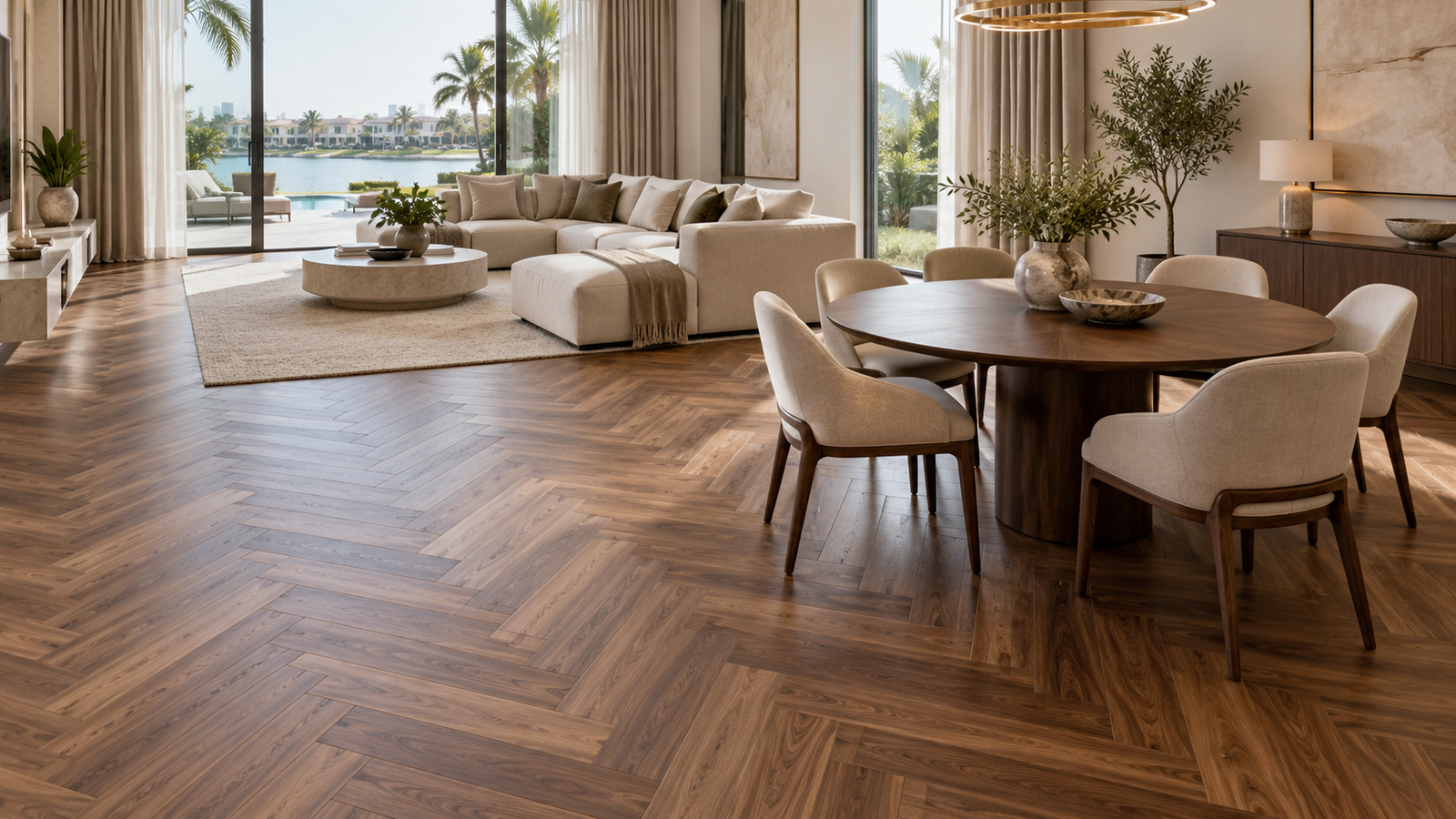
The first factor is the plank itself. Thicker planks with a thicker wear layer cost more to produce, and so do planks with deeper surface texture, better printed designs and a stronger click system. An attached backing pad adds to the price, but it saves you from buying a separate underlay. The second factor is the project. A small bedroom costs more per square metre than a large open living room, because cutting waste and labour take up a bigger share. Patterns such as herringbone need more material and more time, and subfloor preparation can change the final figure in older buildings.
The third factor is what the quote includes. Delivery, skirting boards, trims, underlay, labour and waste allowance can make two similar quotes very different once you add them up. Always ask for an itemised quote, and be careful with prices far below every other offer, because they often point to a thin wear layer or extras that appear later. Our flooring cost guide for Dubai shows how to build a realistic budget.
Most SPC planks use a click system and float over the subfloor, which means they are not glued down in most homes. The process is quicker than tiling, but the details decide how the floor looks and how long it lasts, so it helps to know the steps.
The subfloor must be clean, dry and reasonably flat. Small bumps and dips can show through over time, and trapped moisture can cause problems even under a waterproof plank. In older buildings, this preparation often takes longer than the laying itself, so ask for a site visit before the work is scheduled.
Planks should rest in the room for a day or two before laying so they match the room temperature. The installer then clicks each plank into the next, leaving a small expansion gap around the edges so the floor can move slightly as temperatures change. Skirting boards and trims cover these gaps neatly. Heavy fixed items such as kitchen islands and built in wardrobes should not sit on top of the floating surface.
A skilled team knows how to handle doorways, stairs, uneven walls and wet room edges, and mistakes in these areas are painful to fix later. This is why many owners book professional flooring installation together with the purchase. For an average apartment, a skilled team can often finish within a couple of days once the subfloor is ready, although building rules, lift booking and permitted working hours can affect the schedule.
SPC is simple to look after, which is one reason people recommend it to friends. The main enemy is grit, so sweep or vacuum regularly with a soft brush head, especially near entrances where sand and dust arrive on shoes. A doormat at each entry removes a surprising amount before it reaches the floor.
For regular cleaning, use a damp mop with a mild cleaner made for vinyl, and wring the mop well so water does not sit along the joints. Avoid steam mops, bleach, harsh solvents and abrasive pads, because they can damage the wear layer and loosen the edges. Felt pads under furniture legs prevent dents, and wheeled chairs should have soft castors or a protective mat. Blinds or window film near large windows reduce long exposure to strong sun. The same habits apply across the vinyl family, and our guide to maintaining vinyl flooring in the Dubai climate goes into more detail.
Not all SPC is the same, and the difference between a good product and a poor one often shows up a year or two after installation. A few checks will protect you before you commit.
Local experience also counts for a great deal. A supplier who has worked on UAE villas, offices and rentals understands the heat, the humidity and the building requirements, and will explain honestly where SPC is not the right choice. You can see how we approach projects on our page about the best flooring company in Dubai.
SPC stands for Stone Plastic Composite. The name describes a rigid floor whose core is made from limestone powder and PVC. Some catalogues write Stone Polymer Composite, and it means the same product.
It is made of a limestone and PVC core, a printed design film, a clear wear layer on top and often a foam or cork backing pad underneath. The limestone gives the board its hardness, and the PVC makes it waterproof.
The planks are waterproof, which means they do not absorb water or swell. Water can still reach the subfloor through open edges and gaps, so spills should be wiped up and wet rooms need careful installation.
SPC is a type of vinyl flooring with a rigid core. Standard vinyl is softer and more flexible, while SPC is firmer and more stable. Both have a printed design and a clear wear layer.
It depends on the room. SPC is better in kitchens, bathrooms and humid areas because the core does not absorb moisture. Laminate can work well in dry bedrooms and living areas, and it is often cheaper to buy.
With proper care, SPC can serve a home for many years. The lifespan depends mostly on the wear layer, the amount of foot traffic and the quality of the installation. The warranty terms from your supplier give a useful guide.
Often yes, as long as the tiles are firmly fixed, clean and reasonably flat. Deep grout lines may need filling first so they do not show through the surface. A site visit before ordering is the safest way to confirm.
It can feel warm near large windows in direct sun, like any floor. Lighter colours stay cooler, and blinds or window film reduce the effect. Inside an air conditioned room, SPC feels comfortable for most of the day.
SPC usually costs more than basic laminate and less than many natural stone or solid timber floors. The exact price depends on thickness, wear layer, design and project size. Compare itemised quotes so you can see what is included.
Now that the answer to what is SPC flooring is clear, the practical next step is to see real samples. Measure the rooms you want to cover and choose two or three designs that suit your walls, doors and furniture. Look at them at home in morning and evening light, then ask for a site visit so a specialist can check the subfloor and give you a written quote that covers the price, delivery, trims and fitting. To book that visit, get in touch through the Urban Floors home page.
Category :
Share :
WhatsApp us