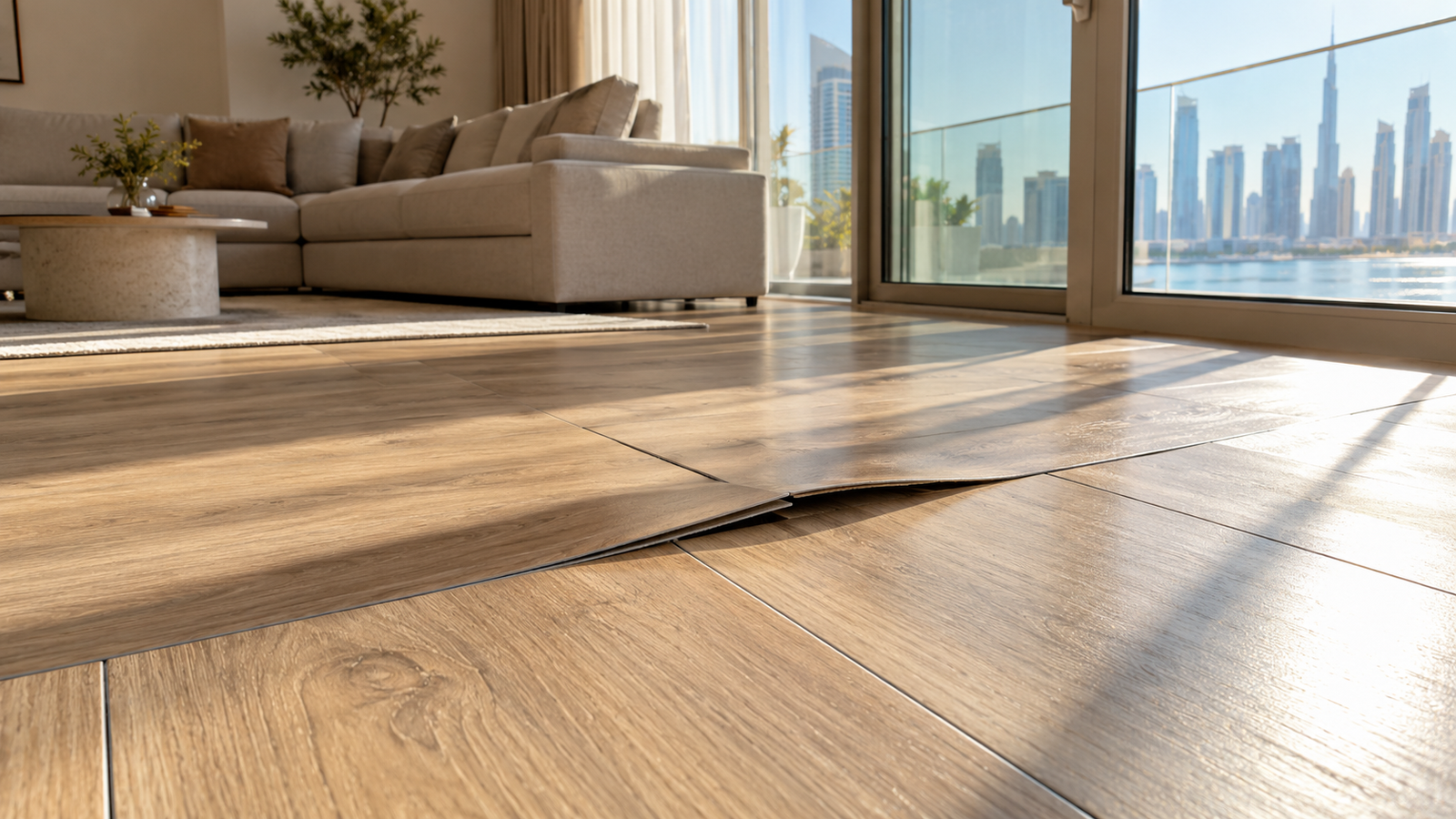

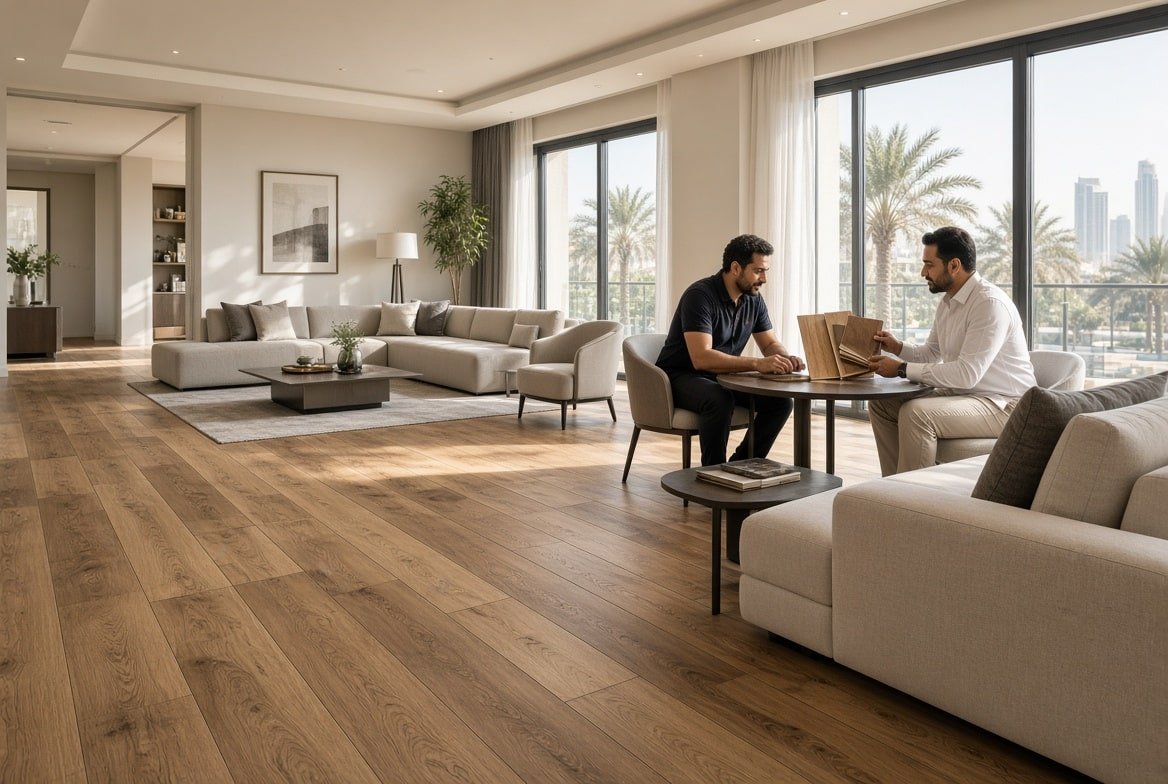
Summer temperatures across Dubai and the wider UAE regularly climb well beyond forty degrees Celsius, and this extreme heat does not stop at the front door. Flooring materials absorb heat from sunlight streaming through windows, from outdoor foot traffic, and from ambient indoor temperatures, which means some flooring options can become genuinely uncomfortable, even painful, to walk on barefoot during peak summer months.
This guide explores which flooring materials stay cool in Dubai’s summer heat, why certain materials heat up faster than others, and practical strategies homeowners can use to keep their floors comfortable throughout the hottest months of the year.
Understanding the science behind heat absorption helps explain why certain flooring materials remain comfortable in Dubai’s climate while others become uncomfortably warm.
Some materials have a higher thermal mass, meaning they absorb and retain heat for longer periods before releasing it. Materials with high thermal mass tend to feel warmer underfoot after prolonged sun exposure, even after the direct sunlight has moved away from that area of the floor.
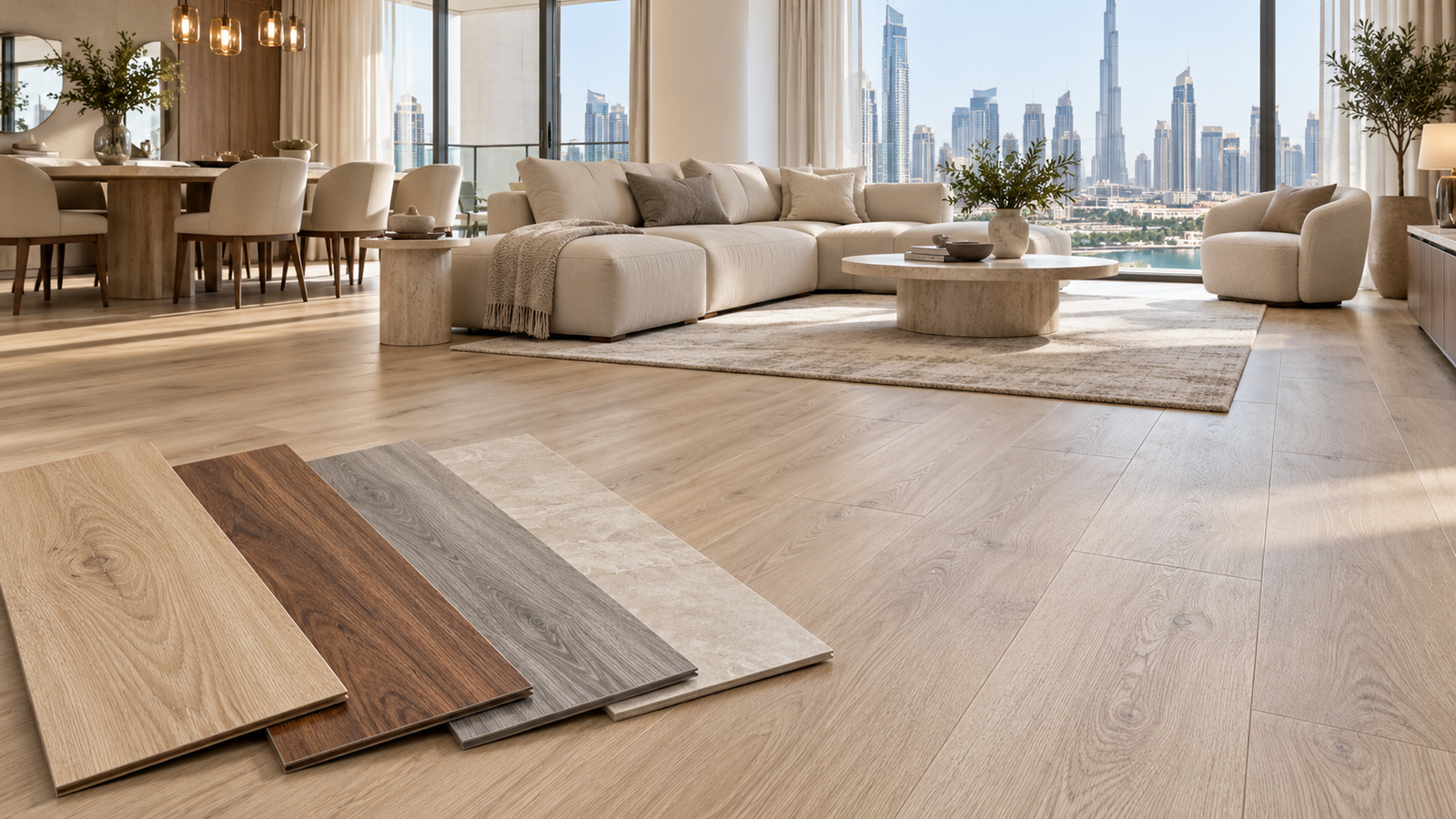
Darker flooring colors absorb significantly more heat from sunlight compared to lighter shades, which reflect a greater portion of solar energy away from the surface. This principle applies across nearly every flooring material, from tile to vinyl to natural stone.
Smooth, dense surfaces often feel hotter to the touch compared to textured or slightly porous surfaces, since smooth surfaces transfer heat more efficiently upon contact with skin.
Porcelain tile is widely recognized as one of the coolest flooring materials available in the UAE market, particularly when finished in lighter colors.
Natural stone options, such as marble and certain limestone varieties, are well known for their naturally cool surface temperature, making them a traditional favorite in hot climate regions.
While vinyl flooring is a synthetic material, choosing lighter colored SPC or luxury vinyl options can significantly reduce surface heat buildup compared to darker toned alternatives.
Similar to porcelain, standard ceramic tile in lighter finishes offers a cool underfoot experience, making it a practical choice for kitchens, hallways, and other high sunlight exposure areas within a villa.
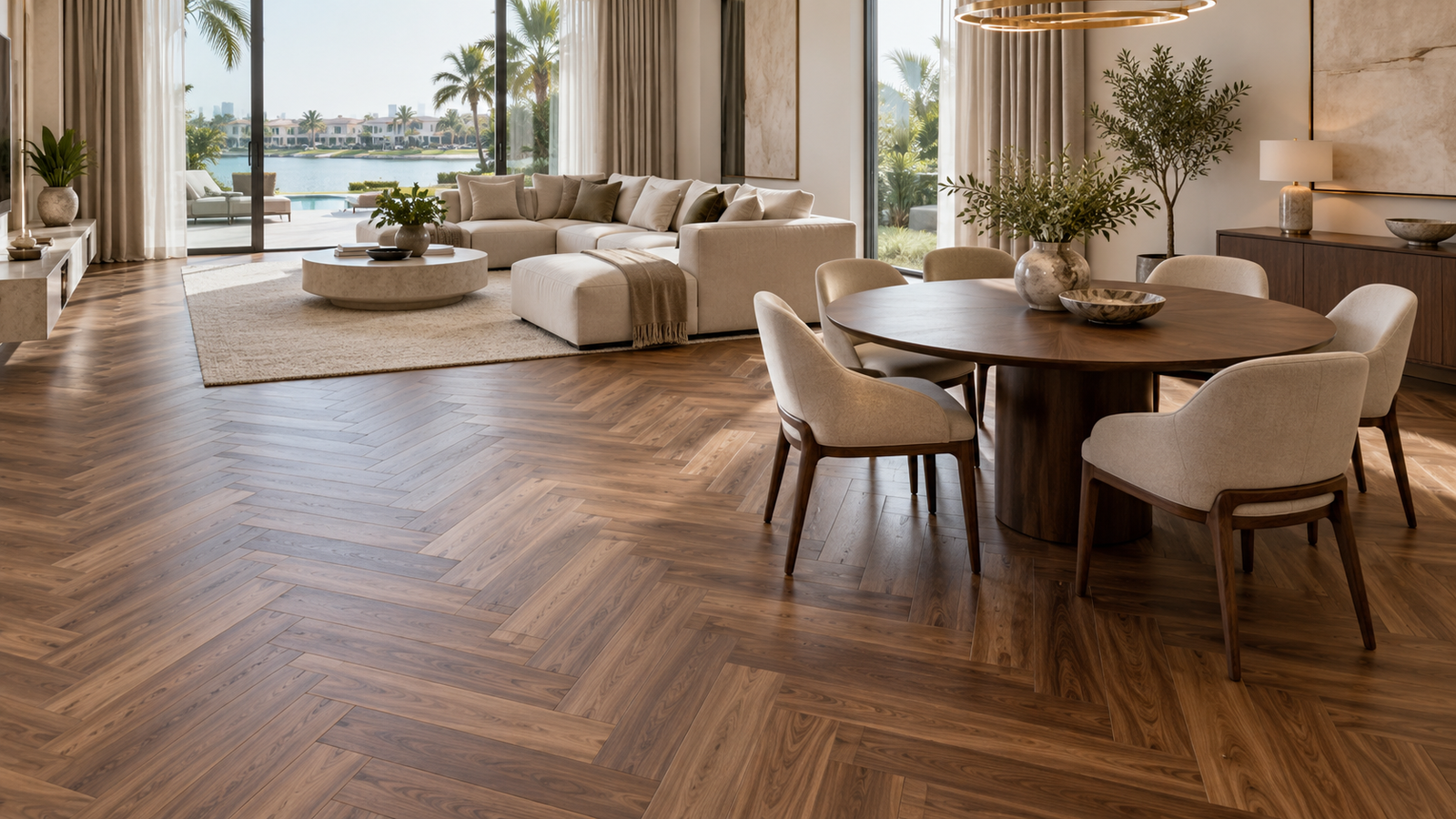
Dark stained hardwood flooring tends to absorb significantly more heat compared to lighter wood tones, which can make certain rooms with large windows noticeably warmer underfoot during peak sun hours.
Dark wood look SPC and vinyl products, while durable and heat resistant in terms of structural performance, can still become warmer to the touch under direct sunlight compared to lighter alternatives, even though they will not warp or degrade from the heat itself.
While natural stone generally performs well in terms of cooling, darker stone varieties absorb more heat compared to lighter options, somewhat reducing the natural cooling advantage typically associated with stone flooring.
Beyond material selection alone, several practical strategies can help homeowners across the UAE maintain cooler flooring throughout their villas and apartments during summer months.
Placing area rugs or mats in heavily sun exposed zones can provide a cooler surface for barefoot walking while still allowing the underlying flooring material to remain visible in less exposed areas of the room.
While air conditioning primarily manages air temperature rather than direct floor surface heat from sunlight, maintaining consistent indoor cooling helps reduce overall ambient heat that can indirectly affect flooring temperature throughout the day.
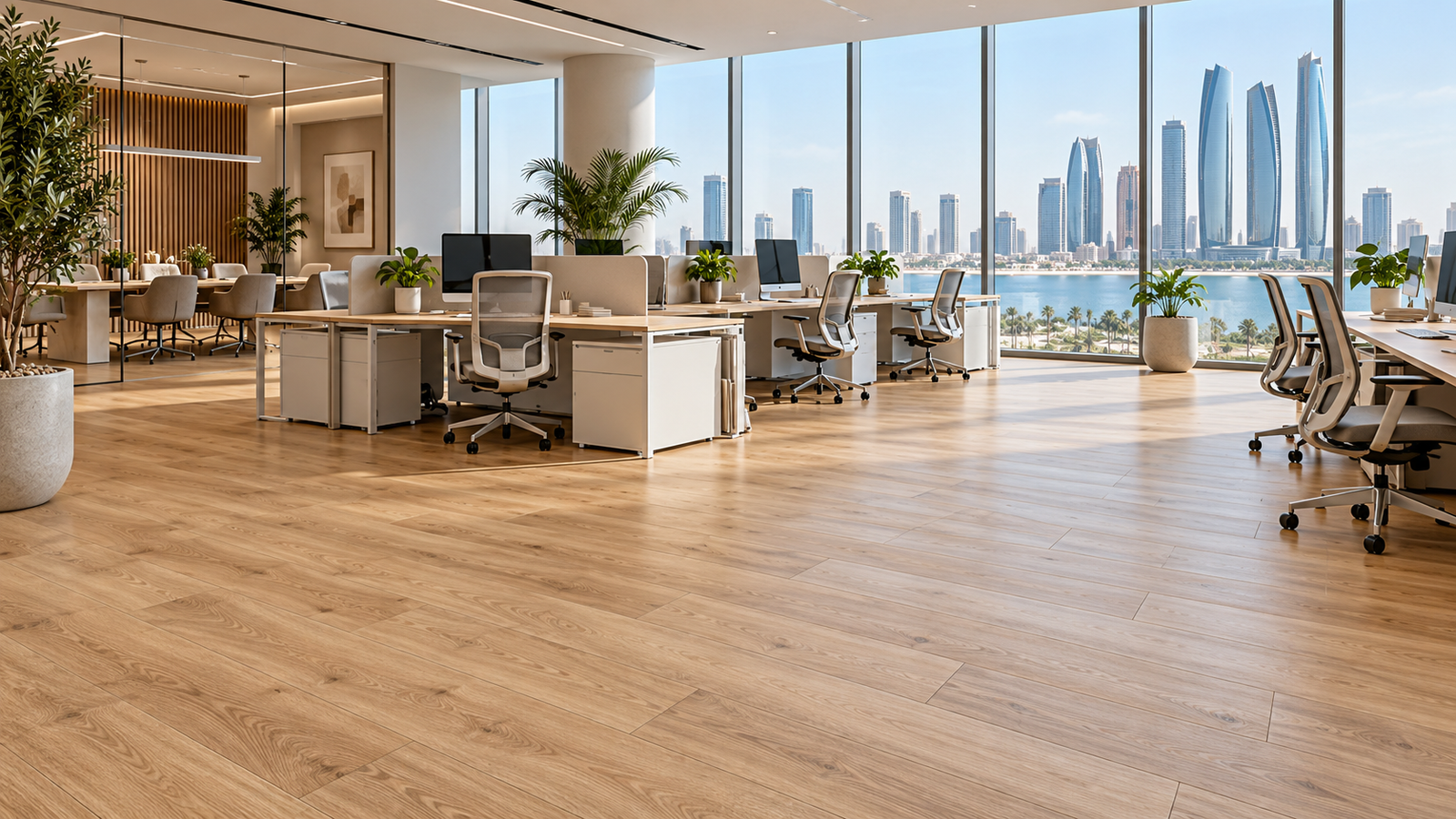
For living rooms, terraces adjacent interiors, and rooms with expansive windows, prioritizing light colored porcelain tile, light natural stone, or light colored SPC flooring generally provides the most comfortable underfoot experience throughout summer months.
Bedrooms and hallways with moderate window exposure offer more flexibility, allowing homeowners to balance cooling performance with design preferences, including slightly darker tones if desired.
Interior rooms with minimal direct sunlight, such as certain bathrooms or storage areas, allow for greater flexibility in flooring color choice without significant concern for heat buildup.
While light colored materials do not necessarily cost more than darker alternatives within the same product line, premium natural stone and porcelain collections can carry higher price points regardless of color choice.
What is the coolest flooring material for Dubai’s summer heat?
Light colored porcelain tile and light natural stone are generally considered the coolest flooring options, offering strong heat reflection and low surface temperature even during peak summer months.
Does flooring color really make a noticeable difference in surface heat?
Yes, lighter flooring colors reflect significantly more solar heat compared to darker finishes, which can result in a noticeably cooler surface temperature in sun exposed rooms.
Is SPC flooring a good option for staying cool in Dubai homes?
Light colored SPC flooring offers a reasonable balance of cooling performance and structural heat resistance, making it a practical option, particularly compared to darker SPC finishes.
Can window treatments really help keep flooring cooler?
Yes, UV protective window films, blackout curtains, and external shading solutions can significantly reduce the amount of solar heat reaching flooring surfaces throughout the day.
Should different rooms in a villa use different flooring colors based on sun exposure?
Many homeowners in Dubai do choose lighter flooring specifically for high sun exposure rooms, while allowing more flexibility in flooring color for rooms with limited direct sunlight.
Selecting flooring that stays cool during Dubai’s intense summer heat involves more than simply choosing a durable material, it requires careful consideration of color, thermal properties, and room specific sun exposure. Light colored porcelain tile, natural stone, and SPC flooring all offer strong cooling performance, particularly when paired with practical strategies such as window treatments and thoughtful room layout planning.
By understanding how different flooring materials respond to heat and applying these considerations throughout a villa or apartment, homeowners across the UAE can maintain comfortable, cool flooring even during the hottest months of the year.
Category :
Share :
WhatsApp us