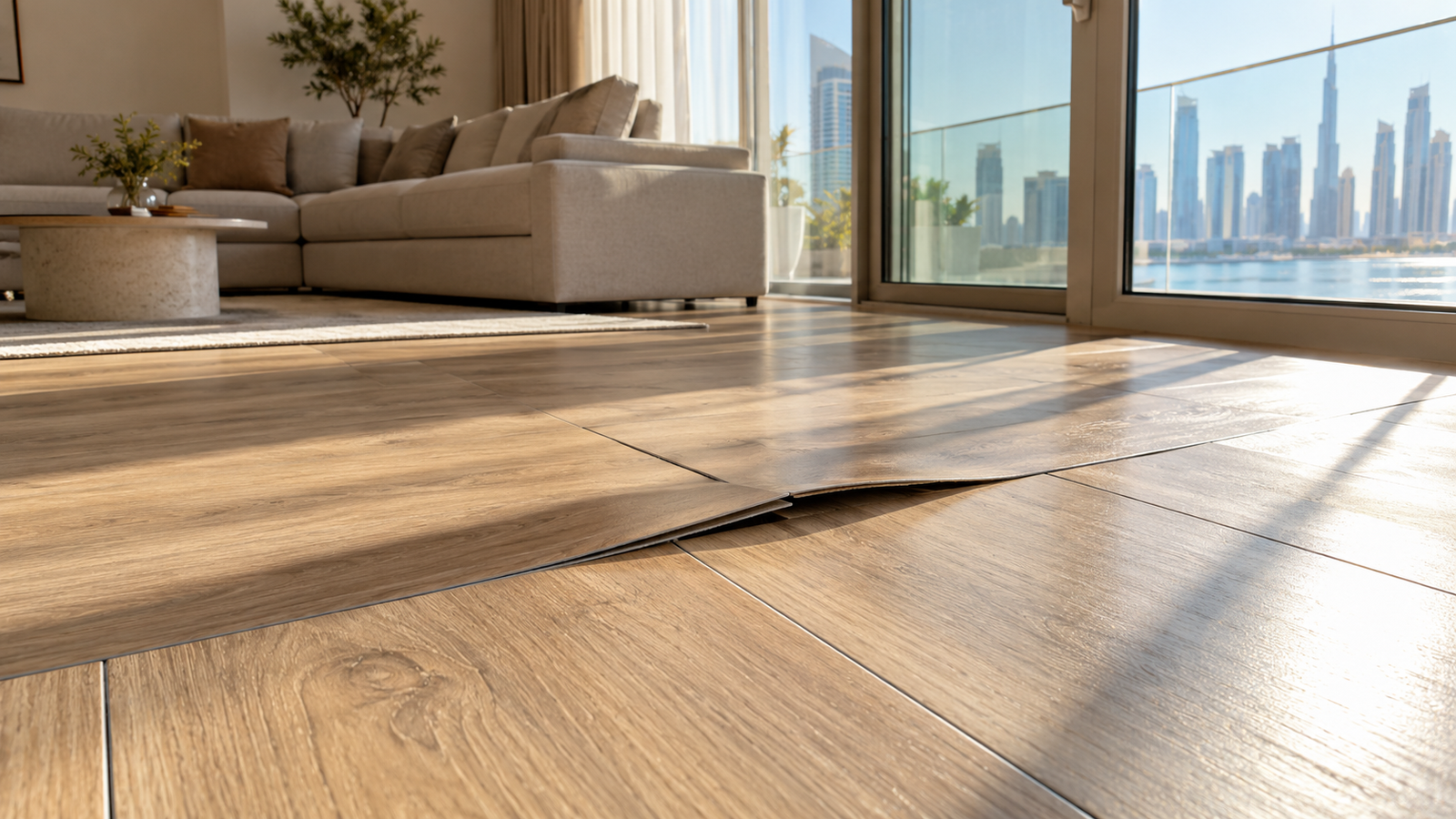

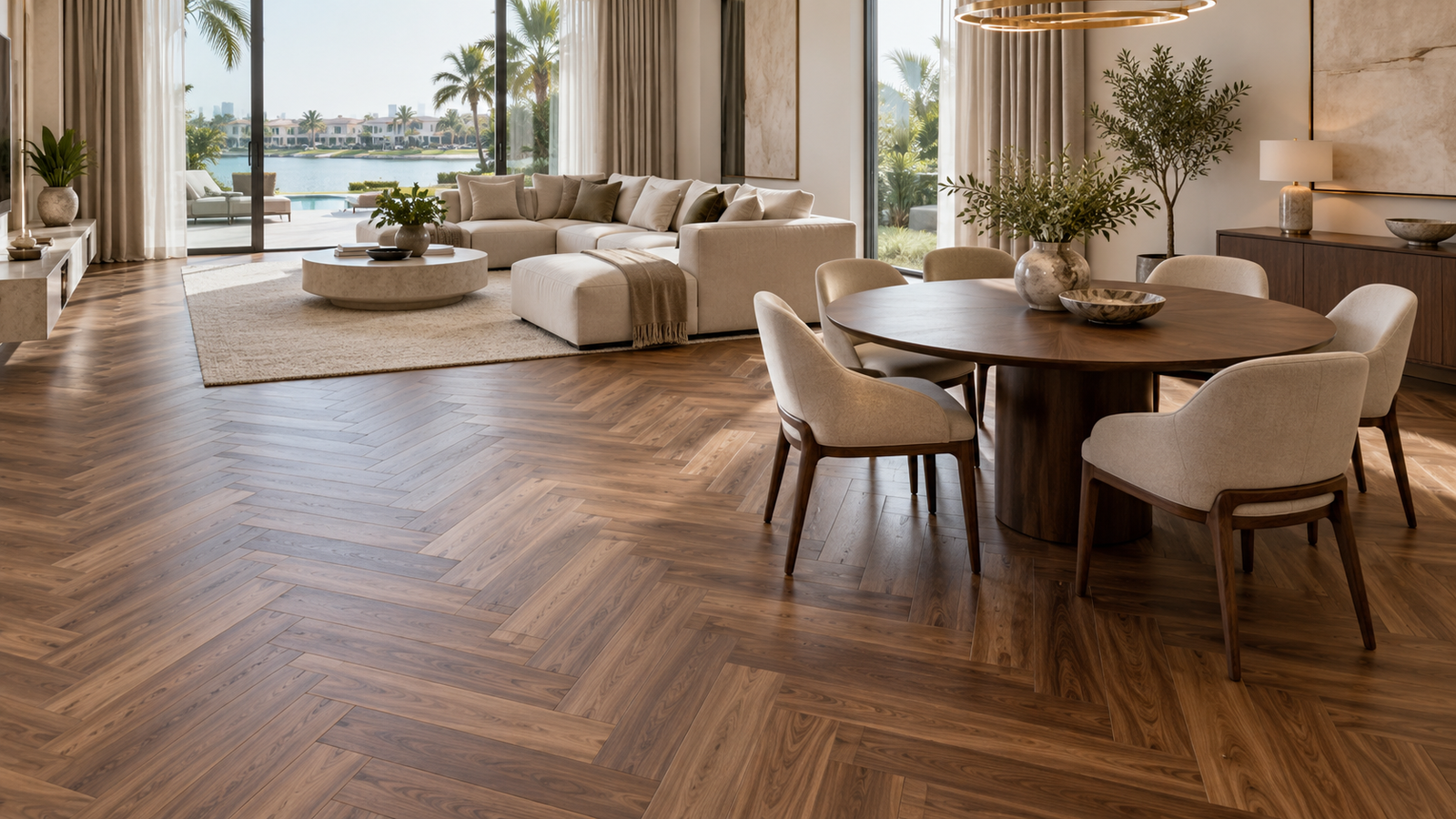
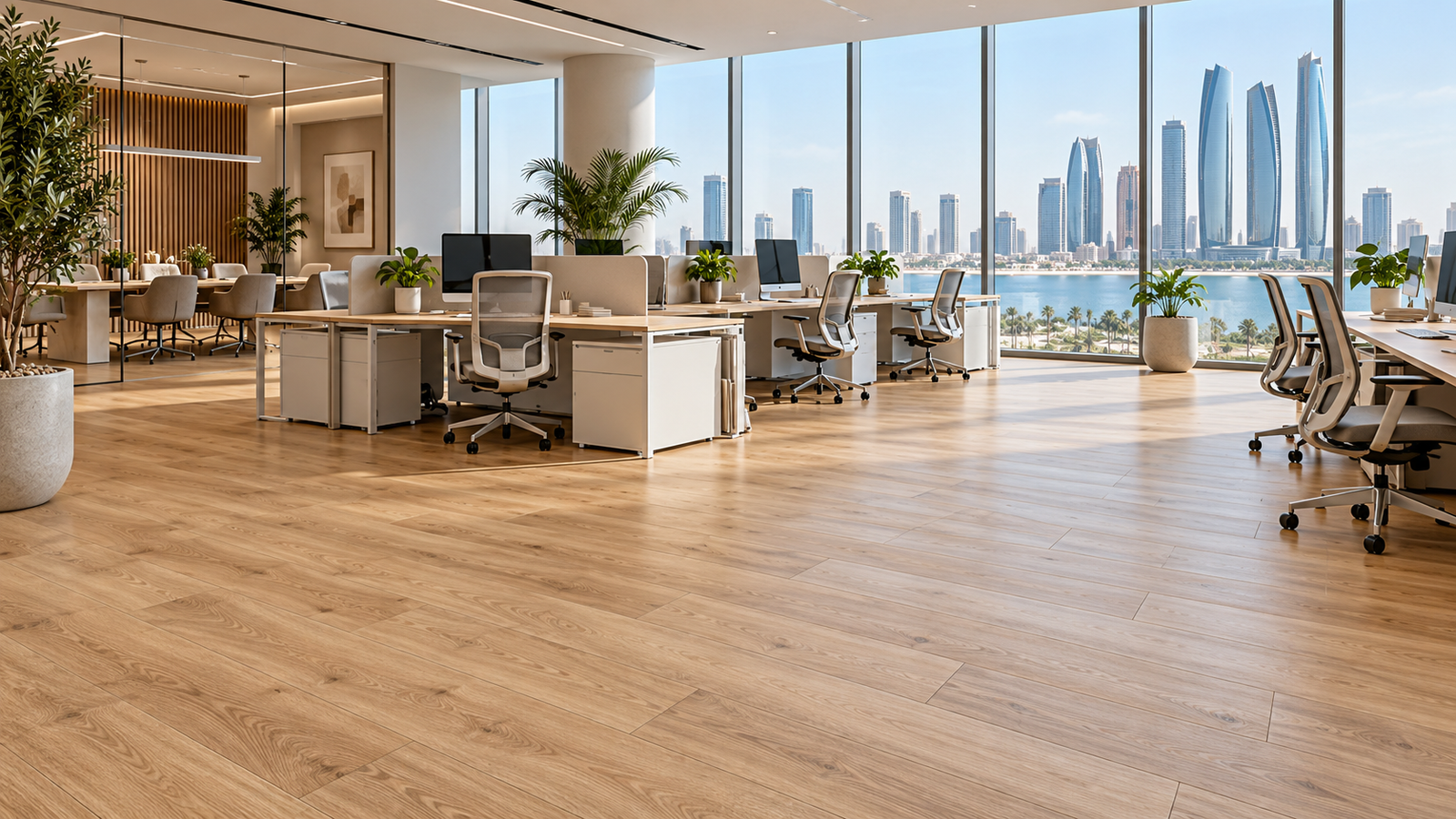
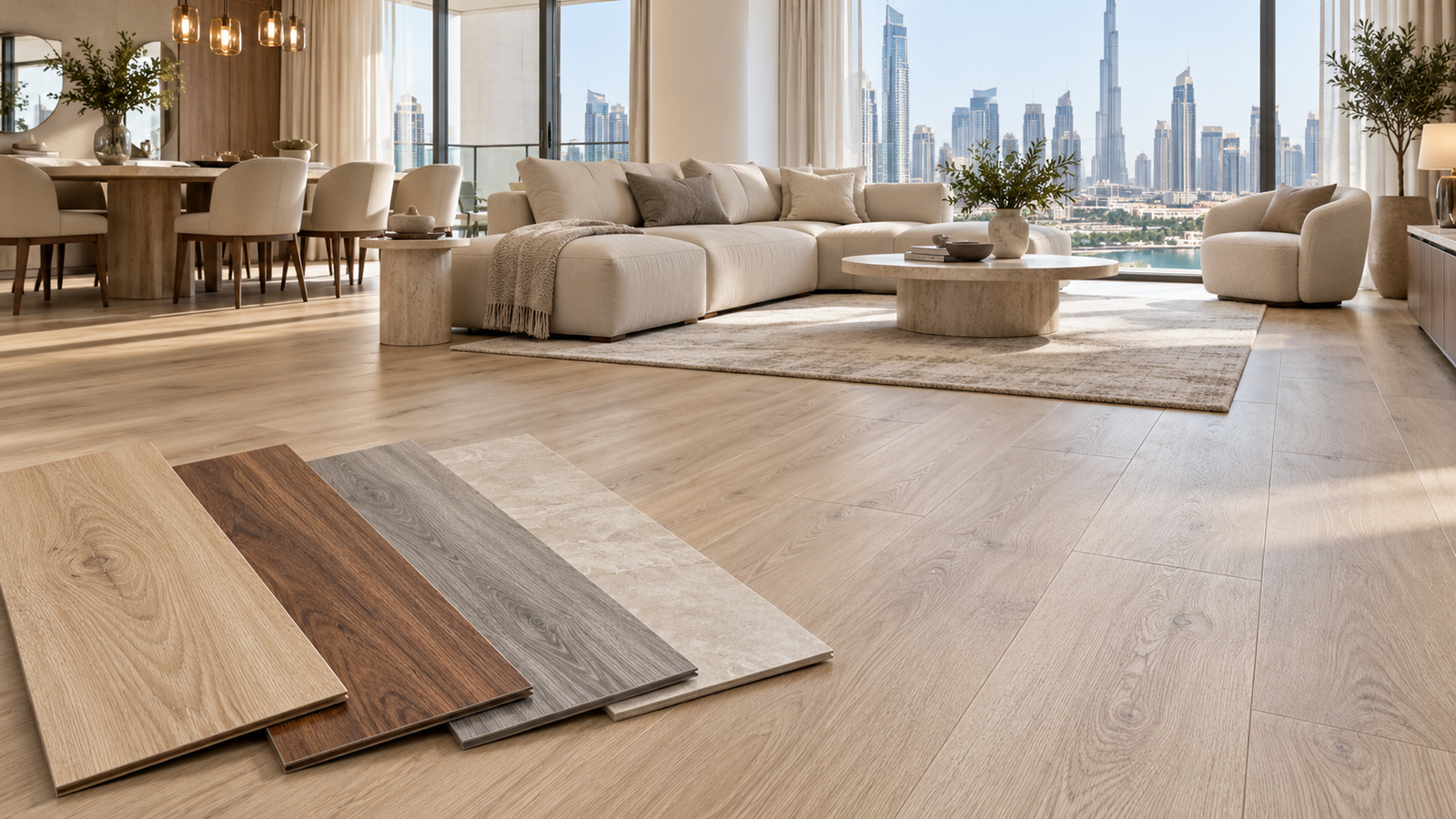
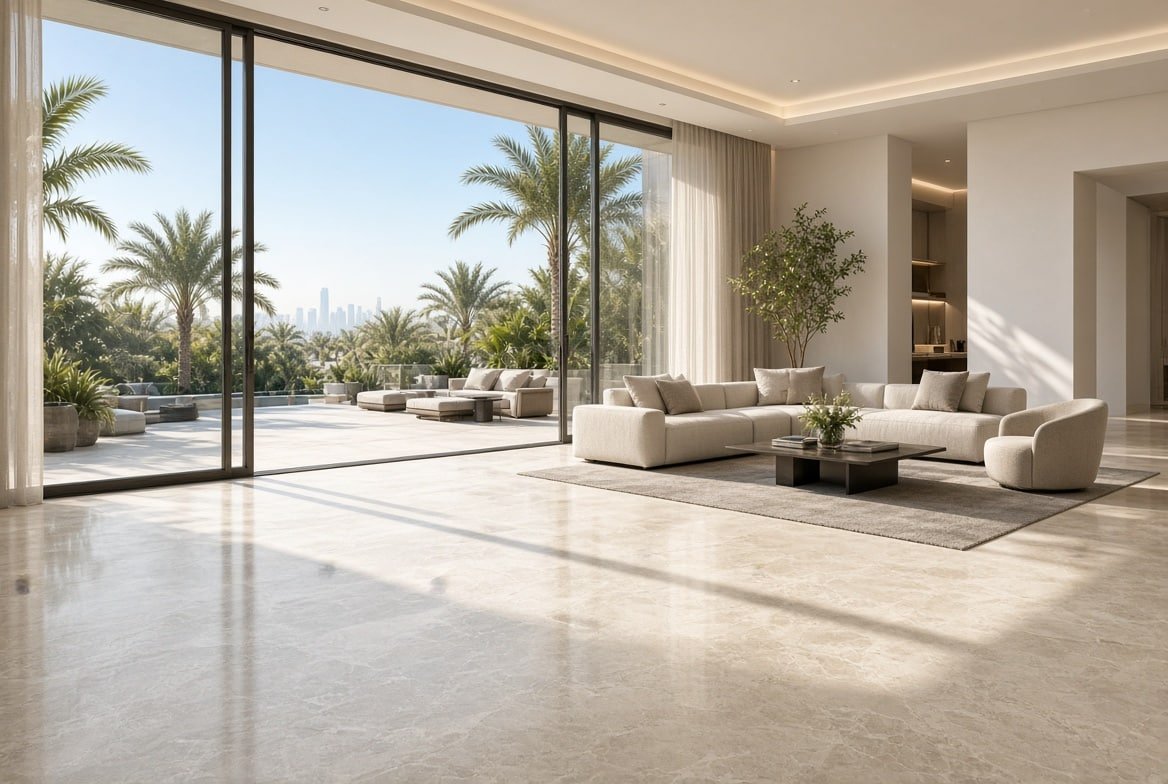
Homeowners across Dubai and the wider UAE face a flooring challenge that many other regions never encounter, a climate that combines periods of high humidity with constant exposure to fine desert sand and dust. This combination can wear down flooring surfaces, dull finishes, and even cause long term structural damage if the wrong materials are chosen. Understanding which flooring types genuinely hold up against both humidity and sand is essential for any homeowner planning a renovation or new build in the Emirates.
This guide explains why humidity and sand present unique challenges for UAE flooring, which materials perform best against these conditions, and practical steps homeowners can take to protect their investment for years to come.
While Dubai is often associated primarily with heat, humidity levels can rise significantly during certain months, particularly in coastal areas near the Arabian Gulf. This humidity does not only affect outdoor conditions, it also impacts indoor air quality and can gradually affect flooring materials that are not properly sealed or protected.
Fine desert sand is a constant presence across the UAE, entering homes through open doors, windows, and on the soles of shoes. Over time, sand particles can act as an abrasive agent against flooring surfaces, gradually wearing down finishes and coatings.
SPC flooring stands out as one of the strongest performers against both humidity and sand exposure, making it particularly well suited to the UAE’s dual climate challenges.
Tile flooring has long been a reliable choice across the UAE specifically because of its natural resistance to both moisture and abrasive particles.
Luxury vinyl products offer a strong combination of water resistance and reasonable durability against sand related wear, particularly when selecting products with a thicker protective wear layer.
For homeowners who prefer the appearance of natural wood but want improved resistance compared to solid hardwood, engineered wood flooring with a quality finish offers a reasonable middle ground, though it still requires more care regarding sand exposure compared to fully synthetic options.
While beautiful, solid hardwood remains one of the most vulnerable flooring materials regarding both humidity and sand exposure, requiring significant additional care, climate control, and maintenance to perform well long term in the UAE.
Natural stone that has not been properly sealed can absorb moisture over time, leading to staining, and its surface can also show wear from sand exposure more readily than denser porcelain alternatives.
Budget flooring products with minimal wear layer thickness, whether vinyl or laminate, tend to show visible scratching from sand exposure much sooner than premium alternatives with thicker protective coatings.
Beyond selecting the right base flooring material, several practical measures can significantly extend the life and appearance of flooring throughout a UAE home.
Entryways, hallways leading to outdoor spaces, and rooms adjacent to gardens or terraces experience the highest sand exposure and benefit most from SPC flooring, porcelain tile, or luxury vinyl with thick wear layers.
Living rooms and family spaces with moderate outdoor access still benefit from durable, easy to clean materials, though slightly more design flexibility exists compared to high exposure entry zones.
Bedrooms and interior rooms with limited outdoor access allow for greater flexibility in flooring material choice, since sand exposure and humidity risk are generally lower in these spaces.
Investing in a slightly thicker wear layer or higher quality tile finish often proves worthwhile in high exposure areas, since the additional upfront cost typically results in significantly reduced long term maintenance and replacement expenses.
What is the best flooring for resisting sand damage in UAE homes?
SPC flooring and porcelain tile generally offer the strongest resistance to sand related wear, particularly when selecting products with thicker wear layers or dense, hard surface compositions.
Does humidity really affect flooring in Dubai despite the desert climate?
Yes, humidity levels can rise significantly during certain months, particularly in coastal areas, and moisture sensitive materials such as solid hardwood or laminate can be affected if not properly managed.
Can natural stone flooring resist sand and humidity effectively?
Natural stone can perform well when properly sealed and maintained, though it generally requires more ongoing care compared to fully synthetic options such as SPC flooring or porcelain tile.
How can homeowners reduce sand related flooring damage without changing materials?
Placing quality doormats at entry points, encouraging shoe removal, and maintaining consistent cleaning routines can significantly reduce sand related wear regardless of the flooring material already installed.
Is SPC flooring better than laminate for resisting UAE humidity and sand?
Yes, SPC flooring generally outperforms laminate in both categories, since its fully synthetic, waterproof core is unaffected by humidity, and quality SPC products often feature thicker, more scratch resistant wear layers.
Selecting flooring that genuinely resists both humidity and desert sand is essential for long term durability in UAE homes. Materials such as SPC flooring, porcelain tile, and quality luxury vinyl consistently outperform more vulnerable options like solid hardwood or thin laminate products when it comes to withstanding these specific environmental challenges.
By combining the right flooring material with practical protective measures, such as entryway mats and consistent cleaning routines, homeowners across Dubai and the UAE can maintain beautiful, durable floors that stand up to the region’s unique combination of humidity and sand exposure for many years to come.
Category :
Share :
WhatsApp us