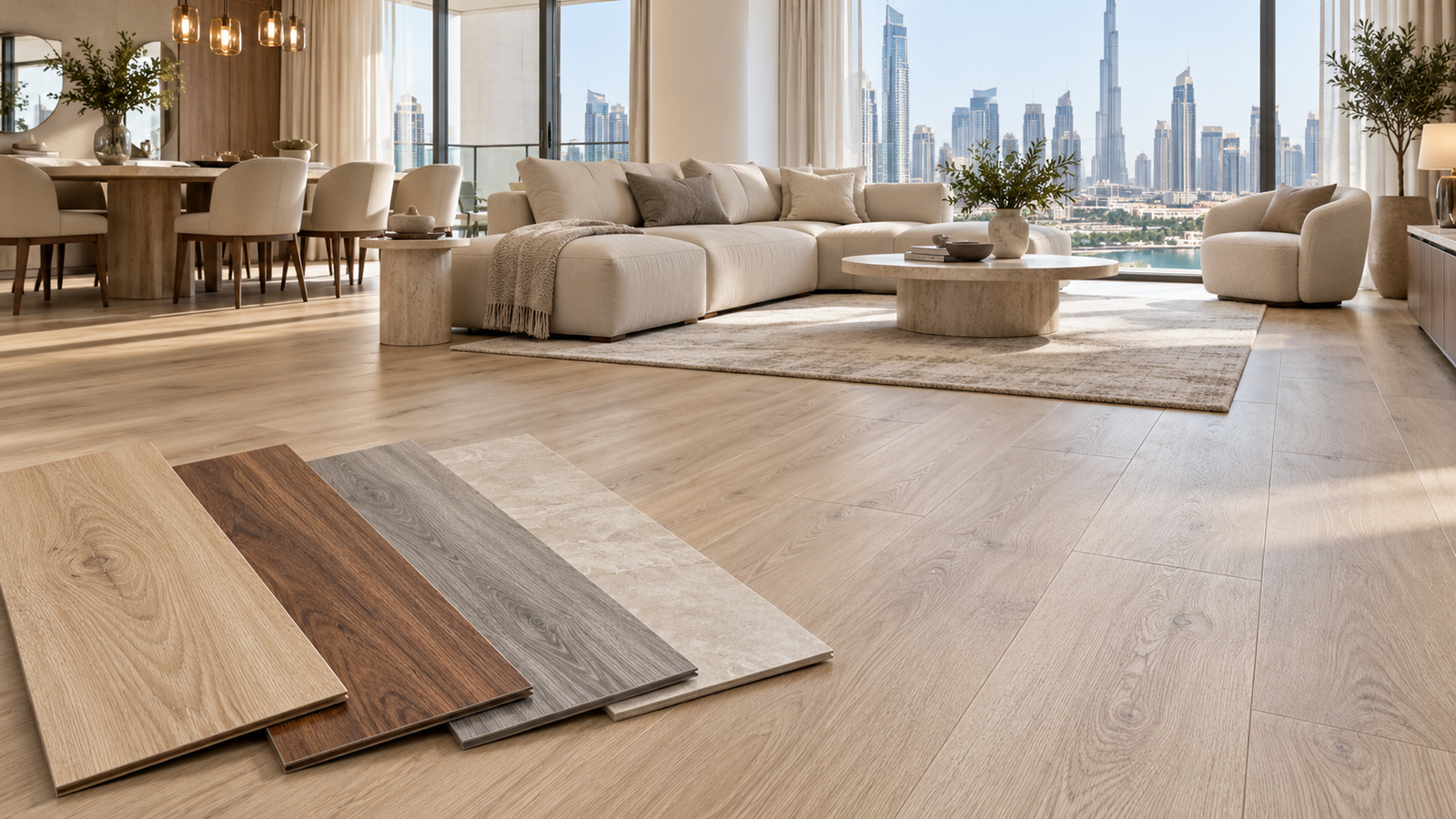
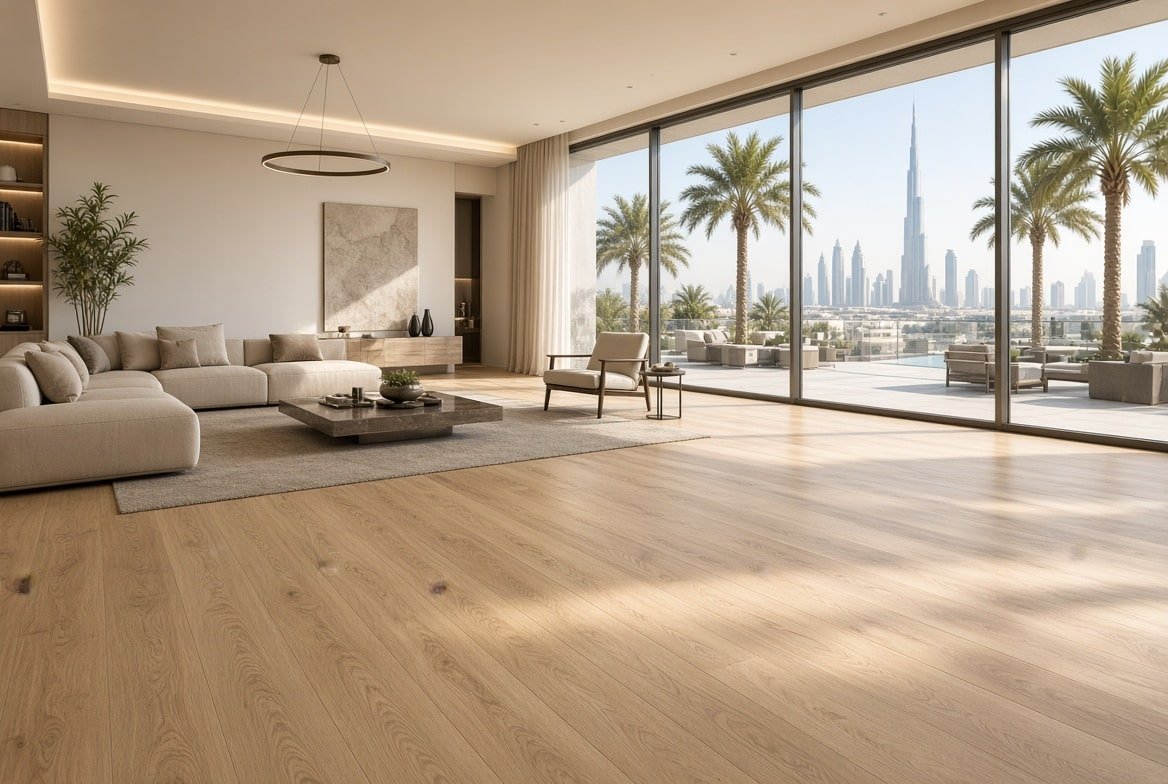
Rigid core vinyl flooring has become one of the most popular flooring categories across Dubai and the UAE, but within this category, two distinct types often confuse homeowners trying to make the right choice, SPC flooring and WPC flooring. While both fall under the broader rigid core vinyl umbrella and share a similar appearance, their internal construction differs in ways that meaningfully affect performance, particularly within the demanding climate conditions found across the Emirates.
This guide provides a complete, side by side comparison of SPC and WPC flooring for UAE homes, covering construction, durability, comfort, water resistance, pricing, and which option makes the most sense for different rooms and applications.
Understanding SPC Flooring Construction
SPC flooring, short for stone plastic composite, uses a dense core made from a combination of limestone powder, PVC, and stabilizing compounds. This composition is compressed under high pressure to create an extremely rigid, dense core layer.
Layers Within SPC Flooring
- Wear layer, a transparent protective top coating resisting scratches and stains
- Design layer, a printed film replicating wood, stone, or marble patterns
- Rigid SPC core, the dense limestone and PVC composite providing exceptional structural stability
- Backing layer, typically a thin cushioning layer supporting sound absorption and comfort
Understanding WPC Flooring Construction
WPC flooring, short for wood plastic composite, uses a foamed core that combines wood fibers or wood flour with plastic compounds. This foamed construction creates a lighter, slightly softer core compared to the dense composition found in SPC flooring.
Layers Within WPC Flooring
- Wear layer, similar to SPC, providing surface protection against scratches and stains
- Design layer, printed decorative film replicating natural wood or stone appearances
- Foamed WPC core, a lighter, wood fiber infused plastic composite offering enhanced cushioning
- Backing layer, often thicker than SPC backing, contributing to additional comfort and sound absorption
Key Differences Between SPC and WPC Flooring
Core Density and Rigidity
- SPC flooring features a dense, rigid core that provides exceptional structural stability and resistance to indentation
- WPC flooring features a lighter, foamed core that offers a softer, slightly more cushioned feel underfoot, though with somewhat reduced rigidity compared to SPC
- WPC flooring generally feels warmer and more cushioned underfoot due to its foamed core construction, making it a popular choice for bedrooms and areas where comfort is prioritized
- SPC flooring feels firmer and more solid underfoot, which some homeowners prefer for its stable, substantial feel, particularly in living areas and high traffic zones
Water Resistance
- SPC flooring is completely waterproof due to its dense composite core, making it highly reliable in wet or humid areas
- WPC flooring is also generally water resistant, though its foamed core structure can, in some lower quality products, be slightly more susceptible to water absorption compared to the denser SPC construction
Heat and Temperature Stability
- SPC flooring offers superior dimensional stability under heat exposure, making it particularly well suited to sun exposed rooms common in Dubai villas and apartments
- WPC flooring performs reasonably well under normal indoor temperature conditions but can be somewhat more sensitive to extreme heat exposure compared to the denser SPC core
Sound Insulation
- WPC flooring generally offers better natural sound absorption due to its thicker, foamed core structure, which can reduce noise transfer, particularly beneficial in apartment settings
- SPC flooring typically requires an additional acoustic underlayment layer to achieve comparable sound insulation performance
Impact and Scratch Resistance
- SPC flooring generally offers superior resistance to heavy impacts and indentation from furniture or dropped objects due to its rigid, dense core
- WPC flooring, while still durable, may show slightly more susceptibility to indentation under heavy or concentrated weight compared to SPC
Heat Exposure Considerations
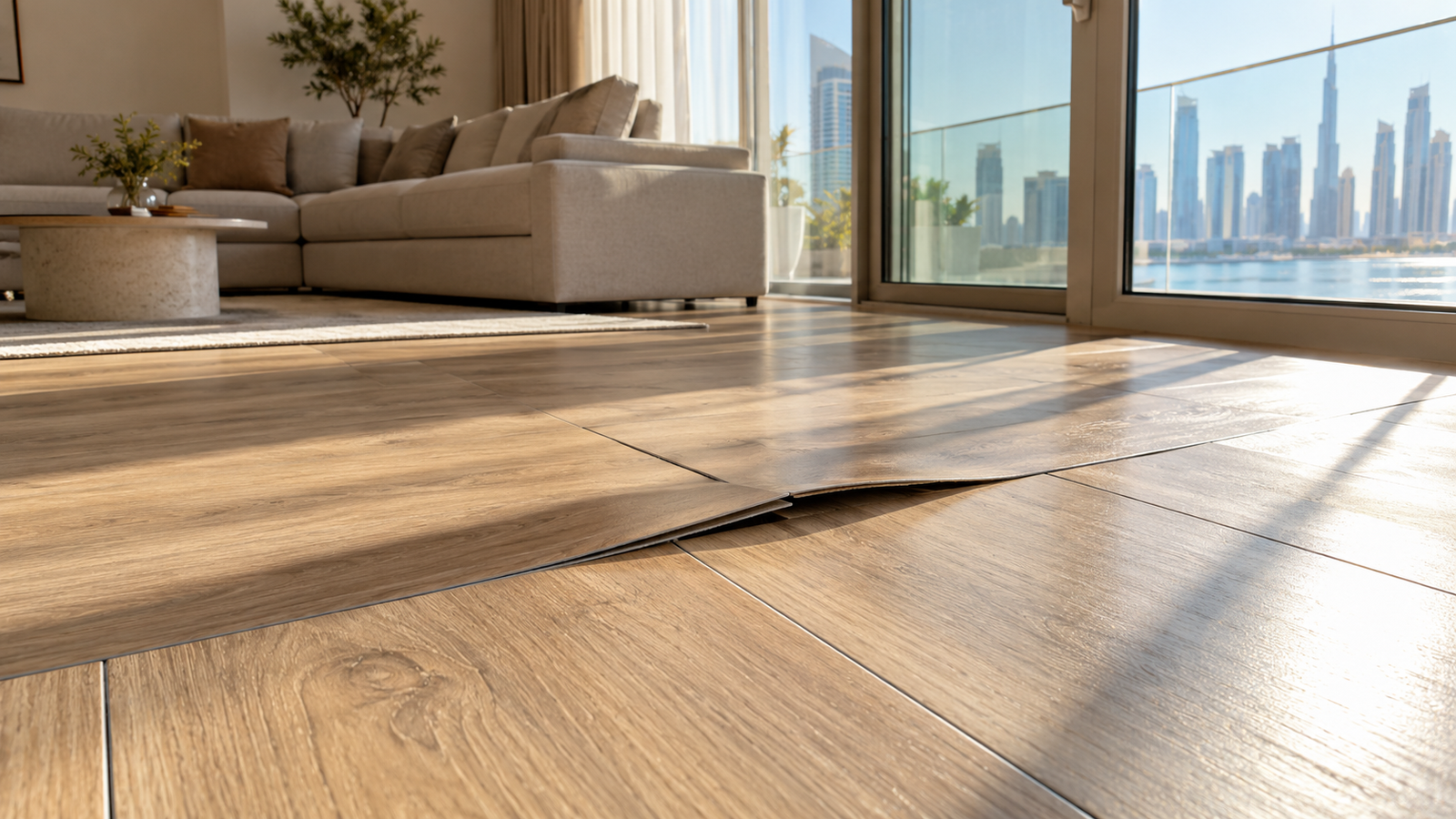
Given Dubai’s intense sun exposure and high temperatures, SPC flooring generally holds a performance advantage in rooms with significant direct sunlight, such as living rooms with large windows or open plan spaces adjacent to glass doors.
Humidity Considerations
Both SPC and WPC flooring perform well regarding humidity resistance compared to wood based flooring alternatives, though SPC’s denser core provides an additional margin of reliability in consistently humid conditions.
Practical Climate Based Recommendation
For high sun exposure areas and rooms with significant heat buildup, SPC flooring is generally the stronger choice. For bedrooms, quieter living spaces, and areas where comfort and sound insulation take priority over maximum heat resistance, WPC flooring offers a compelling alternative.
Price Comparison Between SPC and WPC Flooring in the UAE
SPC Flooring Price Range
- Standard SPC flooring, generally 60 to 100 AED per square meter
- Premium SPC collections with thicker wear layers, often 100 to 130 AED per square meter or higher
WPC Flooring Price Range
- Standard WPC flooring, generally 65 to 110 AED per square meter
- Premium WPC collections, often 110 to 150 AED per square meter, reflecting the additional cushioning and comfort features
WPC flooring often carries a slightly higher price point compared to comparable grade SPC flooring, reflecting its additional foamed core material and enhanced comfort characteristics, though pricing can vary significantly between brands and specific product lines.
Installation Cost Considerations
Installation costs for both SPC and WPC flooring in the UAE typically range from 15 to 35 AED per square meter, with minimal cost difference between the two materials, since both commonly use similar click lock floating floor installation methods.
Best Applications for SPC Flooring in UAE Homes
Recommended Rooms and Spaces
- Living rooms and open plan areas with significant sun exposure through large windows
- Kitchens and bathrooms, given SPC’s superior waterproof performance
- High traffic hallways and entryways where impact resistance is a priority
- Villa spaces with direct exposure to heat from expansive glass doors or windows
Best Applications for WPC Flooring in UAE Homes
Recommended Rooms and Spaces
- Bedrooms, where comfort and a softer underfoot feel are prioritized
- Apartment living spaces where natural sound insulation is beneficial for reducing noise transfer between units
- Home offices or quieter living areas where extended standing or sitting comfort matters
- Rooms with moderate, rather than extreme, sun exposure
Installation Considerations for SPC and WPC Flooring
Subfloor Preparation
Both SPC and WPC flooring require a clean, dry, and reasonably level subfloor, though SPC’s rigid core is generally slightly more forgiving of minor subfloor imperfections compared to WPC’s softer foamed core.
Acclimatization Requirements
Both materials generally require shorter acclimatization periods compared to solid hardwood, given their synthetic composition, though following manufacturer specific guidelines remains important for both SPC and WPC installations.
Installation Method
The vast majority of SPC and WPC flooring products in the UAE use a click lock floating floor installation system, allowing for relatively quick and straightforward installation across both residential and light commercial applications.
Maintenance Comparison Between SPC and WPC Flooring
Maintaining SPC Flooring
- Regular sweeping or vacuuming to remove dust and sand
- Damp mopping is safe given SPC’s fully waterproof construction
- Minimal risk of damage from occasional water exposure
Maintaining WPC Flooring
- Similar routine cleaning requirements to SPC flooring
- Generally safe for damp mopping, though excessive standing water should still be avoided as a general best practice
- Slightly more attention may be needed regarding heavy furniture placement given the softer core structure
Longevity Comparison Between SPC and WPC Flooring
- SPC flooring typically lasts between fifteen and twenty five years with proper installation and maintenance, supported by its dense, stable core construction
- WPC flooring typically lasts between ten and twenty years, with performance closely tied to product quality and the specific demands placed on the flooring within a given space
Common Mistakes When Choosing Between SPC and WPC Flooring
Frequent Selection Errors
- Choosing WPC flooring for high sun exposure rooms without accounting for its comparatively lower heat resistance relative to SPC
- Assuming SPC and WPC flooring perform identically, when their core construction creates meaningful differences in comfort, sound insulation, and heat stability
- Overlooking sound insulation needs in apartment settings, where WPC’s natural cushioning may offer a practical advantage
- Selecting the cheapest available option within either category without confirming wear layer thickness and overall product quality
Frequently Asked Questions
What is the main difference between SPC and WPC flooring?
The primary difference lies in the core construction, SPC flooring uses a dense limestone and PVC composite core offering superior rigidity and heat resistance, while WPC flooring uses a lighter, foamed wood fiber and plastic core offering enhanced comfort and sound absorption.
Which is better for hot, sun exposed rooms in Dubai, SPC or WPC?
SPC flooring generally performs better in hot, sun exposed rooms due to its superior dimensional stability and heat resistance compared to WPC flooring’s slightly more heat sensitive foamed core.
Is WPC flooring more comfortable to walk on than SPC flooring?
Yes, WPC flooring generally offers a softer, more cushioned feel underfoot due to its foamed core construction, making it a popular choice for bedrooms and comfort focused spaces.
Which option is more affordable, SPC or WPC flooring?
Pricing is often similar between the two, though WPC flooring can sometimes carry a slightly higher price point due to its additional cushioning material, with actual costs varying significantly by brand and product quality.
Can SPC and WPC flooring both be used throughout the same UAE home?
Yes, many homeowners choose to combine both materials, using SPC flooring in sun exposed or high traffic areas and WPC flooring in bedrooms or quieter living spaces to balance performance and comfort throughout the home.
Conclusion
Both SPC and WPC flooring offer strong, waterproof, and durable alternatives to traditional wood and tile flooring, but their differing core constructions make each option better suited to specific applications within a UAE home. SPC flooring’s rigid, heat resistant core makes it the stronger choice for sun exposed living areas, kitchens, and high traffic zones, while WPC flooring’s softer, more cushioned construction offers enhanced comfort and sound insulation well suited to bedrooms and quieter spaces.
By understanding these core differences, homeowners across Dubai and the wider UAE can select the rigid core vinyl flooring option that best matches the specific demands of each room, resulting in a home that balances durability, comfort, and long term performance throughout every space.