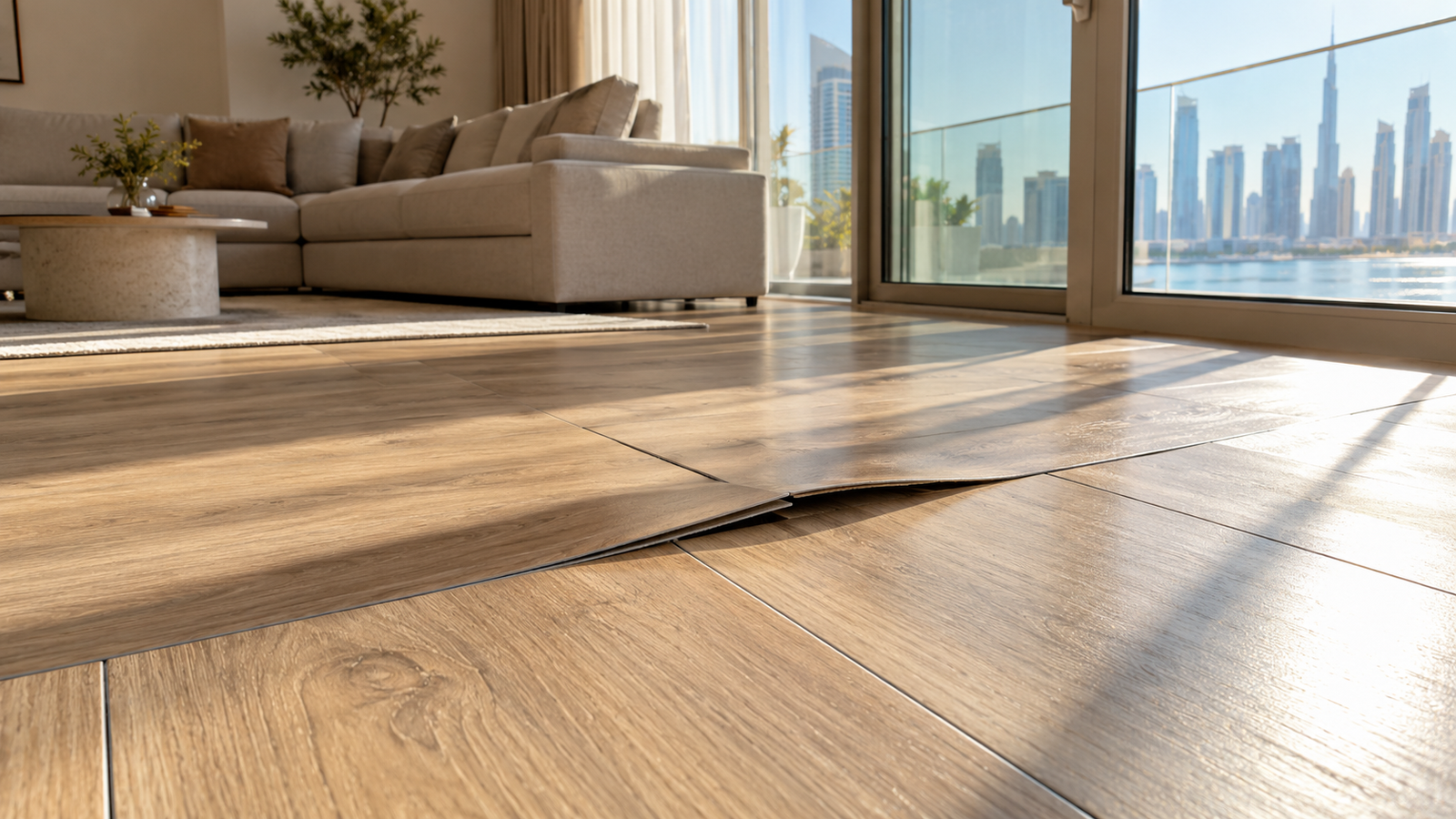

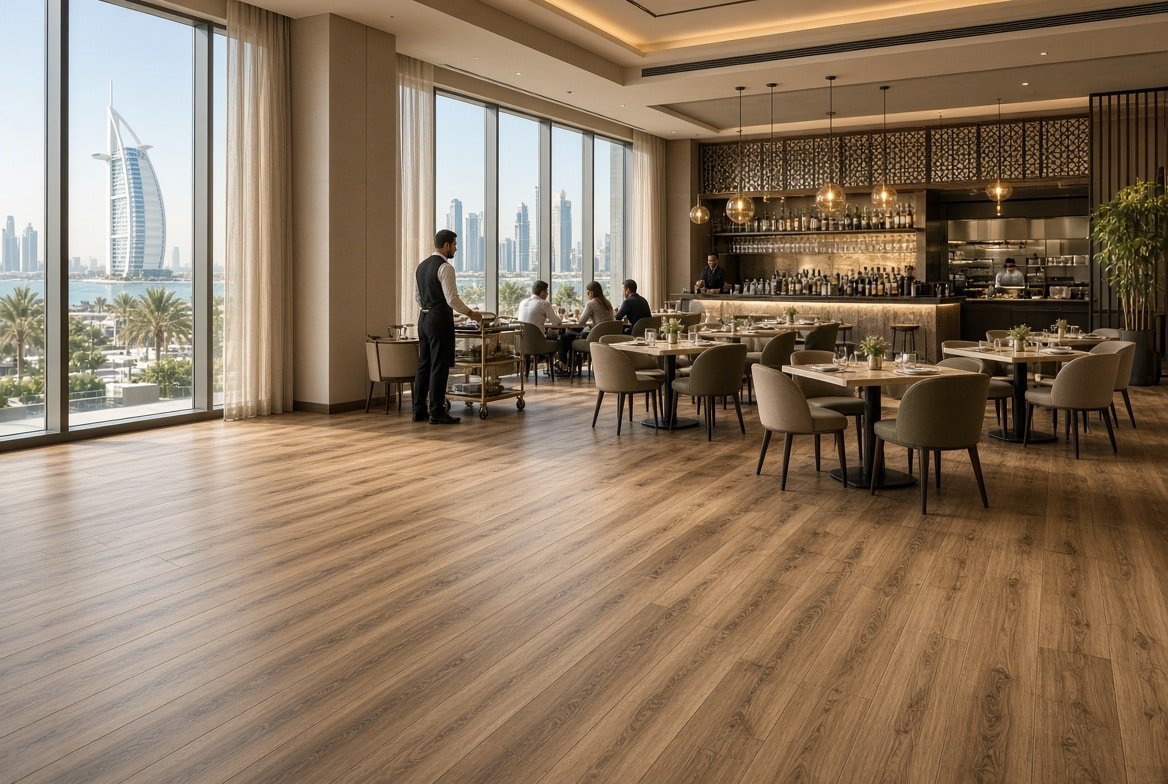
Rental properties put flooring through a different kind of stress than a home you live in yourself. Tenants move in and out, furniture gets dragged across rooms during moves, cleaning standards vary from one occupant to the next, and landlords rarely get much notice before they need the unit turnaround-ready for the next lease. Flooring that looks great on day one but can not survive a few tenant cycles quickly turns into a recurring repair bill.
For landlords and property managers across Dubai, the right flooring choice isn’t just about appearance , it’s about minimizing maintenance costs, reducing turnover downtime between tenants, and protecting rental yield over the long term. This guide covers the best flooring options for rental properties in Dubai, what to prioritize as a landlord, and how to avoid the flooring mistakes that quietly eat into rental income.
A homeowner chooses flooring based on personal taste and how long they plan to live somewhere. A landlord needs to think in terms of tenant cycles, maintenance costs, and resale or re-letting value. That changes the priorities significantly:
A flooring choice that ticks these boxes protects rental income by reducing the cost and downtime of maintaining the property between tenancies.
SPC (stone plastic composite) flooring is one of the strongest choices for rental units, largely because it’s built to survive exactly the kind of wear-and-tear cycle that rental properties go through.
Why SPC works well for rental properties:
Vinyl flooring offers a softer, more comfortable underfoot feel than SPC, which can be a strong selling point for landlords targeting tenants who prioritize comfort, such as families or long-term residential renters.
Why vinyl works well for rental properties:
Laminate flooring gives landlords a way to upgrade a rental unit’s appearance with an authentic wood-look finish, without the higher cost of engineered wood useful for improving a property’s rental appeal on a tighter renovation budget.
Why laminate can work for rental properties:
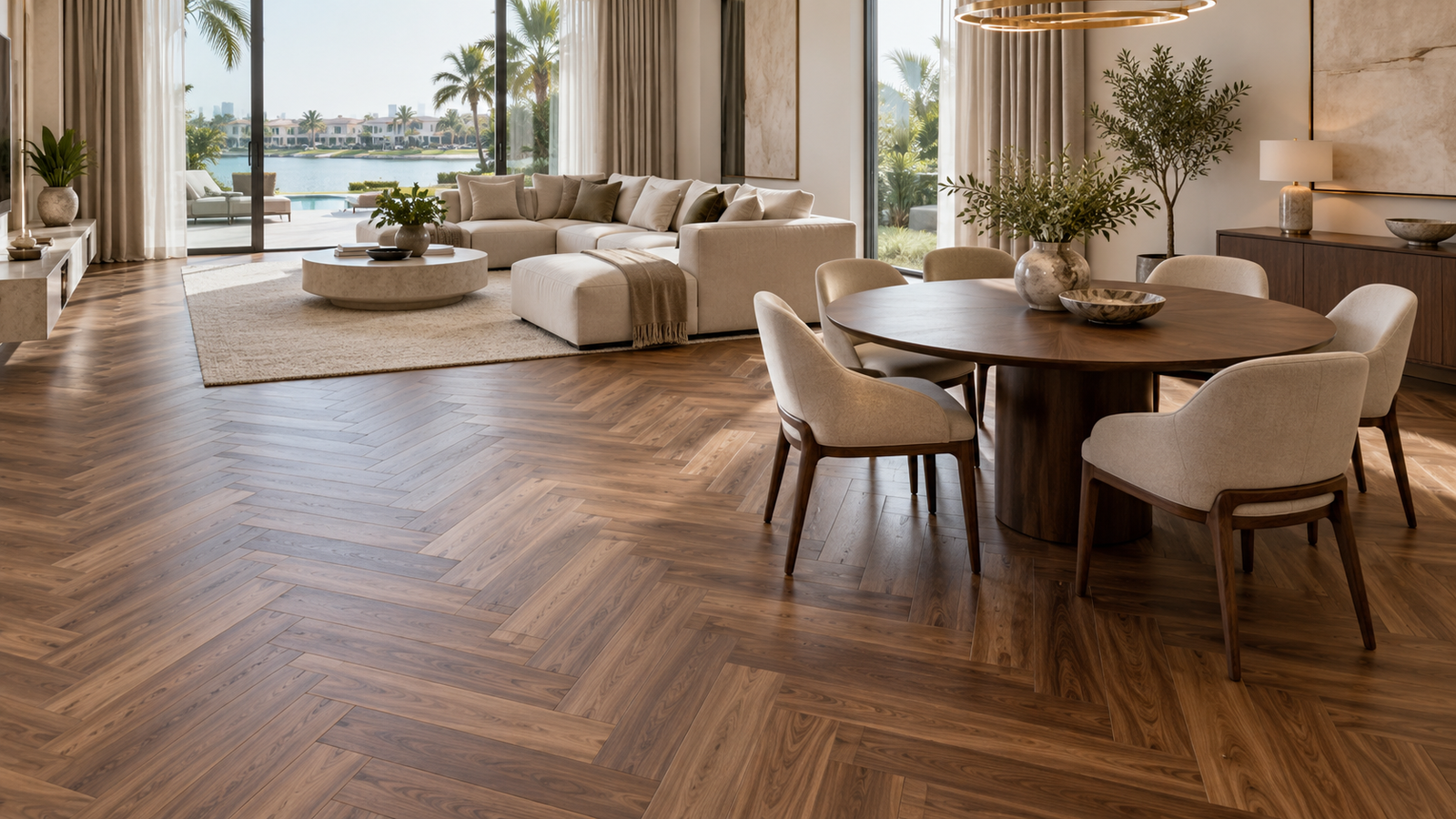
For landlords targeting the higher end of the Dubai rental market premium apartments, villas, or short-term luxury lets engineered wood flooring adds a genuine, high-value finish that can support higher rental pricing and stronger tenant retention.
Why engineered wood can work for premium rentals:
Dubai’s heat and humidity create specific risks for rental flooring that landlords in more temperate markets rarely have to think about. These conditions matter even more in rental units, since tenants aren’t always as attentive to ventilation, spill cleanup, or maintenance as an owner-occupant might be:
Because landlords can’t control how carefully each tenant maintains a unit, choosing flooring that performs well even under less-than-ideal conditions is one of the simplest ways to protect the investment without relying on tenant diligence.
Dubai’s rental market includes everything from long-term residential leases to short-term holiday-home style rentals, and the flooring priorities shift slightly depending on which category a property falls into.
For long-term residential rentals, the priority is usually:
For short-term or holiday-home style rentals, the priority often shifts toward:
In both cases, SPC and vinyl tend to outperform laminate and engineered wood on pure durability and maintenance grounds, though engineered wood can still make sense for premium short-term listings where presentation directly drives nightly rates.
Just as with commercial spaces, many landlords get better long-term value by matching flooring type to each room’s usage rather than using one material throughout the entire unit:
For landlords managing multiple units, small differences in per-square-meter pricing add up quickly. Ask for volume pricing if you’re flooring more than one unit, and compare total project cost — material plus installation — rather than material price alone.
Vacancy periods cost money. Ask directly:
Ask about wear layer thickness and impact resistance specifically in the context of repeated tenant turnover, not just everyday residential use. A floor that’s rated for a single family living in a home long-term may not hold up the same way across three or four tenant cycles in a few years.
Confirm what the warranty covers — waterproofing, wear resistance, installation workmanship — and for how long. For landlords, a strong warranty reduces the risk of unexpected repair costs eating into rental yield.
Ask whether the flooring company offers consistent, itemized pricing across multiple units, and whether they can provide a single point of contact for landlords managing more than one property.
Whether your rental units are in Dubai Marina, JVC, Abu Dhabi, or Sharjah, confirm the flooring company can service each location with the same installation quality, particularly important for landlords with properties spread across different emirates.
It’s tempting for landlords to treat flooring as a fixed cost to minimize, but the numbers usually tell a different story once you factor in the full lifecycle of a rental unit rather than just the upfront invoice.
When landlords calculate cost per year of use rather than cost per square meter upfront, higher-durability materials like SPC frequently come out ahead, even though the initial price per unit may be higher than budget alternatives.
Landlords managing one or more rental properties should be especially cautious of suppliers who don’t understand the realities of rental turnover. Watch for these warning signs:
A supplier that regularly works with landlords and property managers will typically ask about tenancy turnover frequency, portfolio size, and vacancy timelines before recommending a product — because those factors matter just as much as the material itself.
Even the most durable flooring benefits from a consistent maintenance routine during turnover periods. A few simple habits go a long way toward protecting the investment:
What is the best flooring for rental properties in Dubai?
SPC flooring is generally the top choice for rental properties, thanks to its full waterproofing, durability across multiple tenant cycles, low maintenance, and long lifespan, which together help protect rental yield over time.
Is vinyl flooring a good option for rental apartments?
Yes. Vinyl flooring offers a comfortable, quiet, fully waterproof surface that appeals to a wide range of tenants, making it a strong option for bedrooms and living areas in rental units.
How long does rental property flooring typically last?
SPC flooring can last between fifteen and twenty five years with proper installation and maintenance, while vinyl and laminate typically last ten to twenty years, depending on product quality and usage across tenant cycles.
Should landlords use the same flooring throughout the entire unit?
Not necessarily. Many landlords get better long-term value by matching flooring to each room’s needs — for example, SPC in kitchens and bathrooms for waterproofing, and vinyl or laminate in bedrooms for comfort.
How much does it cost to install flooring in a rental property in Dubai?
Costs vary based on material choice and unit size, but landlords managing multiple units can often access volume pricing, so it’s worth requesting a portfolio-based quote rather than pricing units individually.
Can flooring be installed quickly between tenants to reduce vacancy time?
Yes, particularly when working with a supplier that keeps popular flooring ranges in stock locally, allowing installation to be scheduled quickly once a unit becomes vacant rather than waiting weeks for materials to arrive.
Is engineered wood flooring worth it for rental properties?
It can be, particularly for premium or luxury rental units where a higher-end finish supports stronger rental pricing and tenant retention, though it’s generally less practical for high-moisture areas like kitchens and bathrooms.
Does flooring choice differ between short-term and long-term rentals?
Yes. Short-term rentals typically benefit most from extremely durable, low-maintenance materials like SPC or vinyl due to frequent guest turnover, while long-term rentals can prioritize a broader mix of materials since turnover happens far less often.
What flooring maintenance should landlords do between tenants?
Landlords should inspect flooring at every move-out, deep clean thoroughly rather than just surface cleaning, address any minor damage immediately, and keep a small stock of matching material on hand for quick spot repairs before the next tenancy begins.
For landlords in Dubai, flooring isn’t just a design decision — it’s a long-term investment that directly affects maintenance costs, vacancy periods, and how quickly a unit re-lets after a tenant moves out. Choosing durable, fully waterproof materials suited to each room, working with a flooring company experienced in fast turnarounds, and planning for tenant cycles rather than a single owner-occupant all help protect rental yield over time.
The landlords who get the most value out of their flooring investment tend to think a few tenancy cycles ahead rather than focusing only on the unit currently being fitted out. A material that costs slightly more upfront but holds up across five or six tenants, requires minimal repair between move-outs, and photographs well for every new listing will almost always outperform a cheaper option that needs attention every year or two. Treating flooring as part of the property’s long-term asset value, rather than a one-time renovation expense, is ultimately what separates a low-maintenance rental portfolio from one that constantly eats into its own returns.
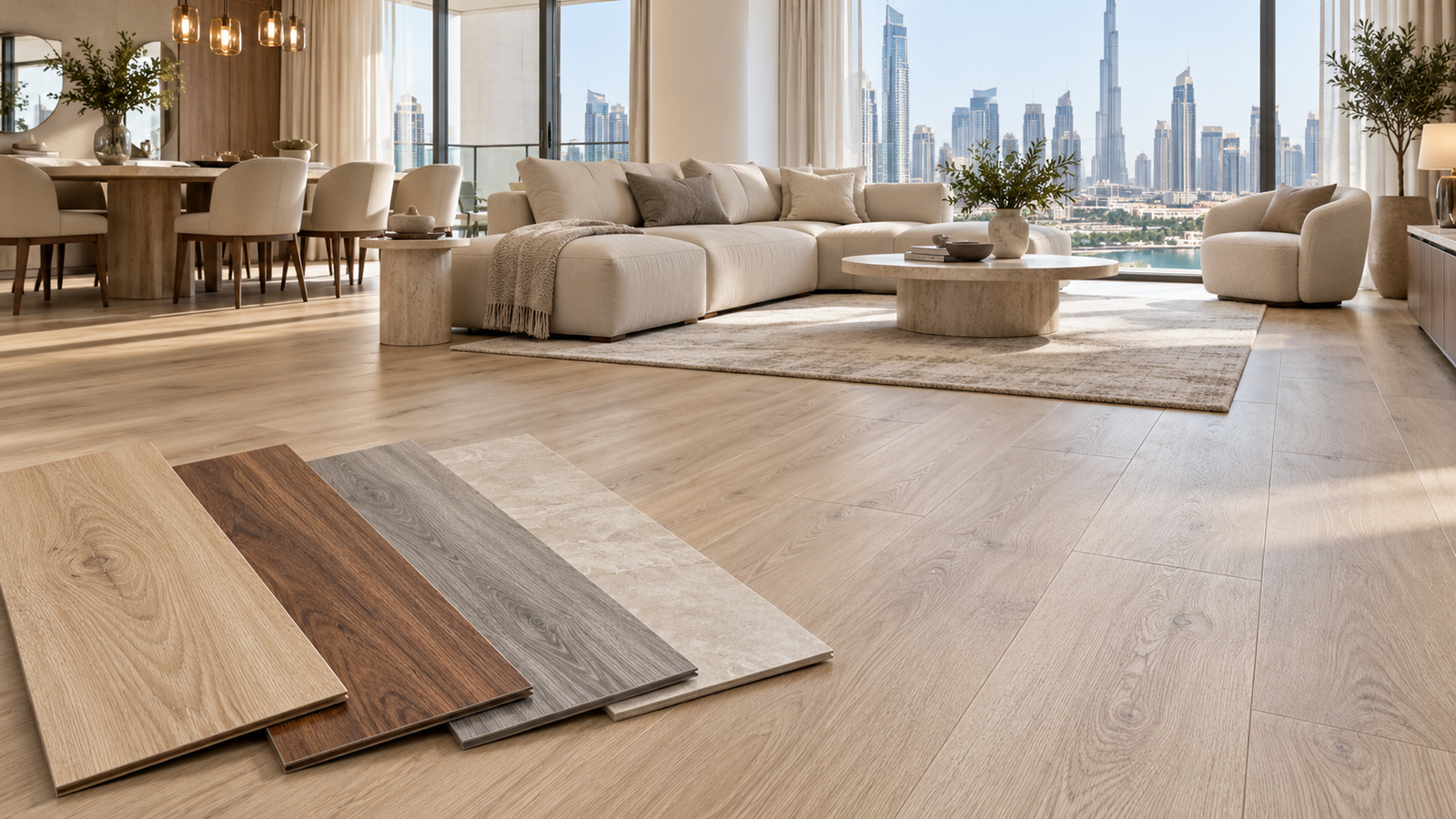
At Urban Floors, we supply and install SPC, vinyl, laminate, and engineered wood flooring for rental properties and landlords across Dubai and the wider UAE, with transparent pricing, fast delivery, and installation teams experienced in quick tenant turnaround projects. If you’re planning a rental property flooring upgrade, get your free consultation and quote today.
Category :
Share :
WhatsApp us