
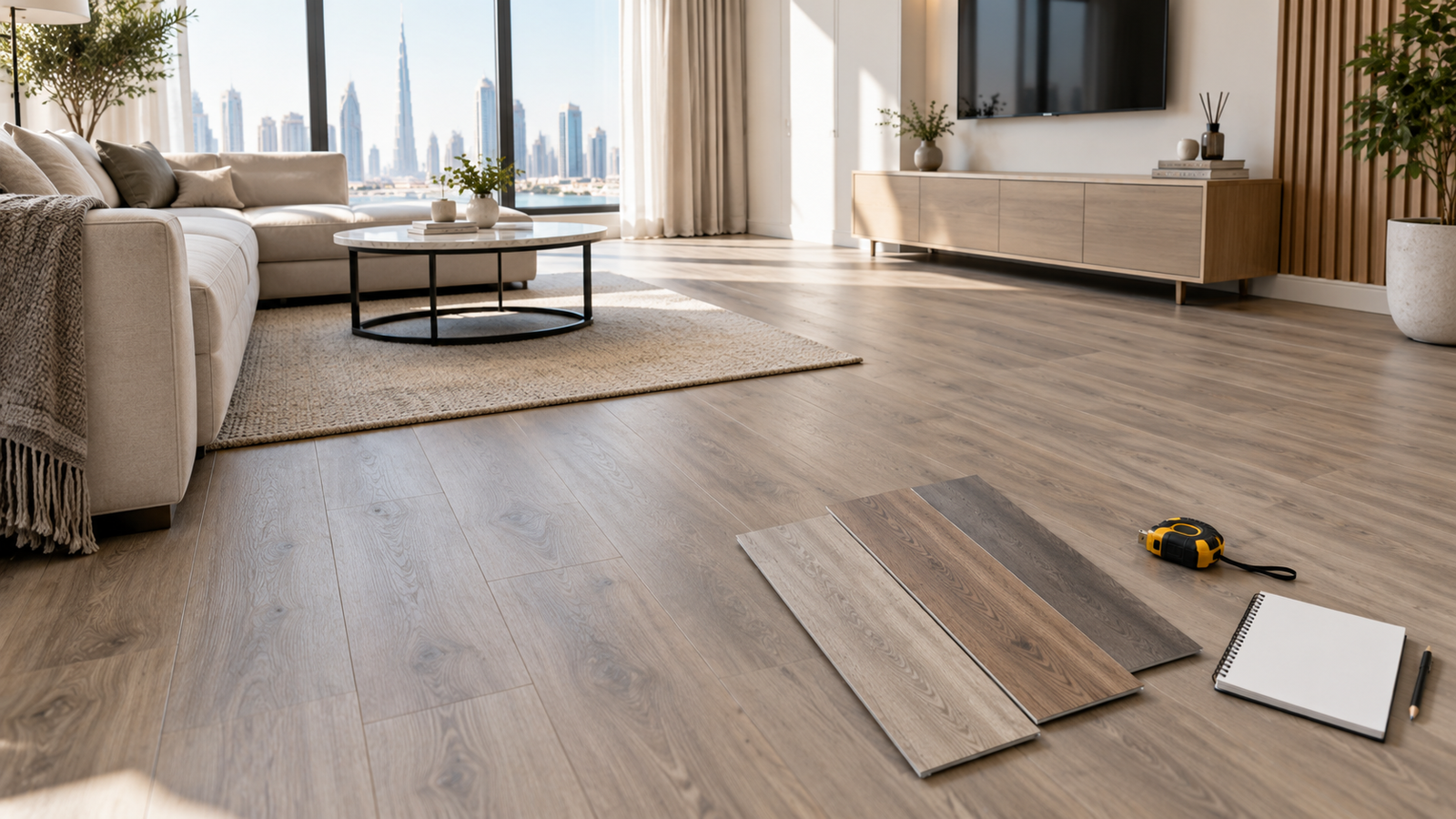
The vinyl flooring price in UAE is quoted per square metre and depends mainly on the type of vinyl, the total thickness, the wear layer, the design, the size of the project and whether installation is included. There is no single fixed price, because a basic roll and a premium plank can look similar in a photo while sitting far apart in cost. The fairest way to compare offers is to ask for an itemised quote that lists the material, trims, underlay, labour and delivery separately. You can see the available ranges on our vinyl and LVT flooring page.
This guide explains every factor behind the cost in plain language. It covers how suppliers build their prices, why two similar products can cost very different amounts, which extra items people forget, how to calculate your own budget and how to avoid the mistakes that make buyers overspend or choose the wrong floor. Prices change with the supplier and the season, so the focus here is on understanding the numbers rather than quoting figures that may be out of date by the time you read them.
Readers who want the short version can use these key points, and the sections after this one explain each of them.
Suppliers across the country usually quote vinyl flooring per square metre, but they do not all quote the same thing. Some give the price of the material only, some give a supply and fit price, and some bundle everything into one figure. This is the first reason why quotes are so hard to compare. A number that looks low may leave out items that another supplier has already included, and a number that looks high may simply be more complete.
The material price covers the planks, tiles or rolls themselves. A supply and fit price covers the material, the labour to lay it and usually the basic trims. When a quote arrives, check which of the two you are reading before you compare it with anything else. If one quote says supply only and another says supply and fit, the figures cannot be placed side by side.
A per square metre figure hides the quantity you actually need to buy. Planks and rolls are cut to fit walls and doorways, so you always order more than the exact floor area. A small bedroom wastes a larger share of material than a big open living room, which means the real cost per usable square metre changes from room to room. This is also why the vinyl flooring price per sqm on a website rarely matches the final invoice exactly.
Several features of the product itself move the price. Understanding them helps you pay for quality where it matters and save where it does not.
Vinyl is a family of products, and each member sits at a different level. Sheet vinyl is usually the simplest format. Planks and tiles, often sold as LVT, which stands for Luxury Vinyl Tile, cost more because the designs are more detailed and the wear layer is stronger. Rigid core boards cost more again because of their dense and stable centre. If you are curious about that last group, our SPC flooring page explains how the rigid core changes the way the floor behaves and why it is priced differently.
Thicker products use more material and are generally more stable and stronger. They also hide small subfloor flaws better. Thickness is one of the most visible differences between a budget range and a good one, so always ask for the total thickness in writing instead of relying on a description such as thick or premium.
The wear layer is the clear protective surface on top. It takes the scratches, scuffs and daily friction from shoes, furniture and pet claws, so it decides how long the floor keeps looking new. A thicker wear layer costs more, and it is worth paying for in busy homes, rentals and commercial spaces. A thin wear layer is the most common reason cheap vinyl flooring in the UAE looks tired after a year or two.
Products with deeper embossing, more realistic printing and many different grain patterns cost more to produce. A plain single tone design is usually cheaper than a plank that avoids repeating the same pattern across a room. Textured finishes that copy real timber often cost more than flat glossy ones, but they also hide dust and small scratches better, which matters in a country where fine sand arrives on every pair of shoes.
Some products have an attached backing layer that adds comfort and sound reduction. It adds to the price of the plank, but it can save you from buying a separate underlay. If your product has no attached backing, add the cost of underlay to your budget, especially in apartments where noise travels to the neighbours below.
Well established brands and products with clear testing and warranty terms tend to cost more. A strong warranty is only useful if it is clear about what is covered, so read the conditions and not only the number of years. Always ask whether the warranty applies to home use or commercial use, because the two are often treated differently.
Rather than guessing at numbers, it is more useful to understand what you get from each type. The table below shows the usual differences without any fixed prices, since exact rates change with supplier and time.
| Type | Typical use | Cost level | Main point to know |
|---|---|---|---|
| Sheet vinyl | Clinics, laundry rooms, simple kitchens | Usually lower | Needs a very smooth subfloor |
| Glue down planks and tiles | Shops, offices, busy homes | Medium to higher | Solid feel, but removal is harder |
| Click planks and tiles | Apartments, villas, rentals | Medium | Fast to fit and easy to replace |
| Rigid core boards | Living areas, kitchens, large open spaces | Medium to higher | Very stable in heat |
When people ask about LVT flooring price, they are often really asking about the installation method. A glue down floor needs adhesive and a very well prepared subfloor, so the labour is more careful and usually costs more per square metre. A click floor floats over the subfloor, which is quicker and often cheaper to fit, though the planks themselves may cost slightly more. For commercial spaces that see heavy trolleys and constant traffic, glue down can still be the better long term choice even with the higher starting cost.
The product is only half of the story. The shape and condition of your space can change the final cost as much as the vinyl you choose.
Larger open rooms are more efficient to cover, because there are fewer cuts and less waste. Small rooms with many corners, doorways and built in units create more offcuts. Most installers add a waste allowance, often around ten percent, and complex layouts need more.
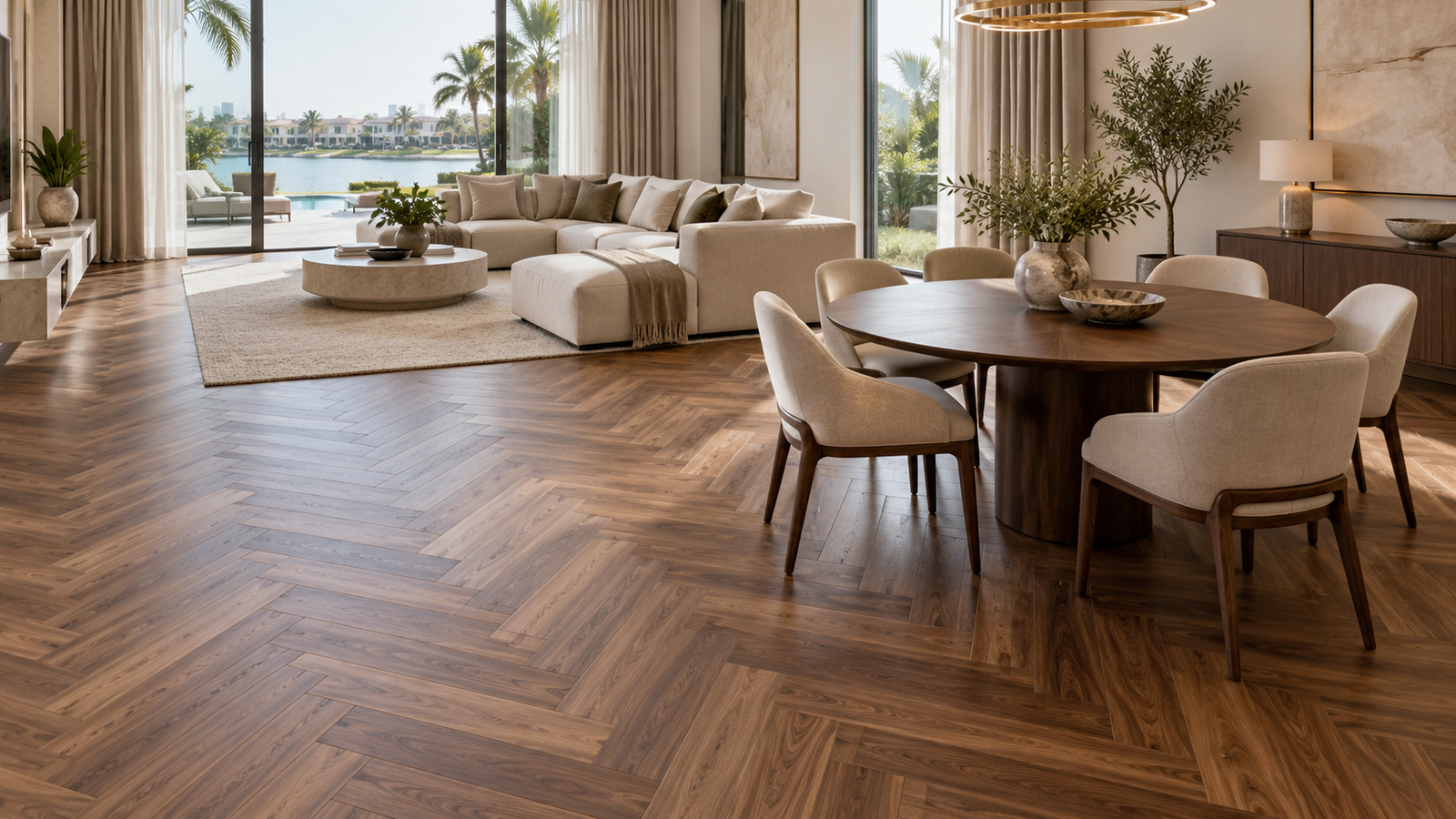
A straight plank layout is the quickest and cheapest to install. Diagonal layouts and herringbone patterns need more material and more labour, because each piece is cut and placed with care. If you love a pattern, plan for a higher budget, or use it in one main room and a simple layout everywhere else.
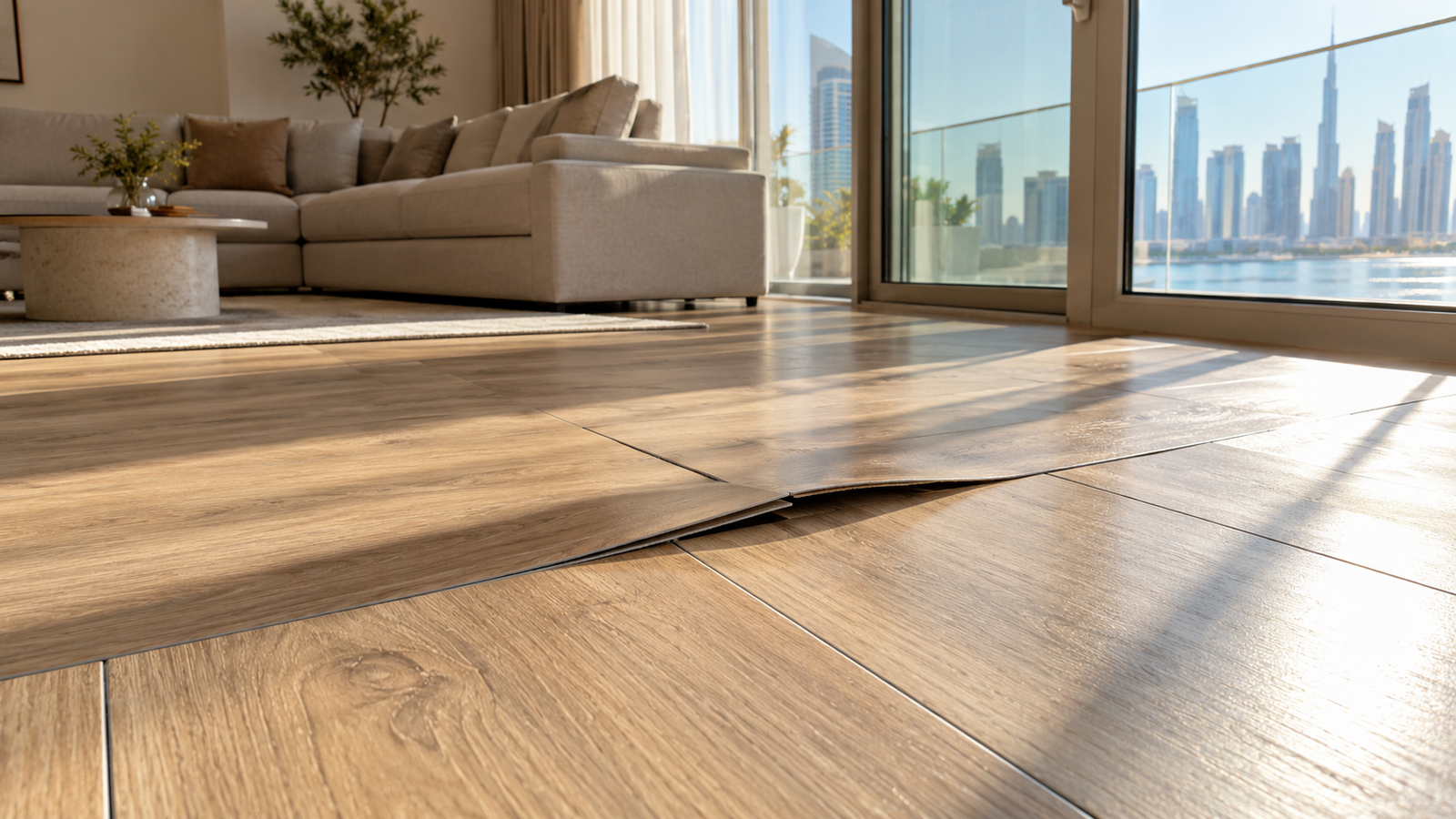
Vinyl needs a clean, dry and reasonably flat subfloor. Thinner products show every bump and dip, and trapped moisture can cause trouble even under a waterproof plank. If your floor has large dips, loose screed or old adhesive, the preparation adds time and cost. In older buildings this can be a large part of the project, so a site visit before pricing is very important.
Stairs take far more labour per square metre than flat floors, because each step is cut, fitted and finished by hand. Skirting boards, door strips and threshold trims are separate items that add to the total. These small parts are easy to forget when you are focused on the main floor area.
Apartment buildings often limit working hours, require lift booking and ask for deposits or approval letters. These rules can slow the job and add small costs. Always check them with building management before you confirm a schedule.
The vinyl flooring installation cost can be quoted as a separate rate per square metre or included in a supply and fit price. Either way, you should know exactly what the work covers. Our page on professional flooring installation explains what a complete service includes.
A complete installation normally covers checking and cleaning the subfloor, minor levelling, laying underlay where needed, fitting the product with correct expansion gaps for floating floors, cutting around doors and fixed items, and fitting skirting or trims. It may or may not include removing the old floor, moving furniture, major levelling and disposal of waste, so ask about each one separately.
Acclimatisation also matters. Planks should rest in the room for a day or two before laying so they match the room temperature. A careful team plans for this, while a rushed job skips it and risks small gaps or lifting later. That one step costs almost nothing, and it is a good sign when an installer mentions it without being asked.
Many unpleasant surprises come from items that never appeared in the first quote. Check this list before you accept any offer.
Ordering a small extra box for future repairs is a smart habit. Colours can vary slightly between batches, and a spare box from the same batch lets you replace a damaged plank years later without a visible difference.
You can build a rough budget yourself in a few steps, which also makes it easier to check whether a quote makes sense.
First, measure the floor area of each room in square metres and add them together. Second, add a waste allowance, often around ten percent for simple rooms and more for patterns or many corners. Third, multiply that total area by the material price per square metre quoted by the supplier. Fourth, add the installation rate per square metre, applied to the actual floor area. Fifth, add trims, skirting, underlay, delivery and any preparation work.
For example, if your rooms add up to 100 square metres and you allow ten percent for waste, you would order material for 110 square metres and pay installation on the 100 square metres of actual floor. Replace the rates with the figures from your own quotes, and the total becomes clear. Doing this simple sum before you speak to suppliers gives you confidence, because you can quickly see when a quote leaves something out.
Most buyers want to know whether vinyl is good value compared with the alternatives. Cost should be judged over the life of the floor and not only at the start, since replacement, repairs and cleaning all count.
Tiles are very durable, but they are slow and messy to install, and the labour adds to the total. Grout also needs regular cleaning, and a cracked tile is difficult to replace. Our article on vinyl flooring and tiles in the UAE looks at the cost side in detail, which helps when you decide which rooms deserve which material.
Laminate is often cheaper to buy, and it looks excellent in dry rooms such as bedrooms and living areas. Its wood fibre core is sensitive to moisture, so in kitchens and humid spaces vinyl can save you from early replacement. You can view our laminate flooring range if you want to see both materials side by side. For a wider look at how laminate compares with real timber, read our guide to laminate versus hardwood cost in the UAE.
Rigid core boards usually cost more than standard flexible vinyl, but they stay flat over small subfloor flaws and hold their shape better in heat. Another close relative is WPC, which stands for Wood Plastic Composite and has a softer, more cushioned core. The SPC and WPC comparison explains how these two differ, which helps you judge whether the extra cost of a rigid product is worth it for your rooms.
Solid and engineered timber usually sit at a much higher price, and they need more care in a humid climate. Our guide to wooden flooring prices in Dubai shows how they compare. Many owners choose vinyl for most of the home and keep real timber for one feature room, which keeps the total budget under control.
The right budget depends on the kind of space you are covering, because each one has different priorities.
Villas have a lot of floor area, staircases and long corridors. The large area gives you better efficiency on waste, but stairs and patterns raise labour. Choosing a good wear layer matters because one floor often runs through many rooms and takes daily family use. Our page on vinyl flooring for villas in Dubai gives helpful background for larger homes.
Apartments are smaller, so waste and fixed costs take a bigger share of the total. Sound reduction is important, so a product with an attached backing is worth the extra. We compare both property types in our article on flooring choices for villas and apartments.
Landlords need a floor that survives several tenants and can be refreshed quickly. A mid range click product with a decent wear layer often gives the best balance, because a damaged plank can be replaced without redoing the room. Our guide to the best flooring for rental properties in Dubai explains how to balance cost and durability across several units.
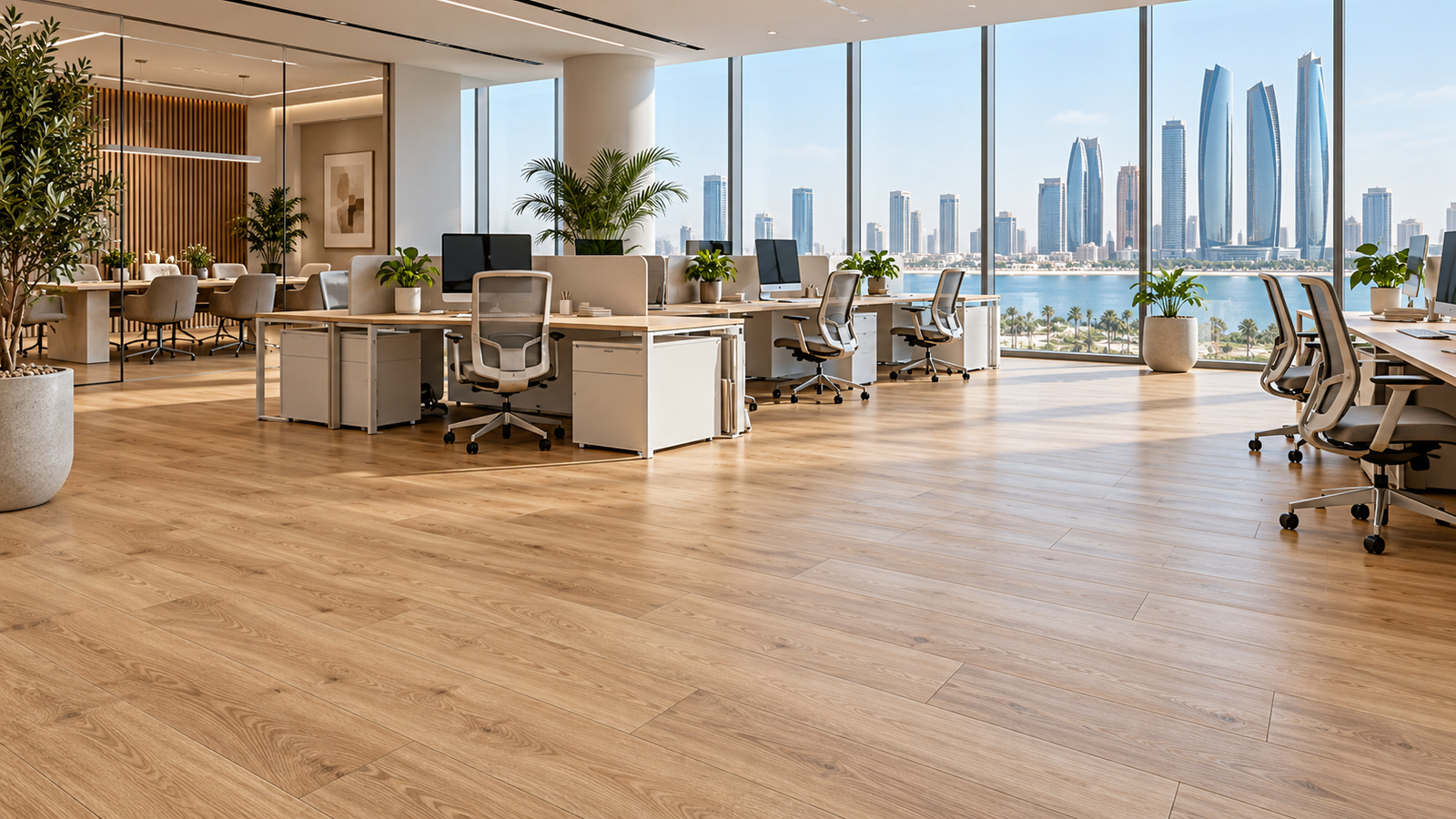
Commercial spaces need a thicker wear layer and a commercial warranty, which raises the price per square metre but lowers how often the floor must be replaced. For layouts and durability levels, read our article on office flooring solutions in the UAE. For food and drink businesses, our guide to the best flooring for restaurants and cafes covers slip resistance and easy cleaning, both of which affect which product is worth paying for.
Vinyl gives the strongest return in rooms where other materials struggle. Kitchens, bathrooms and laundry rooms are the clearest examples, because the planks do not soak up water and a spill will not cause the swelling you see with wood based boards. For a closer look at these rooms and the materials that suit them, read our guide to waterproof flooring for bathrooms and kitchens.
Vinyl also earns its price in sunny rooms. Lighter shades tend to stay more comfortable underfoot than very dark ones, and good quality products resist fading better than cheap ones. If your living room faces south or west, our article on choosing flooring that stays cool in summer heat will help you pick a shade that works with your windows.
Cheap vinyl is worth it only when the room, the use and the time frame match the product. In a guest room, a storage room or a short term rental, a budget range can be sensible. In a living room, hallway or shop, a thin wear layer will show scratches and wear patterns early, and replacing the floor costs far more than the saving you made at the start.
A useful test is to ask how many years you expect the floor to last, then divide the total cost by that number. A slightly higher price that lasts much longer is usually the cheaper choice over time. Care matters too, and our guide to maintaining vinyl flooring in the Dubai climate shows how simple habits protect your investment. If you decide to look for cheap vinyl flooring in the UAE, ask to see physical samples and check the wear layer before you commit.
A good vinyl flooring quote protects both you and the supplier, because it makes the scope clear. Follow these steps to get quotes you can trust and compare.
Ask for the same specification from every supplier. That means the same type, the same total thickness and the same wear layer thickness. Without this, you are comparing different products. Ask for a site visit, because remote quotes cannot account for subfloor condition, stairs or access rules. Ask for the quote in writing, with each item listed separately, and check which items are included and which are not.
Look at the warranty conditions and ask who is responsible if a problem appears after installation. Finally, be careful with prices far below every other quote. A very low price often means a thin wear layer, a weak joint system or extras that appear after the work starts. Our guide to flooring mistakes to avoid when renovating in the UAE lists the errors that cause the most budget surprises.
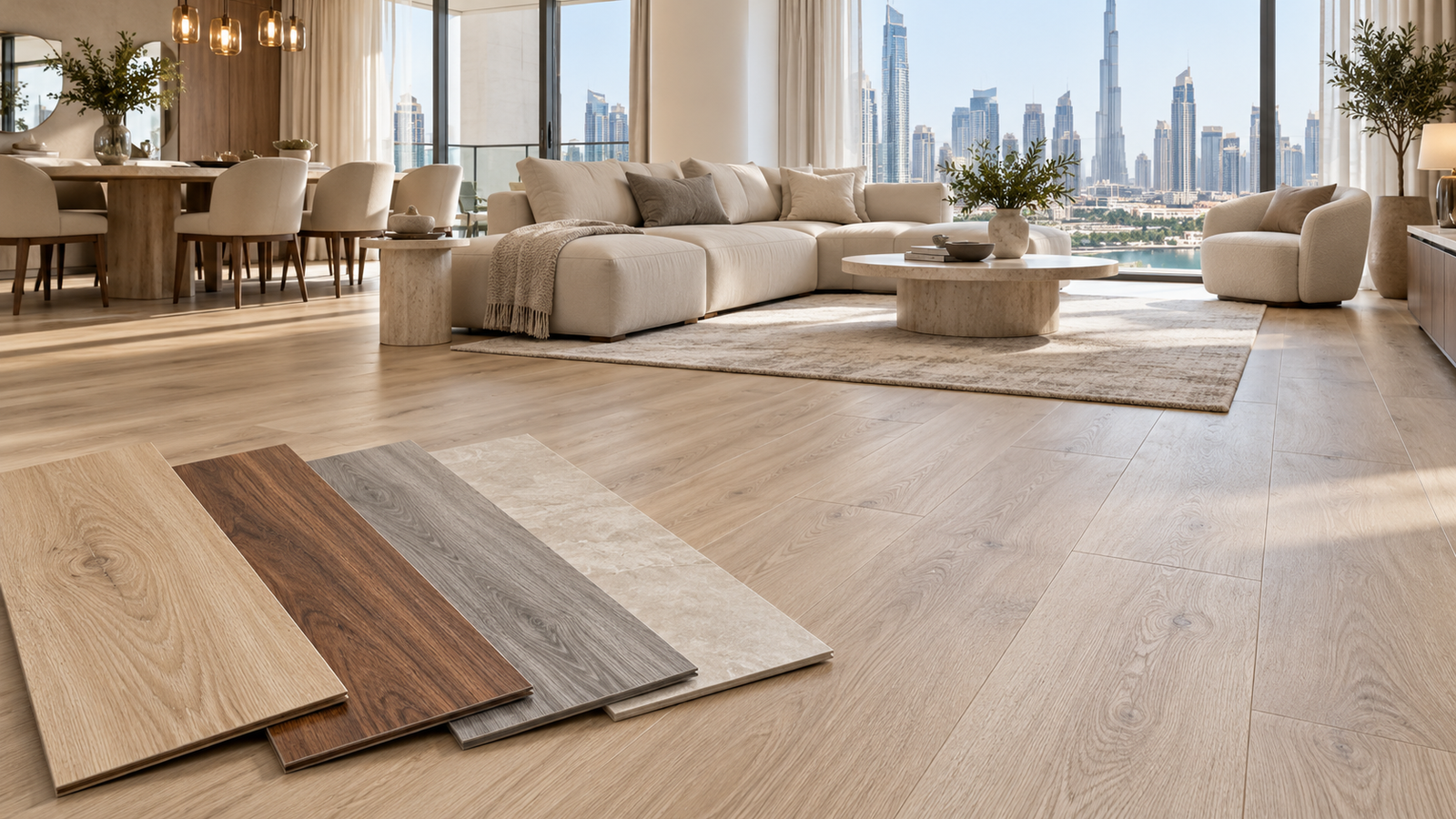
Price is only one part of the decision. The supplier affects the product quality, the delivery schedule, the installation and the support you receive later. Ask to see physical samples at home in morning and evening light, get the thickness and wear layer in writing, confirm that enough stock from the same batch is available, and ask whether installation and aftercare come from the same team. Local experience also counts, because a supplier who has worked on UAE homes and offices understands the heat, the humidity and the building requirements. You can see how we approach projects on our page about the best flooring company in Dubai.
The price per square metre depends on the type of vinyl, thickness, wear layer, design and project size, so there is no single fixed figure. Ask for an itemised quote that shows material, trims, underlay and labour separately. Our flooring cost guide for Dubai explains how to build a realistic budget.
Suppliers sell different qualities, and their quotes often include different items. One may quote material only while another includes installation and trims. Compare the same thickness and wear layer, and check exactly what each quote covers.
Vinyl is often cheaper to install because it is quicker and needs no mortar or grout. Tiles can last very long, though, so compare the full cost including labour and the time the job takes.
Not always. Basic laminate is often cheaper to buy, but vinyl can cost less over time in kitchens and humid rooms because it does not swell with moisture. The better choice depends on the room.
Installation is usually priced per square metre or included in a supply and fit rate. The cost depends on the layout, subfloor condition, stairs and building rules. A site visit gives the most accurate figure.
Glue down vinyl usually needs more careful preparation and labour, so the fitting cost is often higher. Click vinyl is quicker to lay, though the planks may cost slightly more. Commercial spaces often prefer glue down for heavy traffic.
Many products have an attached backing, so a separate underlay is not needed. If yours has none, underlay improves comfort and reduces noise, especially in apartments.
It can be fine for light use rooms, but it often has a thin wear layer and a weaker joint system. Check samples and warranty terms before buying, and avoid it for busy areas.
Many suppliers offer a free site visit and quote, and you should ask for one in writing. A visit lets the specialist check the subfloor and measure accurately, which gives a quote you can rely on.
Now that you know what shapes the vinyl flooring price in UAE, the best next step is to get a real quote based on your own rooms. Measure the area you want to cover, choose two or three sample designs and note which rooms have heavy use. Then request a site visit so a specialist can check the subfloor and prepare a written, itemised quote that covers material, trims, delivery and fitting. To book that visit and see samples in person, get in touch through the Urban Floors home page.
Category :
Share :
WhatsApp us