
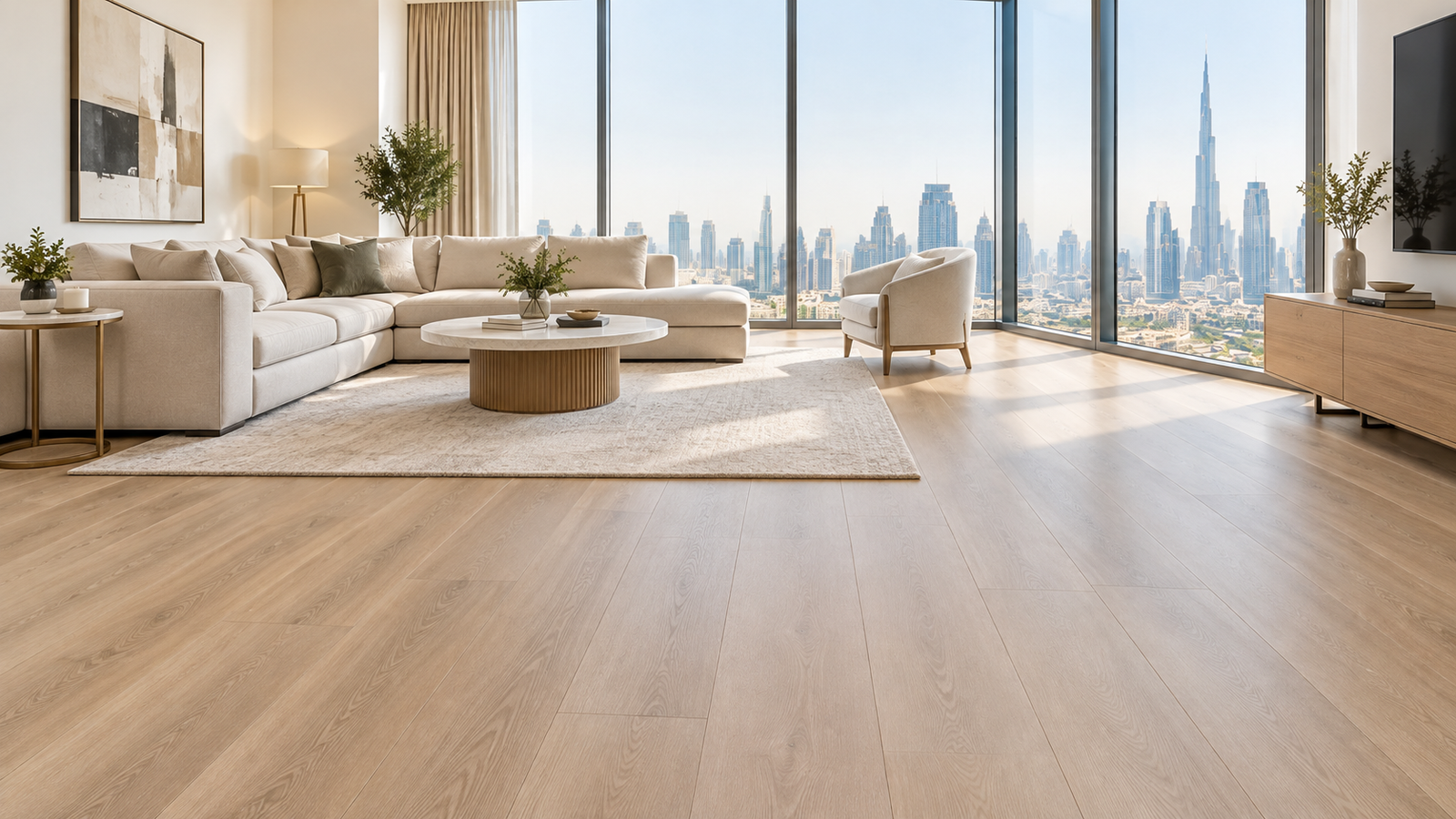
Choosing a floor in this city is not the same as choosing one anywhere else. Summer heat, humidity near the coast, fine desert sand and constant air conditioning all test a floor in ways that a showroom sample never shows. That is why vinyl flooring Dubai homeowners, landlords and business owners keep choosing has become one of the most requested options in the market. It looks good, it handles water well and it is far kinder to your budget than many traditional materials. This guide explains the main types, where each one works best, what shapes the price, how installation really goes and how to find a supplier you can trust before you spend any money.
Vinyl flooring is a synthetic floor covering made mainly from PVC, built in several layers and finished with a printed design that copies wood, stone, concrete or tile. Years ago, vinyl had a reputation for looking cheap and peeling at the edges. Modern products are very different. The printing is detailed, the surface is textured to feel like real grain, and the protective top layer is strong enough for busy family homes and commercial spaces.
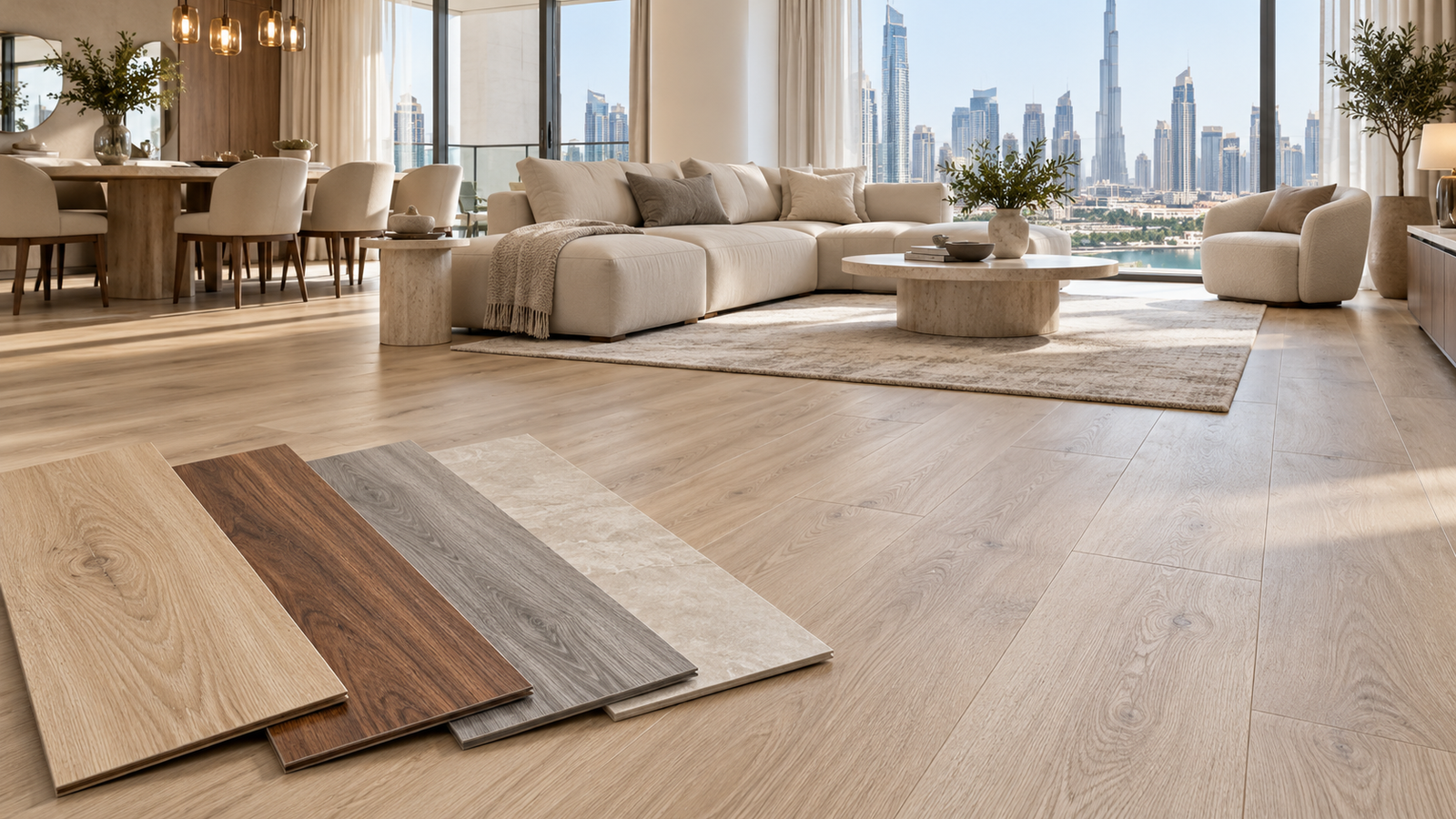
The word vinyl covers a wide family of products, and buyers often get confused because shops use many different names. You will hear about sheet vinyl, planks, tiles, rigid core boards and luxury vinyl tiles. LVT flooring, which stands for Luxury Vinyl Tile, is the most common name for the plank and tile format that most people picture when they imagine a modern vinyl floor. You can see the available options on our vinyl and LVT flooring page.
A close relative is rigid core vinyl, usually called SPC, which stands for Stone Plastic Composite. It has a dense limestone based core that makes the plank firmer and more stable than standard vinyl. If you want to compare the two before deciding, our SPC flooring page explains how the rigid core changes the way the floor behaves.
Almost every vinyl plank has the same basic structure. The top layer is a clear wear layer that protects against scratches, scuffs and stains. Under it sits a printed decorative film that creates the look of oak, walnut, marble or concrete. The core comes next, and its material depends on the product type. Many planks finish with a backing layer that adds grip, comfort and some sound reduction.
People who switch to vinyl usually give the same reasons. The floor is comfortable to walk on, it is easy to wipe clean, it does not mind spills and it can be installed much faster than tile or solid timber. For landlords and business owners, that speed means less time without income. For families, it means a fresh looking home without weeks of dust and noise.
Not every vinyl product suits every room, so it helps to know the main formats before you start asking for quotes. Shops may use slightly different names, but the products fall into four broad groups.
Sheet vinyl comes in large rolls and is cut to size on site. Because there are very few joints, it works well in wet areas and in places that need a hygienic surface, such as clinics, kitchens and laundry rooms. The designs are simpler than plank formats, and the installation depends heavily on a very smooth subfloor.
This is the format most homeowners choose. Planks copy timber and tiles copy stone or concrete, and both can be glued down or fitted with a click system. A glued installation gives a very solid feel and suits commercial spaces, while a click installation floats over the subfloor and is quicker for homes. Good LVT flooring has a convincing surface texture and a wear layer strong enough for years of daily use.
Rigid core boards have a dense and firm centre that does not bend easily. They stay flat over small bumps in the subfloor and hold their shape when temperatures change, which is helpful in a climate where rooms swing between hot and cool through the day. They also feel more solid underfoot than flexible vinyl.
Some products use a foamed core that feels warmer and softer. Families sometimes prefer these for bedrooms and play areas. The trade off is that soft cores can dent under heavy furniture, so they are better for lighter use areas than for busy living rooms or shops.
A simple rule works well. Choose a rigid or glued product for large open areas and busy spaces, a sheet or fully sealed product for wet rooms, and a softer product for quiet bedrooms. When a salesperson recommends one type for every room in your home, ask why. A good adviser can explain the choice room by room.
Dubai asks a great deal from a floor, and vinyl handles several of these demands better than most alternatives. Looking at each condition on its own makes it easier to see where vinyl helps and where you still need to take care.
Large windows and sliding doors let in strong sun, and some floors become warm underfoot or slowly lose colour near the glass. Lighter shades tend to stay more comfortable than very dark ones, and good quality vinyl resists fading better than cheap products. Blinds or window film help any floor near south or west facing glass. For more on this, see our guide on choosing flooring that stays cool in summer heat.
Moisture in the air can lift the edges of some boards, and sand acts like sandpaper under shoes. Vinyl has a sealed surface and does not absorb moisture the way wood fibre does, so it stays stable through humid months. The wear layer takes the abuse from grit, and regular sweeping keeps it in good shape. Our article on flooring that resists humidity and desert sand covers the wider picture for UAE homes.
Waterproof vinyl flooring is often the main reason people choose the material. The planks do not soak up water, so a spilled pot, a leaking dishwasher hose or a wet bathroom floor will not cause the swelling you see with wood based boards. This is a real comfort in apartments, where a leak from the unit above can reach your floor without warning.
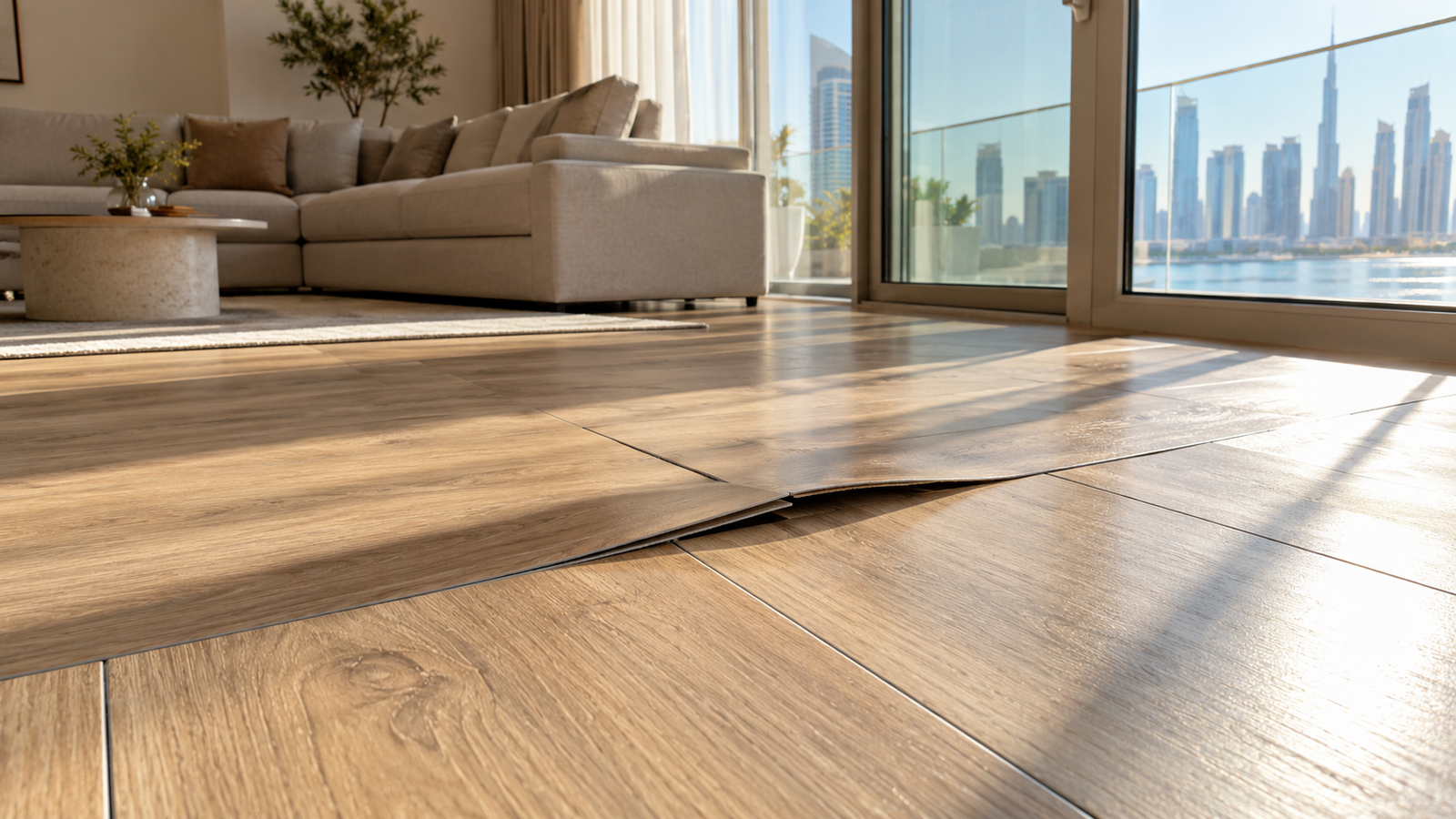
It is worth being honest about the limits. The plank is waterproof, but water can still travel through open edges and gaps to the subfloor below. Standing water should be wiped up reasonably quickly, and wet rooms need careful edge sealing during installation. For a closer look at these rooms and the materials that suit them, read our guide to waterproof flooring for bathrooms and kitchens.
Different properties put different demands on a floor. A large family villa, a small rental apartment and a busy cafe all need something slightly different, so it helps to think about your own space before you choose.
Villas have large living areas, long corridors, staircases and several bedrooms, which adds up to a lot of floor. Using one vinyl product across the whole ground floor gives a calm and continuous look, and the surface handles children, guests and pets without complaint. Our page on vinyl flooring for villas in Dubai goes deeper into layouts, colours and the thickness levels that suit bigger homes.
Apartments bring a different concern, which is sound. Footsteps travel through concrete slabs, and neighbours below will notice a hard floor with no cushioning. A vinyl plank with an attached backing layer reduces this noise, and some buildings also ask owners to use an acoustic underlay. Always check your building rules and service charge conditions before you order, because some communities need written approval for any floor change.
Landlords need a floor that survives a changing set of tenants and can be refreshed quickly between leases. Vinyl suits this well because a damaged plank can often be replaced without redoing the room, and installation is fast. Our guide to the best flooring for rental properties in Dubai explains how to balance cost and durability when you manage more than one unit.
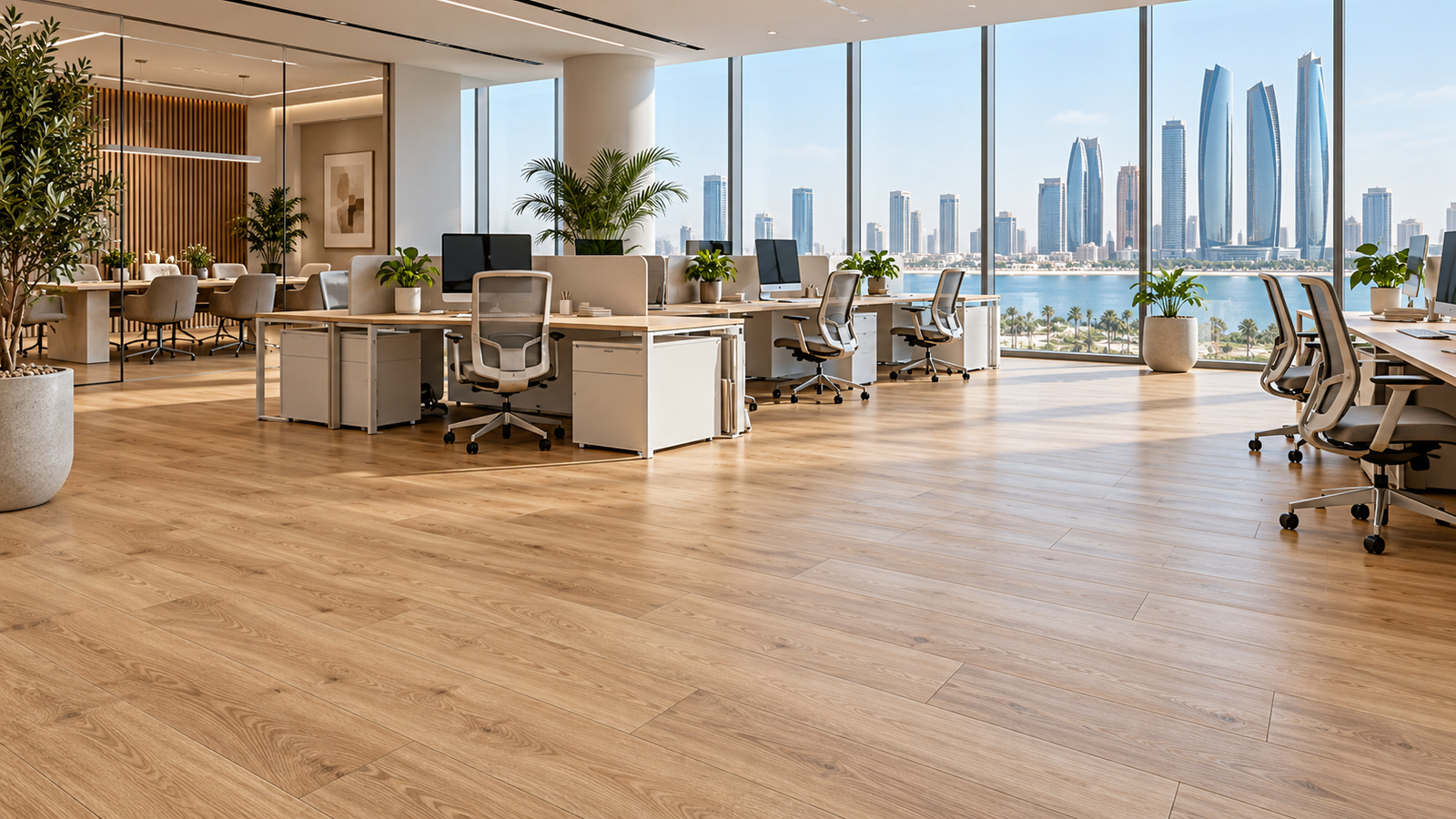
Commercial spaces are harder on floors than homes. A cafe faces spilled drinks, trolley wheels and constant foot traffic from opening to closing, while an office needs a floor that stays quiet and professional for years. Glued vinyl with a strong wear layer is a common choice because it is easy to mop, lays quickly and keeps closure time short. Slip resistant finishes are worth asking about for kitchens and entrances. For ideas on durability levels and layouts, see our article on office flooring solutions in the UAE. Commercial buyers should always ask for the wear layer rating that matches their traffic level, because a home grade plank will wear out much faster in a busy shop.
Buyers rarely look at vinyl alone. Most compare it with ceramic or porcelain tile, with laminate and with rigid core boards before making a decision. The table below gives a quick view of everyday differences.
| Feature | Vinyl (LVT) | Tiles | Laminate | Rigid core (SPC) |
|---|---|---|---|---|
| Water resistance | Very high | Very high | Moderate | Very high |
| Feel underfoot | Comfortable | Cold and hard | Firm | Firm |
| Installation speed | Fast | Slow and messy | Fast | Fast |
| Stability in heat | Good | Very high | Good | High |
| Easy to replace a damaged piece | Yes | Difficult | Sometimes | Yes |
Tiles remain a strong choice for some areas. They are very durable and handle water well, but they feel cold, the grout needs regular cleaning and replacing a cracked tile is a messy job. Vinyl gives a warmer and quieter surface and a much quicker installation. Our comparison of vinyl flooring and tiles in the UAE looks at the cost side in detail, which helps when you are deciding which rooms deserve which material.
Laminate has a wood fibre core, so moisture is its main weakness. It can look excellent in dry bedrooms and living areas, and it is often cheaper at the start. If you want to see it side by side with vinyl, our laminate flooring range is available for viewing. Many owners end up using laminate in dry rooms and vinyl in kitchens, bathrooms and busy family areas.
Almost every buyer asks about vinyl flooring price in UAE early in the process, and the honest answer is that it varies widely. Several factors push the number up or down, and understanding them makes it much easier to compare quotes fairly.
The first factor is the product itself. Thicker planks with a thicker wear layer cost more to produce, and so do planks with deeper surface texture and more realistic printed designs. The type of core matters too, because rigid core boards usually cost more than basic flexible vinyl. An attached backing layer adds to the price but saves you from buying a separate underlay.
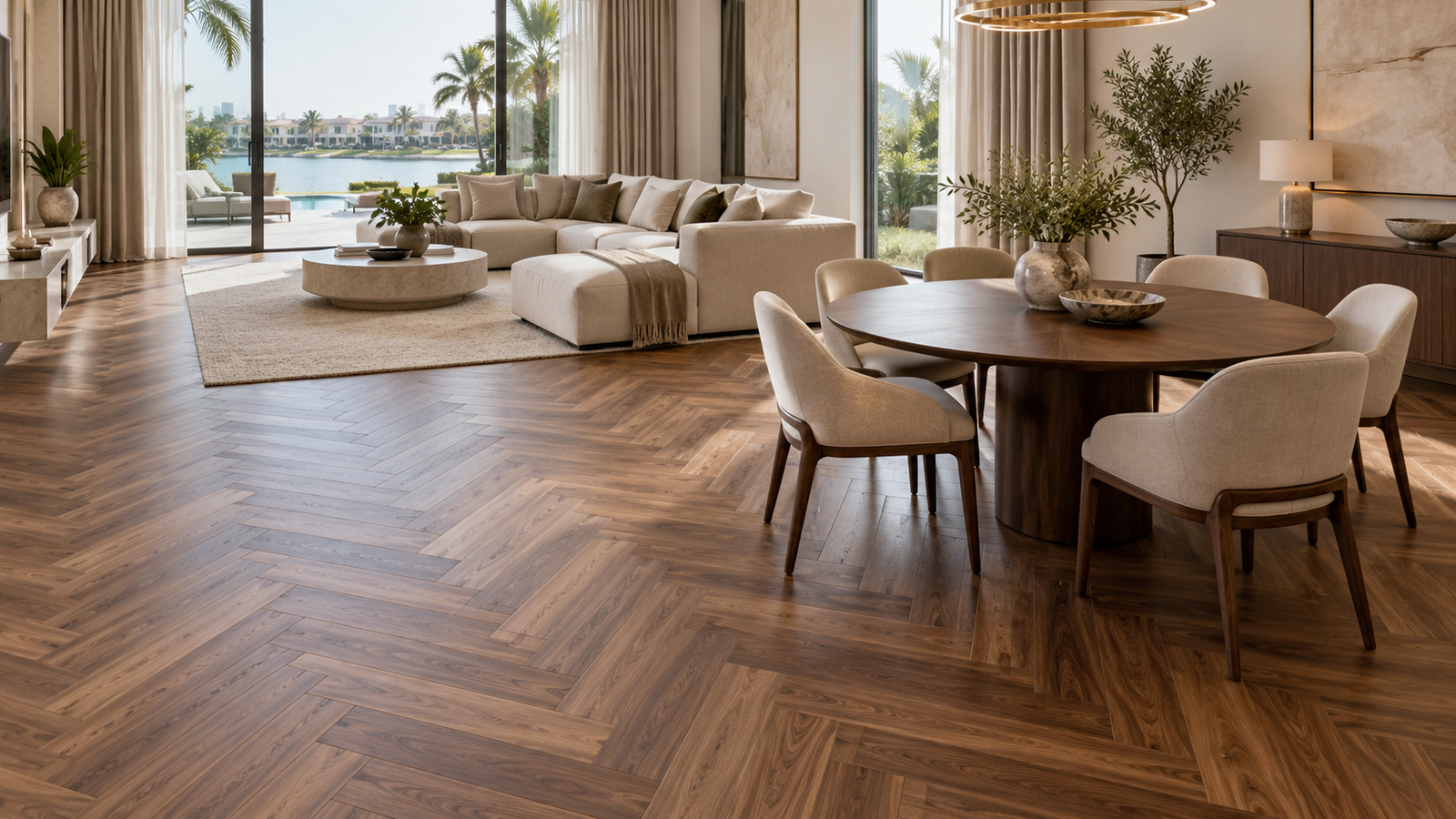
The second factor is the project. A small bedroom costs more per square metre to cover than a large open living area, because cutting waste and labour take up a bigger share of the total. Complex layouts such as herringbone need more material and more time. Subfloor preparation can also change the final figure, particularly in older buildings where the surface needs levelling before any plank can go down.
The third factor is what the quote includes. Two quotes that look similar can end up far apart once you add delivery, skirting boards, trims, underlay, labour and waste allowance. Instead of comparing only the price per square metre, ask for an itemised quote so you can see exactly what you are paying for. Be careful with very low prices, because they often mean a thin wear layer or hidden extras that appear later.
A good floor can be let down by a poor installation, so vinyl flooring installation Dubai projects deserve as much attention as the material. The method depends on the product. Click systems float over the subfloor, while glued systems bond directly to it. Both are quicker than tiling, though the details still decide how the floor looks and how long it lasts.
The subfloor must be clean, dry and reasonably flat. Small dips and bumps will eventually show through thinner vinyl, and trapped moisture can cause trouble even under a waterproof plank. In older buildings, this preparation often takes longer than the laying itself, so ask for a site visit before the work is scheduled and make sure preparation is written into the quote.
Planks should rest in the room for a day or two before laying so they match the room temperature. Skipping this step is one of the most common mistakes, and it can lead to small gaps or slight lifting later on. It costs nothing and prevents a lot of frustration.
Floating floors need a small gap around the edges so they can move slightly as temperatures change. Skirting boards and trims cover these gaps neatly. Heavy fixed items such as kitchen islands and built in wardrobes should not sit on top of a floating floor, and an experienced team knows how to work around them. This is one reason many owners book professional flooring installation together with the purchase instead of hiring a separate fitter.
For an average apartment, a skilled team can often complete the laying within a couple of days once the subfloor is ready. Larger villas take longer, and patterns such as herringbone need extra time. Building management rules, lift booking and permitted working hours can also affect the schedule, so check these early to avoid delays.
Knowing how to clean vinyl flooring properly is the easiest way to protect your investment. The main enemy is grit, so sweep or vacuum regularly with a soft brush head, especially near entrances where sand and dust arrive on shoes. A simple doormat at each entry point removes a surprising amount before it reaches the floor.
For regular cleaning, use a damp mop with a mild cleaner made for vinyl. Water should never be left standing along the joints, so wring the mop well and dry any large spills when you notice them. Avoid steam mops, harsh solvents, bleach and abrasive pads, because they can damage the wear layer and loosen the edges over time.
Furniture needs a little attention as well. Felt pads under chair and table legs prevent dents and scratches, and wheeled office chairs should have soft castors or a protective mat. Heavy items should be lifted rather than dragged. Near large windows, blinds or window film reduce long exposure to strong sun and help the colour last. With these simple habits, a good vinyl floor can look fresh for many years.
There are many vinyl flooring suppliers in Dubai, and the difference between a good one and a poor one shows up months after the sale. The supplier affects the quality of the product, the delivery schedule, the installation and the support you receive if something goes wrong later, so it is worth spending time on this choice.
Start with the samples. Ask to see physical pieces and not only photos, and look at them at home in morning and evening light, next to your walls and furniture. Then ask for the plank thickness and wear layer details in writing, because these two numbers explain most of the difference between a budget range and a premium one. Confirm that enough stock from the same batch is available, since colours can vary slightly between batches and you do not want a visible change halfway across a room.
Read the warranty conditions carefully, and look beyond the number of years to see what is actually covered and what voids it. Ask whether installation and aftercare come from the same team, because shared responsibility makes problems easier to solve. Finally, look for local experience. A supplier who has worked on UAE villas, offices and rentals understands heat, humidity and building requirements, and will explain honestly where vinyl is not the right choice. You can see how we approach projects on our page about the best flooring company in Dubai.
The price per square metre depends on the type of vinyl, the thickness, the wear layer and the size of your project, so there is no single fixed figure. Ask for an itemised quote that includes delivery, trims, underlay and labour. Our flooring cost guide for Dubai shows how to build a realistic budget.
Yes, it is a popular choice for villas because one material can run through large living areas without a change in look. The surface handles family life and pets well. Check the wear layer thickness and warranty before you order.
It can feel warm near large windows in direct sun, like any floor. Lighter colours stay cooler, and blinds or window film reduce the effect. Inside an air conditioned room, vinyl feels comfortable for most of the day.
Often you can, as long as the tiles are firmly fixed, clean and reasonably flat. Deep grout lines may need filling first so they do not show through the surface. A site visit before ordering is the safest way to confirm.
An average apartment can usually be finished in a couple of days once the subfloor is ready. Villas, stairs and patterned layouts take longer. Building rules and lift booking can also change the schedule.
The planks do not absorb water or swell, but water can still reach the subfloor through open edges. Wipe up spills promptly and make sure wet rooms are sealed properly during installation. It is not meant for open terraces or inside shower trays.
Sweep or vacuum first to remove sand, then use a damp mop with a mild vinyl safe cleaner. Skip steam mops and strong chemicals. Our guide to keeping vinyl floors in good shape has more tips for the local climate.
With proper care, a good vinyl floor can serve a home for many years. The lifespan depends mostly on the wear layer, the amount of foot traffic and the quality of the installation. The warranty terms from your supplier give a useful guide.
Ask for physical samples, written specifications for thickness and wear layer, and clear warranty terms. A trustworthy supplier will also show finished projects and explain who handles installation. Be careful with prices that are far below every other quote.
A well planned vinyl flooring Dubai project starts with a few simple actions. Measure the rooms you want to cover, decide which ones are wet areas and choose two or three sample designs. Look at them at home in morning and evening light, next to your walls, doors and furniture. Then ask for a site visit so a specialist can check the subfloor and give you a clear written quote that covers the price, delivery, trims and fitting. To book that visit and see samples in person, get in touch through the Urban Floors home page.
Category :
Share :
WhatsApp us