

Choosing new flooring can change the appearance, comfort, and practicality of your home or business. However, selecting an attractive material is only one part of the process. Proper measurements, suitable subfloor preparation, careful installation, and professional finishing all influence how the completed floor looks and performs.
If you are considering flooring installation services in Dubai, understanding the process beforehand can help you choose the right flooring, plan your budget, and avoid unexpected delays. From selecting materials for a villa or apartment to preparing a commercial property, each stage requires attention to the property’s condition and how the space will be used.
Dubai properties have specific flooring requirements. Air conditioning, indoor temperature changes, humidity, sand, sunlight, and regular foot traffic can affect flooring performance. The right installation approach takes these factors into account instead of focusing only on appearance.
This guide explains what to expect when hiring a professional flooring installation team, which materials you can consider, how the installation process works, what affects the cost, and how to prepare your property before work begins.
Flooring is a long term investment, and its performance depends on more than the quality of the material itself. Even a premium product can develop problems if the surface underneath is uneven, the wrong adhesive is used, or the installation does not follow the manufacturer’s requirements.
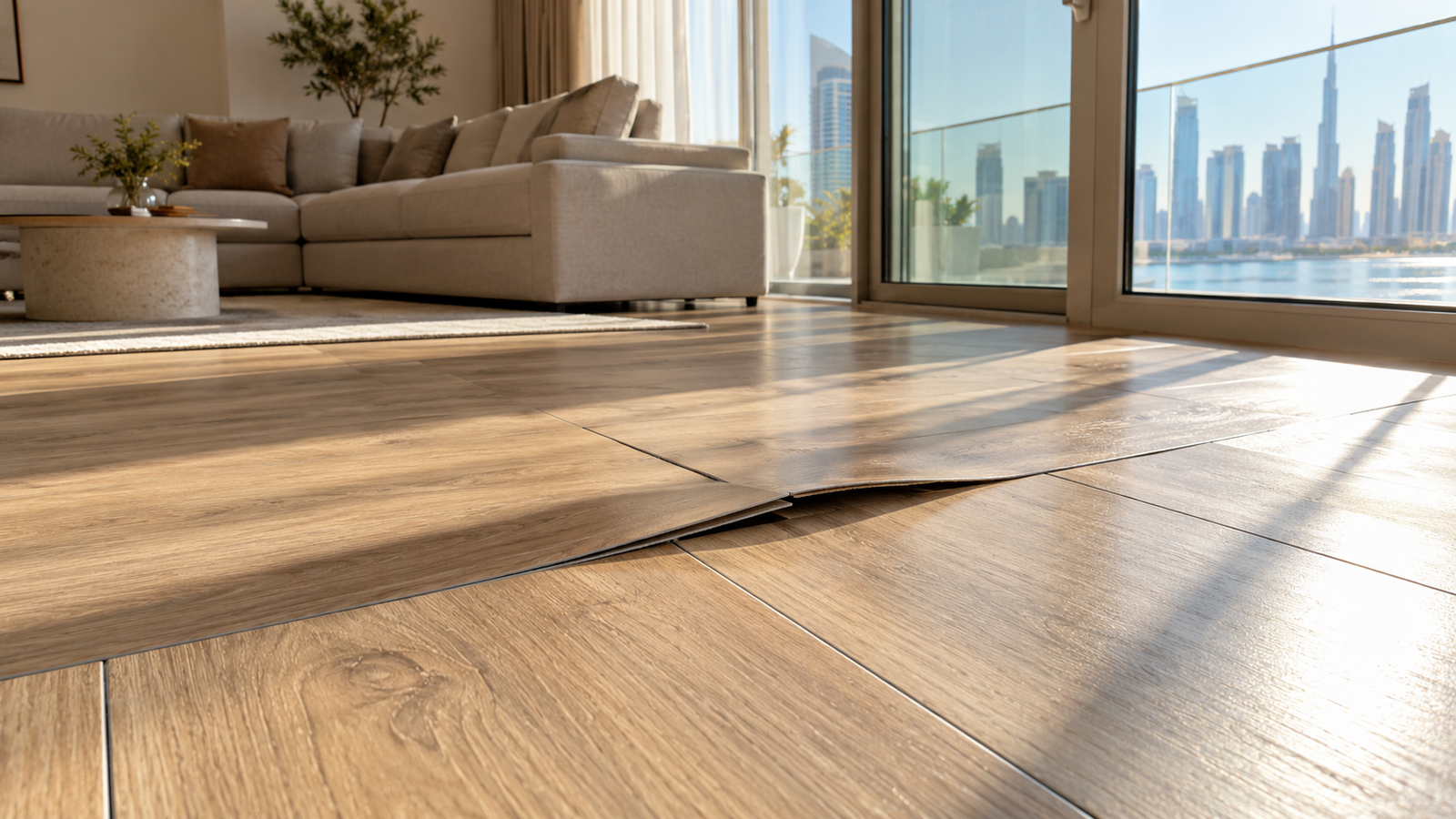
Professional installers assess the existing floor, identify preparation requirements, and select an installation method suitable for the chosen material. This helps reduce the risk of lifting edges, visible gaps, uneven surfaces, damaged joints, and premature wear.
For example, click lock flooring needs an appropriately prepared surface so the locking joints fit correctly. Glue down vinyl requires a compatible adhesive and a suitably smooth base. Engineered wood needs appropriate moisture management and allowance for natural movement.
Experienced installers also consider door clearance, skirting, room transitions, furniture placement, and the direction in which planks or tiles should run. These details influence the finished appearance and everyday usability of the floor.
When comparing professional flooring installation services, ask what is included in the quoted work. A complete service should clearly explain material supply, installation, surface preparation, finishing accessories, and any additional charges.
The process normally begins with a discussion about your property, preferred flooring style, budget, and installation requirements. This consultation helps determine which materials are suitable and whether the existing surface requires additional work.
An installer will usually ask whether the project involves a villa, apartment, office, retail unit, or another type of property. They may also ask which rooms need flooring, how frequently those areas are used, and whether the property will remain occupied during installation.
A family living room may need a durable, easy to clean surface that handles regular foot traffic. A bedroom might prioritise comfort and a warm wood appearance. A commercial office may require a floor that withstands rolling chairs, furniture movement, and daily cleaning.
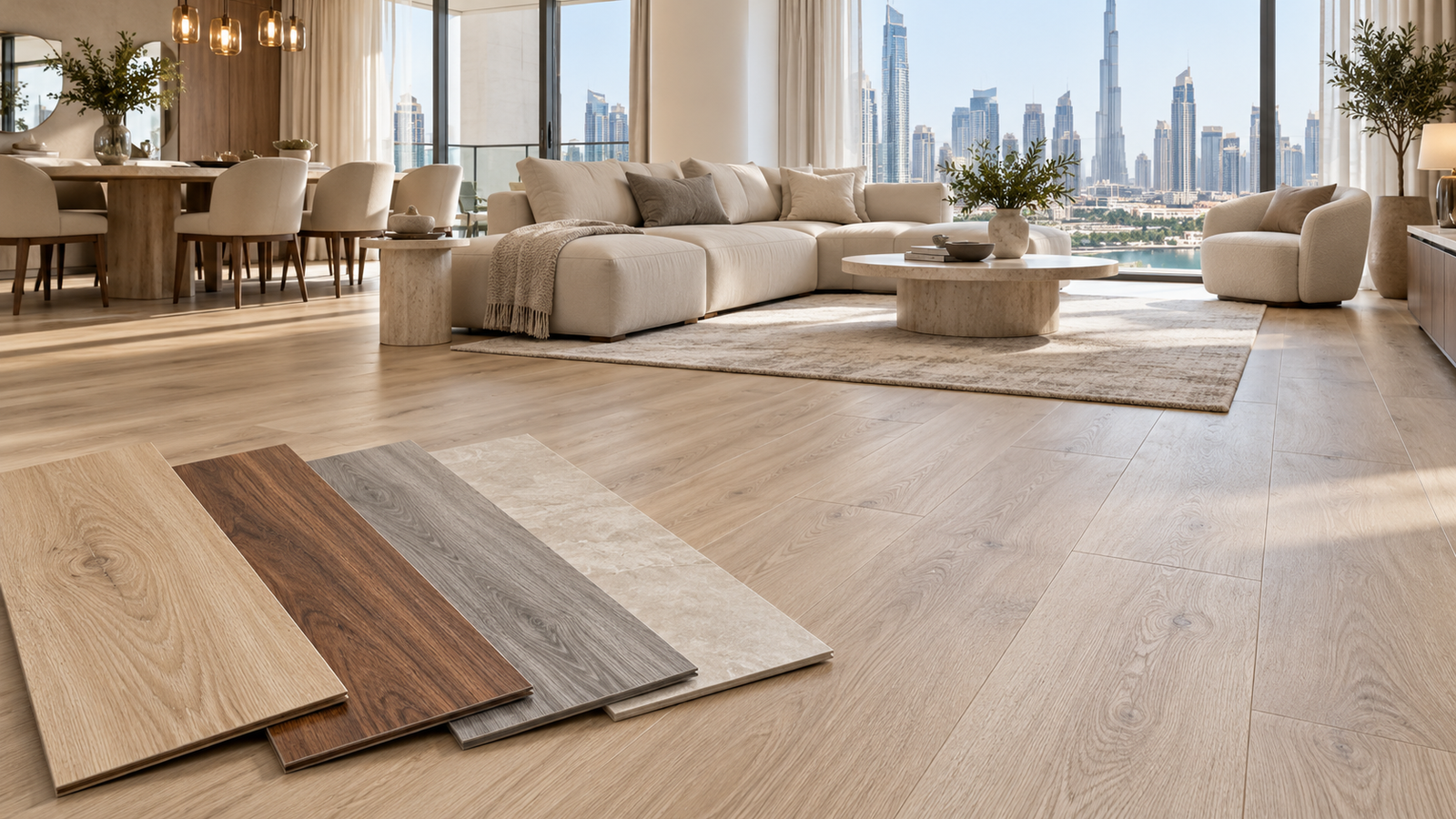
Your preferences also matter. Some property owners prefer natural wood finishes, while others want stone inspired designs, contemporary grey tones, or light oak colours that make smaller rooms feel more open.
The installer should assess the current floor and the surface underneath it wherever possible. They may check for uneven areas, loose tiles, cracks, old adhesive, dampness, or damage that could affect the new installation.
The inspection also helps determine whether the existing floor can remain in place or needs to be removed. Installing a new floor over an existing surface may be possible in certain situations, but it depends on the condition, height, compatibility, and installation requirements of the selected material.
Accurate measurements help calculate the material quantity, accessories, labour, and preparation work required for the project.
Installers should measure individual rooms rather than relying only on rough estimates. Doorways, alcoves, unusual corners, built in cabinets, and other features can affect material requirements and cutting time.
The quotation should also account for an appropriate allowance for cutting waste. The required allowance depends on the room layout, flooring format, installation pattern, and product specifications.
The right flooring material depends on your budget, preferred appearance, maintenance expectations, and the conditions in each room. No single product is ideal for every property.
Stone plastic composite flooring, commonly called SPC flooring, has a rigid core and is available in designs that resemble wood or stone. Many products use click lock installation systems, making them a practical option for suitable residential and commercial interiors.
SPC is popular with property owners who want a contemporary finish without the maintenance requirements of natural timber. Depending on the specific product, it may also offer useful resistance to everyday spills and surface wear.
However, water resistance does not mean that every SPC product is suitable for every wet area. The manufacturer’s instructions, joints, perimeter details, and the condition of the subfloor still matter.
Before choosing a product, review the wear layer, thickness, underlay requirements, warranty, and suitability for your intended room.
Explore SPC flooring options in the UAE to understand the available styles and installation possibilities.
Vinyl flooring is available in different formats, including planks, tiles, and sheet products. Luxury vinyl tile and luxury vinyl plank options can reproduce the appearance of wood, stone, and other decorative surfaces.
This material can suit apartments, bedrooms, living rooms, and selected commercial spaces because it offers a range of designs and can be straightforward to maintain.
Installation requirements vary by product. Some vinyl floors use a click system, while others require adhesive. Glue down products generally need a particularly smooth and properly prepared base because surface imperfections may show through the finished floor.
The installer should also check the product specifications for moisture, temperature, adhesive compatibility, and cleaning requirements.
For properties where design flexibility and practical maintenance are priorities, vinyl flooring and LVT options are worth comparing.
Laminate flooring provides a wood inspired appearance through a decorative surface layer. It is available in many colours and patterns, from pale oak to deeper walnut shades.
It can be a suitable option for bedrooms, living rooms, and other areas where a warm interior finish is desirable. Product quality, surface protection, and installation method can vary, so it is worth comparing specifications rather than choosing based on colour alone.
Standard laminate products are not automatically waterproof. Spills should be cleaned promptly, and the product must be appropriate for the intended room. Wet areas require particular care when selecting flooring.
A professional installer can check the required underlay, perimeter expansion space, doorway transitions, and subfloor condition before work begins.
You can compare laminate flooring options when planning an interior upgrade.
Engineered wood flooring combines a real wood surface layer with a constructed core. It offers the appearance of natural timber while using a structure designed to manage movement differently from solid wood.
It is often considered for bedrooms, living rooms, premium apartments, and villas where natural grain and texture are important design features.
Wood flooring still responds to changes in temperature and moisture. Installation should follow the product manufacturer’s guidance regarding storage, acclimatisation, subfloor moisture, expansion allowances, and suitable room conditions.
It is also important to confirm whether the chosen product can be installed as a floating floor, glued down, or fitted using another approved method.
For a natural wood appearance, explore engineered wood flooring options.
A villa may have large living areas, multiple bedrooms, stairs, and outdoor spaces. An apartment may have stricter building access requirements, limited storage, and neighbours who could be affected by installation noise.
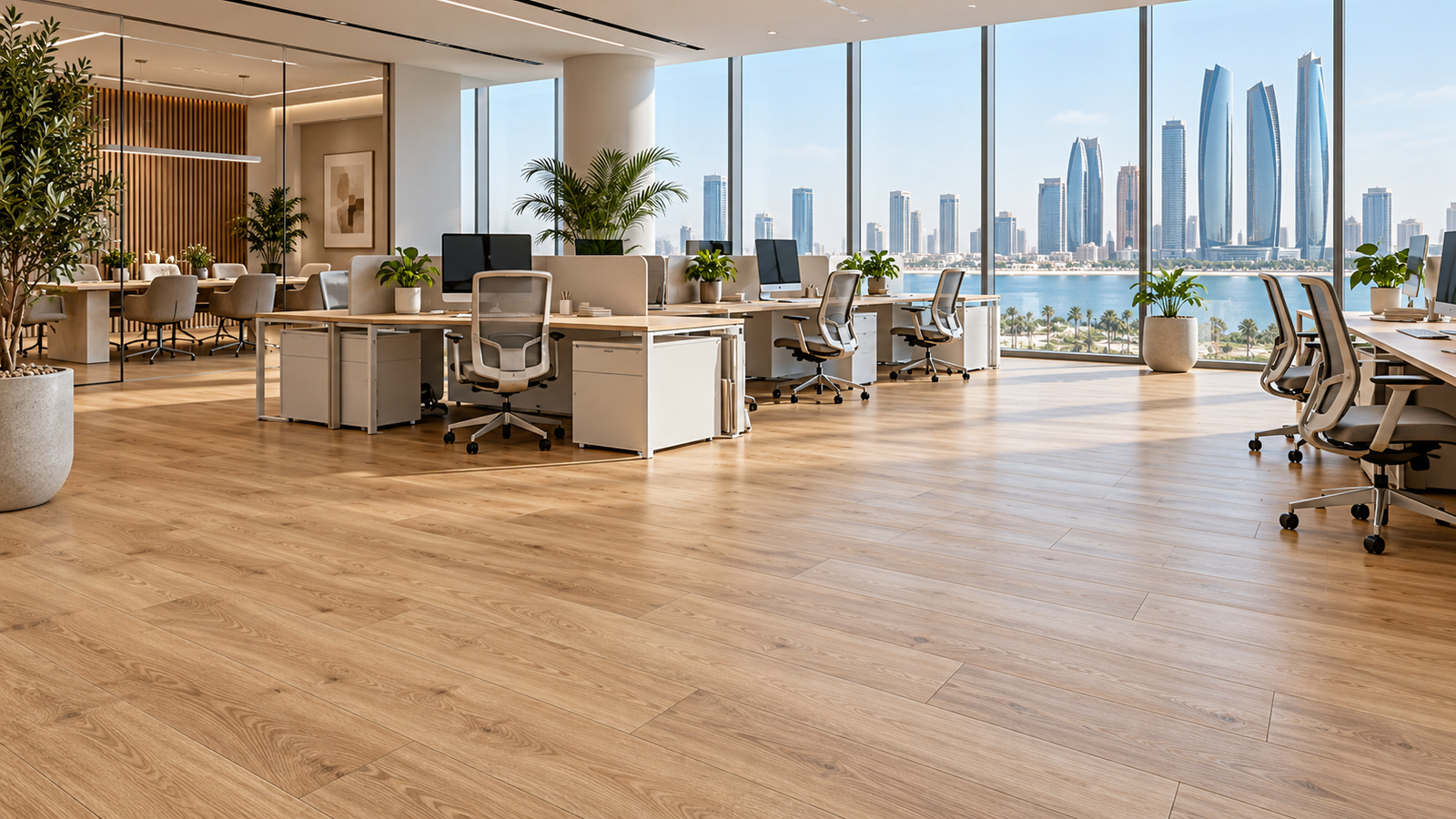
Commercial properties introduce different considerations, including business hours, heavy foot traffic, furniture movement, and the need to limit downtime.
If you are comparing flooring for different residential layouts, this guide to flooring for villas and apartments can help you evaluate the requirements of each property type.
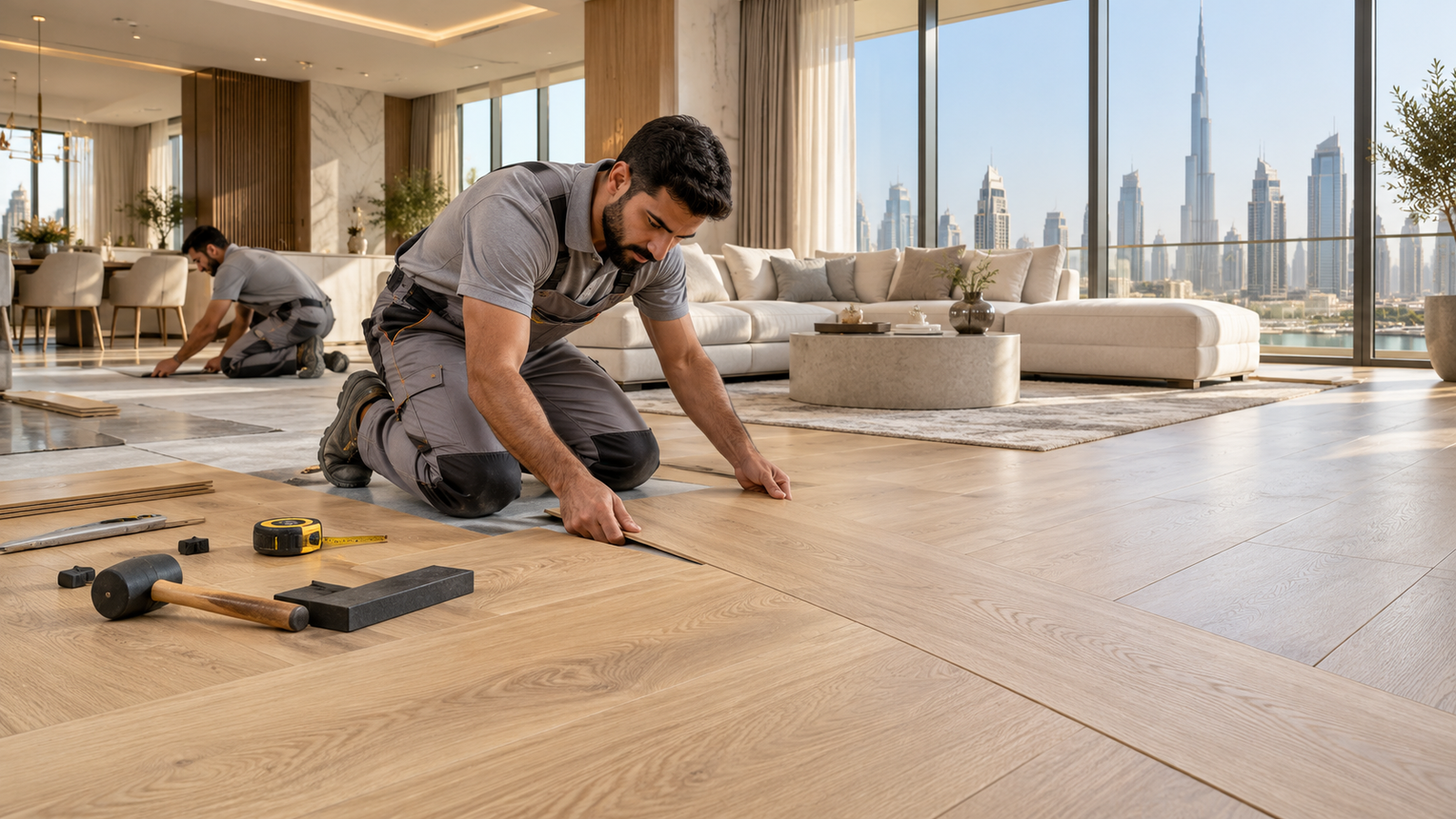
Once you have selected a suitable product and approved the quotation, the installation team can plan the work. The exact sequence depends on the material, the size of the property, and the condition of the existing floor.
The team reviews the property, confirms measurements, and checks the areas included in the project. They may also discuss furniture removal, building access, parking, delivery arrangements, and any restrictions imposed by the property manager.
This is the right time to confirm the selected flooring colour, product specifications, skirting style, and transition pieces. Final decisions should be made before the material is ordered whenever possible.
A clear quotation should identify the work included and any items that are excluded.
Depending on the project, the quotation may cover flooring materials, installation labour, removal of old flooring, subfloor repairs, levelling, underlay, adhesive, skirting, transition strips, waste disposal, and cleaning.
Not every project requires every item. The important point is to agree on the scope before work begins.
Ask how unexpected issues will be handled. For example, if the team discovers damaged screed or moisture beneath the existing floor, the installer should explain the problem and agree on any additional work and cost before proceeding.
Old flooring may need to be removed if it is loose, damaged, unsuitable for overlay installation, or likely to interfere with the new floor height.
Removal can involve lifting planks, tiles, carpet, or vinyl and dealing with leftover adhesive or underlay. The process may generate dust and noise, so the installation team should explain how the work area will be protected.
In some cases, the existing surface can remain. This decision should be based on its stability, flatness, moisture condition, and compatibility with the new product.
Leaving an unsuitable floor underneath can create problems later, so ask the installer to explain the recommended method.
Subfloor preparation is one of the most important stages of flooring installation. The new surface may look attractive on completion, but defects underneath can affect its stability and appearance over time.
The team may need to remove debris, scrape old adhesive, repair cracks, fill local depressions, or apply a suitable levelling compound. The exact work depends on the existing substrate and the tolerances required by the flooring manufacturer.
Moisture checks are also important for products and installation systems that can be affected by dampness. The installer should use an appropriate assessment method and address any identified problems before covering the surface.
Preparation should not be skipped simply to make the project cheaper or faster. A written quotation should distinguish necessary preparation from optional improvements.
Before installing the main area, the team should plan the direction and arrangement of the flooring.
For plank flooring, installers often consider the shape of the room, natural light, doorways, adjoining spaces, and where cut pieces will be most visible. Tile layouts require attention to alignment, joint spacing, and the placement of cut edges.
The installer should also plan transitions between different flooring materials and check how the new floor will meet existing thresholds, stairs, and door frames.
Good planning helps create a balanced appearance and reduces avoidable cutting waste.
The installation method depends on the product.
Click lock SPC and laminate flooring are fitted according to the manufacturer’s locking system and expansion requirements. Glue down vinyl uses a compatible adhesive applied according to the product instructions. Engineered wood may require floating or bonded installation, depending on its specification.
During installation, the team should keep joints aligned, make accurate cuts around fixed features, and avoid damaging the finished surface. Expansion gaps and movement joints should be provided where required by the material and installation system.
A professional installation should not rely on forcing boards or tiles into place to compensate for an uneven base.
Skirting covers the junction between the floor and the wall, while transition profiles create a finished connection between different flooring surfaces or floor levels.
These finishing details can significantly affect the final appearance. Poorly fitted trims, exposed gaps, rough cuts, and awkward height differences may make an otherwise attractive floor look unfinished.
The installer should also check door clearance. A new floor can change the height of the finished surface, which may mean that some doors need adjustment.
Once the installation is complete, the team should remove installation debris and inspect the finished floor.
The inspection may cover visible joints, surface damage, skirting, thresholds, door clearance, edges, and the general consistency of the layout. Any concerns should be recorded and addressed according to the agreed scope.
The installer should explain when the floor can be walked on, when furniture can be returned, and whether any adhesive curing time or special cleaning procedure applies.
Before signing off, ask for product care instructions and any applicable installation warranty documentation.
The installation timeline depends on the floor area, material, preparation requirements, number of rooms, access conditions, and whether the existing floor needs to be removed.
A small room with a suitable subfloor may be completed relatively quickly. A large villa with several rooms, extensive levelling, complicated cuts, and new skirting will generally require more time.
Adhesive based systems may require additional time for curing before the floor can be used or furniture can be returned. Some products also have specific requirements for storage and acclimatisation.
The project schedule should account for more than the time spent laying the material. Measurement, delivery, surface preparation, installation, finishing, and inspection all contribute to the overall timeline.
Dubai apartment buildings and residential communities may also have rules about working hours, deliveries, service lifts, and contractor access. Confirm these requirements early to avoid delays.
For a more accurate estimate, ask your installer to provide an expected start date, the anticipated installation period, and any conditions that could affect completion.
The cost of flooring installation services in Dubai depends on the complete project scope rather than the material price alone. Two rooms of similar size can require different budgets if one has a level surface and the other needs extensive preparation.
SPC, vinyl, laminate, and engineered wood products have different price points. Within each category, thickness, surface finish, wear layer, core construction, brand, and warranty can influence the price.
A more expensive product may offer a particular appearance or performance feature that suits your needs, but it is still worth comparing specifications carefully.
Larger areas require more material and installation labour, although the cost per square metre may vary with project size.
Small rooms, narrow corridors, multiple doorways, curved edges, and complicated layouts can require more cutting and finishing work relative to the floor area.
Removing old flooring adds labour and may involve disposal fees. The type of existing material and the method used to attach it affect the amount of work required.
If the old surface can remain safely and the selected product permits overlay installation, removal might not be necessary. However, the installer must confirm that the existing floor is suitable.
Uneven surfaces, cracks, adhesive residue, and moisture concerns can require extra preparation. These issues should be identified during the site inspection wherever possible.
The final cost may increase if hidden damage is discovered after the existing floor is removed. Ask how such additional work will be priced and approved.
Accessories can affect both performance and appearance. Some systems require specific underlays, while glue down products need compatible adhesives. Skirting, doorway profiles, and transition strips may be priced separately.
Make sure the quotation clearly states which accessories are included.
Moving heavy furniture, working around occupied rooms, transporting materials through restricted access areas, and disposing of old flooring may add to the project cost.
For a better understanding of the factors behind a flooring budget, review this flooring cost guide for Dubai.
When requesting quotations, compare the scope, material specification, preparation, finishing, and warranty rather than choosing solely on the lowest total.
A little preparation can help the installation team work efficiently and protect your belongings.
Before the scheduled date, confirm which rooms will be inaccessible during the work. Remove small personal items, fragile decorations, and loose belongings from the installation area. Ask the installer whether furniture removal is included or whether you need to arrange it separately.
If you live in an apartment or managed community, confirm the building’s contractor access rules, delivery arrangements, and permitted working hours. These requirements can affect when materials arrive and how work is scheduled.
Discuss the protection of nearby walls, cabinets, and existing surfaces. Keep children and pets away from tools, adhesives, cutting equipment, and unfinished flooring.
It is also helpful to agree on where unused materials and waste will be stored during the project. This reduces disruption and makes the work area easier to manage.
Finally, keep the product details and quotation available. If a question arises about colour, installation direction, or finishing accessories, the team can refer to the approved specification instead of making assumptions.
Dubai’s climate makes product selection and installation planning particularly important. Temperature changes, indoor air conditioning, humidity, and fine sand can influence how a floor is used and maintained.
Rooms with large windows or strong afternoon sunlight may experience greater temperature changes at the floor surface. Some materials can expand, contract, or change appearance when exposed to conditions outside their recommended limits.
Discuss sun exposure with your installer before choosing a product, particularly for areas near windows and glass doors. Blinds, curtains, and suitable product specifications can help address the conditions in the room.
If maintaining a comfortable indoor environment is a priority, consider this article about flooring that stays cooler in Dubai’s summer heat.
Air conditioning can help regulate indoor conditions, but it does not remove the need to assess the subfloor and follow installation instructions.
Moisture beneath flooring can contribute to adhesive failure, swelling, lifting, or other problems depending on the material. The installation team should investigate moisture concerns before covering the base.
Read about flooring for UAE humidity and desert sand to understand the environmental factors worth considering when selecting a product.
Fine sand can enter homes on shoes, through open doors, and from outdoor areas. If it is not removed regularly, it can contribute to surface abrasion over time.
Use suitable entrance mats and remove loose grit with a vacuum or soft cleaning tool recommended for your flooring type. Avoid harsh cleaning products unless the manufacturer confirms they are appropriate.
The correct care routine depends on the selected material, surface finish, and installation system.
A successful flooring project involves more than laying material quickly. Understanding common mistakes can help you assess quotations and ask useful questions before the work begins.
A product that looks attractive in a showroom may not suit every room. Consider moisture exposure, sunlight, foot traffic, maintenance, and the manufacturer’s recommended applications before making a final decision.
Installing flooring over an uneven, unstable, or damp surface can affect the finished result. The installer should identify and address relevant issues rather than hiding them under the new material.
A low initial price may exclude floor removal, levelling, underlay, skirting, trims, or waste disposal. Request an itemised scope so you can compare offers fairly.
Certain flooring systems need expansion gaps or movement joints. If these requirements are ignored, the floor may buckle, lift, or develop other defects as conditions change.
Cutting corners during preparation, using unsuitable adhesives, or allowing insufficient curing time can compromise the work. A realistic schedule should include the steps required by the selected product.
Door clearance, skirting, thresholds, and room transitions should be planned before installation. These details help the finished floor look complete and remain practical to use.
For additional advice, see these flooring mistakes to avoid during UAE renovations.
The installer you choose can affect the quality of the work, communication, project schedule, and overall experience. It is worth comparing more than prices when evaluating flooring contractors in Dubai.
Start by asking about experience with your chosen flooring system. An installer who regularly works with click lock SPC may have a different skill set from a specialist in engineered wood or glue down vinyl.
Request a clear written quotation and confirm whether the team supplies the material, handles preparation, installs the floor, fits finishing accessories, and removes waste. Any exclusions should be explained before you approve the work.
Ask how the company assesses subfloor condition and moisture concerns. The response should show that preparation is part of the installation process rather than an optional extra that can be ignored.
You can also request examples of comparable completed projects and ask about the warranty on the product and installation. Make sure you understand the difference between a manufacturer’s product warranty and a contractor’s workmanship warranty.
Communication matters as well. A reliable contractor should explain the work schedule, discuss changes before charging for them, and provide clear guidance on caring for the completed floor.
For a broader comparison of selection criteria, read this guide to choosing the best flooring company in Dubai.
Before approving a project, review the quotation carefully. A detailed quote makes it easier to understand what you are paying for and reduces the risk of disagreements later.
Depending on the agreed project, the document should identify:
Ask whether the quoted material quantity includes cutting waste and how any unused unopened packs will be handled. Confirm whether the installation team will move furniture or whether you need to arrange that separately.
If additional preparation is needed after removing the existing floor, the contractor should explain the work and obtain your approval before proceeding with the extra cost.
A clear scope also helps when comparing different installation companies. One quotation may appear cheaper because it excludes essential preparation, while another may include a more complete service.
The aim is to understand the total project cost and the work required to achieve the finish you want.
The process usually begins with a consultation, site inspection, and accurate measurement. After you approve the material and quotation, the team prepares the subfloor, installs the flooring, completes the edges and transitions, and checks the finished surface.
The cost depends on the flooring material, area size, installation method, condition of the existing floor, and amount of preparation required. Removal, levelling, underlay, skirting, and waste disposal may also affect the final quote. A site assessment provides a more reliable estimate than material price alone.
SPC, vinyl, laminate, and engineered wood can all suit certain apartments, depending on the room and product specifications. Consider maintenance, moisture exposure, noise, appearance, and building requirements before selecting a material.
Sometimes. The existing tiles must be stable, sufficiently level, and compatible with the proposed flooring system. The installer must also check the added floor height, door clearance, transitions, and any moisture concerns before recommending an overlay installation.
The timeline depends on the floor area, material, room layout, preparation work, and curing requirements. A straightforward room may take less time than a large property that needs old flooring removed or the subfloor levelled. Ask for a project schedule after the site inspection.
SPC flooring can be a practical choice for many indoor areas because it has a rigid core and is available in a variety of designs. However, product quality, installation requirements, temperature exposure, and suitability for wet areas should be checked before purchase.
Many contractors offer a combined supply and installation service, while some also accept customer supplied materials. Confirm who is responsible for product defects, quantity calculations, delivery, installation accessories, and warranty coverage before agreeing to the project.
Not always. These items may be included in some quotations and charged separately in others. Ask for written confirmation covering removal, disposal, skirting, transition strips, and any required surface preparation.
Follow the manufacturer’s care instructions for the selected material. Remove sand and loose dirt regularly, clean spills promptly, and use suitable cleaning products. Avoid excessive water or abrasive tools when the flooring specification does not permit them.
Start by identifying the rooms, approximate floor area, preferred material, and any issues with the existing surface. Share these details with a professional installer and arrange a site assessment when needed. Request a written quotation that explains materials, preparation, labour, finishing, and any exclusions.
Choosing the right flooring is only the beginning. Careful measurement, suitable surface preparation, correct installation, and detailed finishing help create a floor that looks good and performs as expected.
Before starting your project, compare materials based on your property’s needs, review the complete quotation, and confirm the installation method with an experienced team. Taking time to plan these details can help you avoid unnecessary costs and reduce the likelihood of problems after installation.
If you are planning to upgrade a villa, apartment, office, or commercial property, explore the flooring options available from Urban Floors. Discuss your requirements, arrange a site assessment, and request a clear quotation for flooring installation services in Dubai.
Category :
Share :
WhatsApp us