

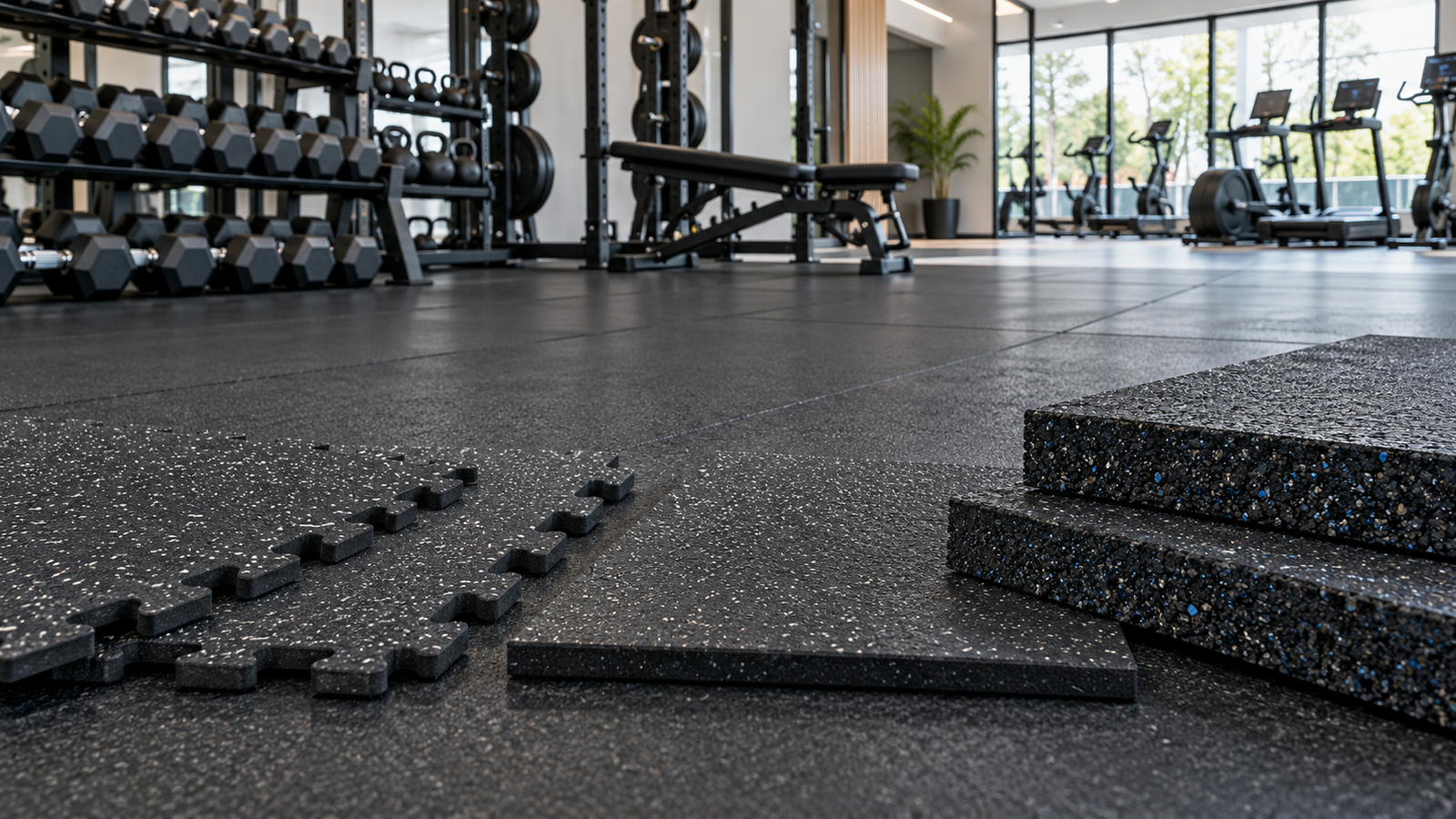
Choosing the best thickness for gym flooring depends on the type of exercise you perform, the equipment you use and the level of impact your floor needs to handle. A home workout area used for yoga and stretching has different requirements from a commercial gym where people lift heavy barbells throughout the day. Selecting the correct thickness can help protect the existing floor, improve workout comfort and create a more practical training environment.
Rubber flooring is a popular choice for gyms because it offers grip, durability and varying levels of impact absorption. However, thicker flooring is not automatically better for every situation. The density, construction and quality of the rubber can affect performance just as much as its measured thickness.
For light exercise, a relatively thin rubber surface may be sufficient. General home gyms often need a more substantial protective layer, while heavy weightlifting areas may require thick rubber mats or a specialist lifting platform. The correct specification also depends on whether the gym is located in a villa, apartment, garage, hotel or commercial fitness centre.
This guide explains the available thickness options, how to choose flooring for different workouts, which factors influence performance and what to consider before installing gym flooring in the UAE.
Gym flooring does more than provide a surface to exercise on. It helps protect the underlying floor from equipment contact, repeated movement and certain types of impact. The right product can also improve comfort underfoot and make the workout area easier to maintain.
Thickness matters because different exercises create different loads. Walking on a treadmill produces a different type of force from placing a dumbbell on the ground or dropping a loaded barbell. The floor needs to match the actual activity rather than simply the appearance of the gym.
During exercise, equipment and body movement transfer forces to the floor. Rubber flooring can help absorb some of that impact before it reaches the underlying surface. A thicker product may provide more material for managing impact, but its performance depends on the rubber formulation, density and construction.
For example, a yoga area may only need a comfortable, stable surface. A strength training zone may need additional protection because dumbbells, kettlebells and weight plates can create concentrated loads.
If heavy weights are dropped repeatedly, a standard rubber mat may not provide sufficient protection on its own. The equipment, drop height and existing floor structure should all be considered before choosing a suitable product.
The right floor can make exercises such as stretching, floor based strength training and bodyweight movements more comfortable. Rubber surfaces are available with different levels of firmness and resilience, allowing users to select a product suited to their routine.
However, a softer surface is not always preferable. Excessive cushioning can make balance exercises, lifting movements and certain strength training activities less stable. A floor that compresses too much beneath equipment may also affect the machine’s position.
The goal is to find a surface that provides suitable support without becoming unnecessarily soft or unstable.
Rubber flooring can reduce some impact noise from equipment and foot movement. This can be useful in apartment gyms, hotel fitness rooms and commercial buildings where other people may occupy nearby spaces.
The reduction in noise depends on the flooring material, installation system and building structure. Vibrations from heavy weights or running machines can travel through a concrete slab or timber floor even when rubber mats are installed.
Where noise transmission is a serious concern, the solution may require an engineered acoustic system rather than additional rubber thickness alone.
Heavy treadmills, exercise bikes, weight benches and racks can place continuous pressure on small areas of flooring. Suitable rubber flooring helps create a protective layer between the equipment and the original surface.
The selected product must be designed to support the expected load. Thickness alone does not determine whether the flooring will resist compression or recover after pressure is removed.
The best thickness depends on the training activity. The ranges below provide a practical starting point when comparing products. They are general guidelines rather than universal specifications, so always check the manufacturer’s recommendations.
Thin rubber flooring or exercise mats may be suitable for stretching, yoga, mobility work and selected low impact activities. They can provide a protective surface over a suitable existing floor without raising the finished floor level significantly.
This option may work in a multipurpose room where the floor needs to remain accessible for everyday household use. It is also useful when the main purpose is to improve surface grip and provide basic protection against light equipment contact.
Thin flooring is not generally the first choice for areas where heavy weights are repeatedly dropped. It provides less material for managing substantial impacts, so the existing floor may remain vulnerable.
Rubber flooring in this range may suit light home workouts, stretching areas and some cardio spaces. It can help protect the floor from routine contact with equipment and provide a more suitable surface for everyday exercise.
This thickness may be appropriate for selected stationary bikes, light training equipment and bodyweight routines, provided the product is designed for the intended application.
For treadmills and other machines, confirm that the floor provides adequate stability and that the manufacturer’s requirements allow the use of a mat or rubber covering underneath.
This range is often considered for home gyms that combine cardio equipment, adjustable dumbbells, resistance training and general fitness exercises.
It provides more material than a thin exercise mat and may offer a useful balance between floor protection, stability and cost. The suitability of the product still depends on its density and construction.
A room used for controlled dumbbell exercises has different requirements from one where weights are dropped regularly. If the workout includes heavy strength training, consider a thicker product in the main lifting zone.
Rubber flooring in this range may be suitable for strength training areas that use dumbbells, kettlebells, benches and selected weight machines. It can provide additional protection compared with thinner surfaces.
The correct choice depends on the weight of the equipment, the frequency of use and whether weights are placed down carefully or dropped from a height.
For home gyms, this range may be useful when strength training is a major part of the routine. Commercial facilities should assess the actual demands of their members and select a product intended for regular commercial use.
Thicker rubber tiles and mats may be suitable for demanding training zones where heavier weights and more frequent impacts are expected. These products can provide additional material between the equipment and the supporting floor.
They may be considered for selected free weight areas, functional training spaces and commercial strength zones. However, the product must be designed for the expected impact rather than selected by thickness alone.
The supporting floor also matters. A thick mat does not automatically make every floor structure suitable for repeated heavy weight drops.
Very thick rubber flooring or purpose designed lifting platforms may be appropriate for specialist applications involving repeated heavy barbell drops.
These installations may require more than a standard rubber tile. The platform construction, surface stability, load distribution and supporting structure should be considered together.
Before specifying this thickness, review the manufacturer’s technical information and obtain professional advice where necessary. A specialist platform may provide a more suitable solution than covering the entire gym with very thick rubber.
| Thickness | Potential use | Main consideration |
|---|---|---|
| 3 mm to 6 mm | Yoga, stretching and light exercise | Limited heavy impact protection |
| 6 mm to 8 mm | Light home workouts and selected cardio areas | Check equipment stability |
| 8 mm to 12 mm | General home gyms | May not suit repeated weight drops |
| 15 mm to 20 mm | Free weights and strength training | Confirm product density and load suitability |
| 25 mm to 30 mm | Higher impact training zones | Consider the supporting floor |
| 40 mm to 50 mm | Specialist lifting zones | A dedicated platform may be needed |
Use these ranges as an initial comparison, not as a substitute for product specifications. The most appropriate floor may be thinner or thicker depending on its material construction and intended use.
A useful gym flooring thickness guide should consider the exercises performed in each area. Many gyms include several activities, so choosing one product for the entire room may not be the most practical approach.
Cardio areas typically include treadmills, exercise bikes, elliptical machines and rowing machines. These machines need a stable base that supports their weight and allows them to operate correctly.
A suitable rubber mat can help reduce direct contact between the equipment and the floor. However, the thickness should not cause excessive movement or interfere with the machine’s stability.
Check the equipment manufacturer’s instructions before adding flooring underneath. Some machines have specific requirements for floor surfaces, clearance and vibration management.
For a cardio focused home gym, a suitable thinner rubber product may be enough. Where several machines operate for long hours each day, a more durable commercial grade surface may be preferable.
Dumbbell and kettlebell exercises involve repeated contact between weights and the floor. The required thickness depends on the weight being used and how the equipment is handled.
If the weights are placed down carefully, a suitable medium thickness rubber product may provide sufficient protection. If the weights are frequently dropped, a thicker product designed for impact should be considered.
The floor should also remain stable during movements such as lunges, presses and kettlebell swings. A surface that compresses excessively can interfere with balance and foot placement.
Deadlifts and other barbell exercises can create substantial localised impact, particularly when the weights are released from a height.
For this type of training, ordinary thin gym flooring may be insufficient. A dedicated lifting area with appropriate rubber mats or a purpose designed platform may be more suitable.
Consider the maximum barbell load, frequency of drops and condition of the underlying floor. If the gym is located above another occupied space, investigate vibration and structural noise as well.
Functional training may include jumping, lunges, push ups, planks, resistance bands and movements that involve changing direction.
The preferred flooring needs to balance traction, comfort and stability. A moderate thickness may suit many general training activities, but jumping and dynamic movements can place different demands on the material.
Check the surface texture and ensure that the floor remains securely positioned during quick movements. Loose tiles or raised edges can create trip hazards.
Yoga and stretching areas generally prioritise comfort, cleanliness and stable contact with the floor rather than heavy impact protection.
A thin exercise mat may be more appropriate than thick rubber gym tiles. If the area is part of a larger gym, a separate mat can create a dedicated zone without requiring a different permanent floor throughout the room.
The surface should be comfortable for seated exercises while remaining firm enough to support standing balance poses.
Home gyms can range from a small workout corner in an apartment to a dedicated fitness room in a villa. The best option depends on the available space, the existing flooring and the type of equipment.
A small home gym may contain a few dumbbells, resistance bands, a bench and a stationary bike. In this situation, a suitable rubber mat or modular tile system may be more practical than a permanently installed heavy duty floor.
Measure the area carefully and decide whether the flooring needs to cover the whole room or only the workout zone.
If the room is also used as a study, guest room or general living space, consider whether the flooring can be removed or extended without damaging the original surface.
Garage gyms may contain heavier equipment and experience different temperature and moisture conditions from indoor rooms.
Before installation, inspect the concrete floor for cracks, uneven sections and moisture issues. Check whether the garage is exposed to water entering from outside and whether the rubber product is suitable for the expected conditions.
If the gym includes a squat rack, weight bench and free weights, use flooring intended for those loads. Dedicated protection may be needed beneath the rack and lifting area.
A dedicated gym in a UAE villa may combine cardio equipment, strength training and stretching. A zone based layout can help create a practical space without using the same thickness everywhere.
The flooring should complement the room design while meeting the needs of the equipment. For broader residential planning, compare the requirements of villa and apartment flooring before deciding how the gym connects with adjoining rooms.
Consider access through doors, equipment delivery routes and the finished height where the gym meets other flooring surfaces.
Apartment gyms require particular attention to noise and vibration. Even a relatively thick rubber mat may not prevent sound from travelling through the building structure.
For light exercise, a stable rubber mat may be suitable. For heavy weights, check building restrictions, load limits and noise requirements before purchasing equipment or flooring.
If the gym sits above a neighbour’s bedroom or living room, specialist acoustic advice may be worthwhile. Avoid assuming that adding more rubber will solve every noise problem.
Commercial facilities usually experience more traffic, more equipment movement and more frequent cleaning than domestic gyms. The floor specification should reflect the number of users, operating hours and activities performed.
Small studios often combine strength exercises, stretching, cardio and supervised training. A medium thickness commercial grade rubber floor may be suitable for many areas, depending on the equipment and training style.
The material should withstand frequent use and remain stable during movement. Consider the ease of replacing damaged sections and maintaining the surface.
If the studio offers different classes, identify the activities that produce the highest impact and specify the flooring accordingly.
Larger gyms often divide their space into cardio, free weight, functional training and stretching zones. Each area may need a different specification.
Cardio zones may prioritise equipment stability and durability. Strength areas may require greater impact protection, while circulation spaces need secure edges and safe transitions.
Using appropriate flooring in each zone can help control costs while ensuring that the most demanding activities receive suitable protection.
Hotel gyms and shared residential fitness rooms need to accommodate users with different experience levels. Equipment may be used throughout the day, and the facility must remain clean and presentable.
Choose flooring that can withstand regular use and be maintained using practical cleaning methods. Ensure that edges and transitions remain secure because visitors may be unfamiliar with the room.
If the facility is located above guest rooms or apartments, include acoustic considerations in the planning process.
Commercial flooring should be selected for its intended traffic level and installation requirements. A product designed for a lightly used home gym may not provide the same durability as one specified for a busy fitness centre.
For projects involving other business areas, explore professional flooring installation to understand the importance of subfloor preparation, suitable materials and correct installation.
Thickness is easy to compare because it is usually listed in millimetres. However, two rubber products with the same thickness can perform differently.
Density, composition, compression behaviour and surface construction influence the floor’s response to pressure and impact.
Density describes how much material is contained within a given volume. A denser product may feel firmer, but density alone does not establish whether it will provide the right impact protection.
The material formulation, bonding process and overall design also affect performance. A thick product with unsuitable construction may not be a better choice than a thinner product designed for the intended activity.
Ask suppliers for technical specifications rather than relying only on product photographs or a stated thickness.
A gym floor must support controlled movement. Excessively soft flooring may feel comfortable during some exercises but can reduce stability when lifting weights or using equipment.
For example, a weight bench should sit securely on the floor without rocking. A treadmill should remain stable during use, and a standing exercise should not feel as though the user is sinking into the surface.
Select a product that offers suitable resilience while supporting the required activity.
Repeated pressure can affect how rubber flooring performs over time. Equipment placed in the same position for months may leave marks or cause localised compression in an unsuitable product.
Ask whether the flooring is designed for heavy stationary equipment and whether it can recover after the load is removed. For weightlifting zones, confirm that the material is intended to handle the expected impacts.
When comparing commercial products, review available performance data, warranty conditions and intended applications.
A warranty may exclude damage caused by incorrect installation, unsuitable cleaning products or activities outside the product’s recommended use. Clarify these conditions before making a purchase.
The strongest specification is one that matches the floor to the actual use rather than relying on a single measurement.
Indoor gym flooring in the UAE must be suitable for the room’s environmental conditions and maintenance routine. Air conditioning, humidity, dust and sand can all influence how the space is managed.
Many gyms operate in air conditioned interiors, but rooms near external doors, windows or unconditioned garages may experience greater temperature changes.
Check the product’s recommended installation and operating conditions. Adhesives and other installation materials should also be suitable for the environment.
For wider residential flooring considerations, this guide to flooring during Dubai summer heat discusses how indoor conditions influence flooring decisions.
Moisture beneath a floor covering can cause problems even when the visible surface appears dry. Before installation, confirm that the subfloor meets the manufacturer’s moisture requirements.
This is particularly relevant in ground floor rooms, garages and areas near showers or other wet spaces. Do not cover an existing moisture problem with rubber mats without identifying the source.
The guide to flooring for UAE humidity and sand offers further context on environmental considerations for indoor flooring.
Sand and fine dust can enter gyms on shoes, through open doors and on equipment wheels. Regular sweeping or vacuuming helps prevent grit from collecting around joins and beneath movable equipment.
Choose cleaning products approved for the rubber surface. Avoid harsh chemicals unless the manufacturer confirms they are suitable, and follow guidance on water use and drying.
In busy commercial facilities, include inspection of tile edges, corners and high traffic areas in the maintenance routine.
Gym flooring should be chosen for the activity taking place in the room. Decorative flooring in adjoining areas may have different requirements.
For example, SPC flooring options can be considered for suitable residential or commercial interiors, but standard decorative products should not replace purpose designed protection in a heavy weightlifting zone.
The material in each area should match its expected load, moisture exposure, maintenance needs and intended use.
Correct thickness cannot compensate for poor installation. Before work begins, inspect the room, confirm the product specifications and make sure the floor is suitable for the expected equipment.
One of the most common mistakes is buying the thickest product available without considering its density or intended use.
A very thick mat may not be suitable for a particular machine, while a thinner high quality product may be appropriate for light exercise. Match the product to the activity and follow the manufacturer’s guidance.
Uneven concrete, loose tiles and moisture problems can affect the stability and life of a new floor.
Prepare the subfloor according to the installation instructions. Check that the surface is clean, stable and level enough for the chosen product.
If the existing floor has structural damage or persistent moisture, address the issue before covering it.
Different flooring thicknesses can create height differences between workout zones and adjoining rooms. Poorly finished transitions may create trip hazards or interfere with doors.
Plan the finished height before installation and use suitable transition details where needed.
General exercise mats may be suitable for stretching and light movement but are not necessarily designed for repeated barbell drops.
For demanding lifting, use flooring or platforms specifically intended for the expected impact. Consider the supporting floor and any acoustic requirements as part of the decision.
Rubber flooring still requires regular care. Dust, sweat, spilled drinks and cleaning residue can affect appearance and traction.
Follow the manufacturer’s cleaning instructions and inspect the surface regularly. Replace damaged sections and correct recurring movement at joins or edges.
When planning a wider renovation, review these flooring mistakes to avoid before finalising the material and installation method.
Flooring costs depend on more than the number of millimetres in the product. Material quality, total coverage, installation requirements and the condition of the subfloor all influence the final price.
Thicker rubber products may cost more because they use additional material or incorporate specialist construction. However, prices cannot be compared fairly by thickness alone.
Compare products with similar density, intended use, surface finish and performance characteristics. A product designed for heavy commercial lifting should not be compared directly with a thin exercise mat simply because both are made from rubber.
A rectangular room may be straightforward to cover, while a space with columns, corners and built in cupboards may require more cutting.
Measure the area accurately and account for the product’s dimensions. Rolls and modular tiles have different coverage patterns, which can influence waste and labour.
Some products can be loose laid or interlocked, while others require adhesive or specialist installation. The condition of the existing floor can also affect the preparation work.
Ask for a quotation that identifies material costs, coverage, installation, preparation, delivery and any finishing work. This makes it easier to compare equivalent specifications.
For wider budgeting, consult the Dubai flooring cost guide and request a product specific quotation for your gym.
The lowest initial price may not be the most economical option if the product is unsuitable for the activity and needs early replacement.
Consider the expected traffic, equipment loads, maintenance routine and availability of replacement tiles. A well matched floor can help avoid unnecessary repairs and interruptions.
For many general home gyms, rubber flooring around 8 mm to 12 mm can be a reasonable starting point. Areas used for heavier free weights may require thicker products or a dedicated lifting platform. The correct choice depends on the equipment, impact level and product construction.
Ten millimetres may suit light to moderate workouts, cardio equipment and controlled dumbbell training when the product is appropriate for the use. It may not provide enough protection for repeated heavy weight drops. Check the manufacturer’s specifications before installing it in a strength training area.
It may be suitable for some general free weight applications, depending on the product’s density and construction. Heavy barbell drops can require a thicker specialist mat or platform. Consider the weight, drop height, frequency of impact and underlying floor before deciding.
Commercial gym flooring thickness depends on the facility’s layout and training activities. Cardio areas may use a different specification from free weight zones and lifting platforms. A zone based plan helps match the flooring to the expected loads and traffic.
No. Greater thickness can provide additional material for managing impact, but performance also depends on density, resilience and product design. Excessively soft flooring can reduce stability during some exercises. Choose flooring according to its intended use rather than thickness alone.
The appropriate mat depends on the treadmill manufacturer’s requirements, the machine’s weight and the floor beneath it. A suitable thinner rubber mat may be enough for some machines, provided it does not cause instability. Follow the manufacturer’s instructions and consider vibration if the gym is above another occupied room.
Suitable rubber flooring can help protect tiles from scuffs and certain impacts, but ordinary mats may not prevent damage from repeated heavy weight drops. The tile surface, subfloor and flooring specification all matter. Use a product designed for the intended load and consider a specialist lifting platform for demanding activities.
It can be suitable for some apartment workouts, but thickness alone does not prevent noise or vibration from travelling through the building structure. Check building rules and equipment loads before installing a heavy lifting area. Specialist acoustic measures may be needed when sound transmission is a concern.
Yoga and stretching generally require comfort and stability rather than heavy impact protection. A suitable exercise mat or thin flooring product may be sufficient. Avoid choosing a thick, soft surface that makes standing balance exercises unstable.
Rubber rolls can provide a continuous finish across larger open areas, while tiles offer modular coverage and may make individual section replacement easier. Both formats are available in different thicknesses and constructions. Choose according to room size, installation requirements, maintenance and the activities performed.
The best thickness for gym flooring is the one that matches your workouts, equipment and existing floor. Thin rubber surfaces may be sufficient for stretching and light exercise, while general home gyms often benefit from a more substantial protective layer. Heavy lifting zones may need specialist rubber mats or an engineered platform.
Before buying, measure the room, assess the subfloor and identify the activities that will take place in each zone. Compare thickness alongside density, stability, impact performance, installation requirements and maintenance instructions.
Urban Floors can help you explore suitable flooring options for residential and commercial interiors. Visit the Urban Floors website to review available solutions and discuss your project requirements before choosing a product.
Category :
Share :
WhatsApp us