
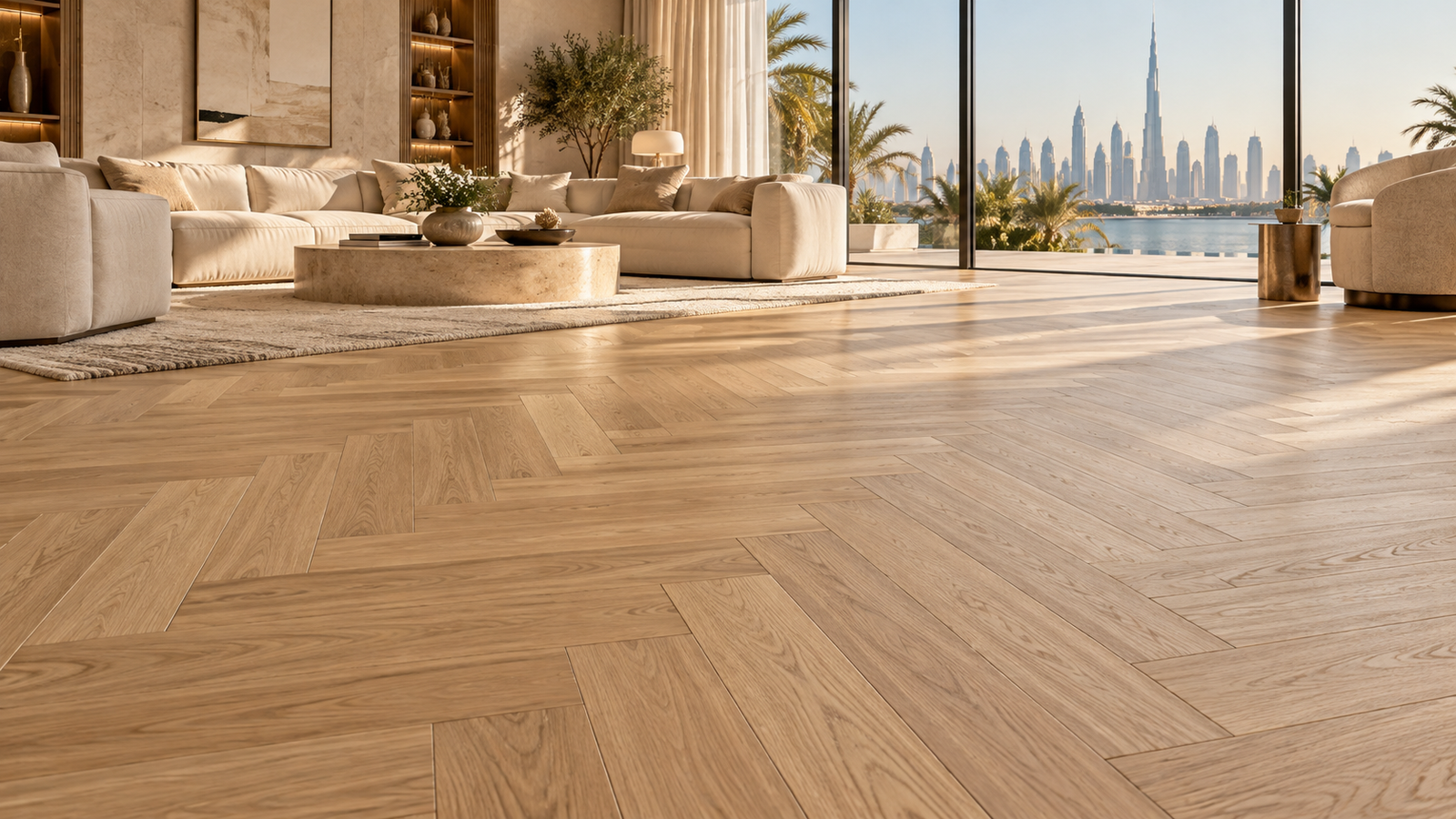
Herringbone flooring Dubai homeowners choose can add character, warmth and a sense of careful design to a room without relying on bold colours or complicated decoration. Its distinctive pattern is made by placing rectangular planks at right angles to form a repeated zigzag. The result looks detailed and elegant, yet it can work in modern apartments, traditional villas, rental properties and commercial interiors.
The pattern has a long history in European interiors, but it suits many different styles found across Dubai. Pale oak tones can make a compact apartment feel brighter, while deeper wood shades can give a villa living room a richer appearance. In offices, boutiques and reception areas, herringbone can create a polished first impression without needing an elaborate design scheme.
Choosing the right floor involves more than selecting a colour from a sample. The material, plank dimensions, surface finish, installation method and condition of the subfloor all affect the finished result. Dubai homes also have practical considerations, including air conditioning, fine desert dust, seasonal humidity and the amount of sunlight entering through large windows.
This guide explains the main styles, compares available materials, explores the factors affecting cost and installation, and shares practical advice for choosing a floor that suits your property. The aim is to help you decide whether herringbone is the right fit for your space and what to discuss with a flooring professional before placing an order.
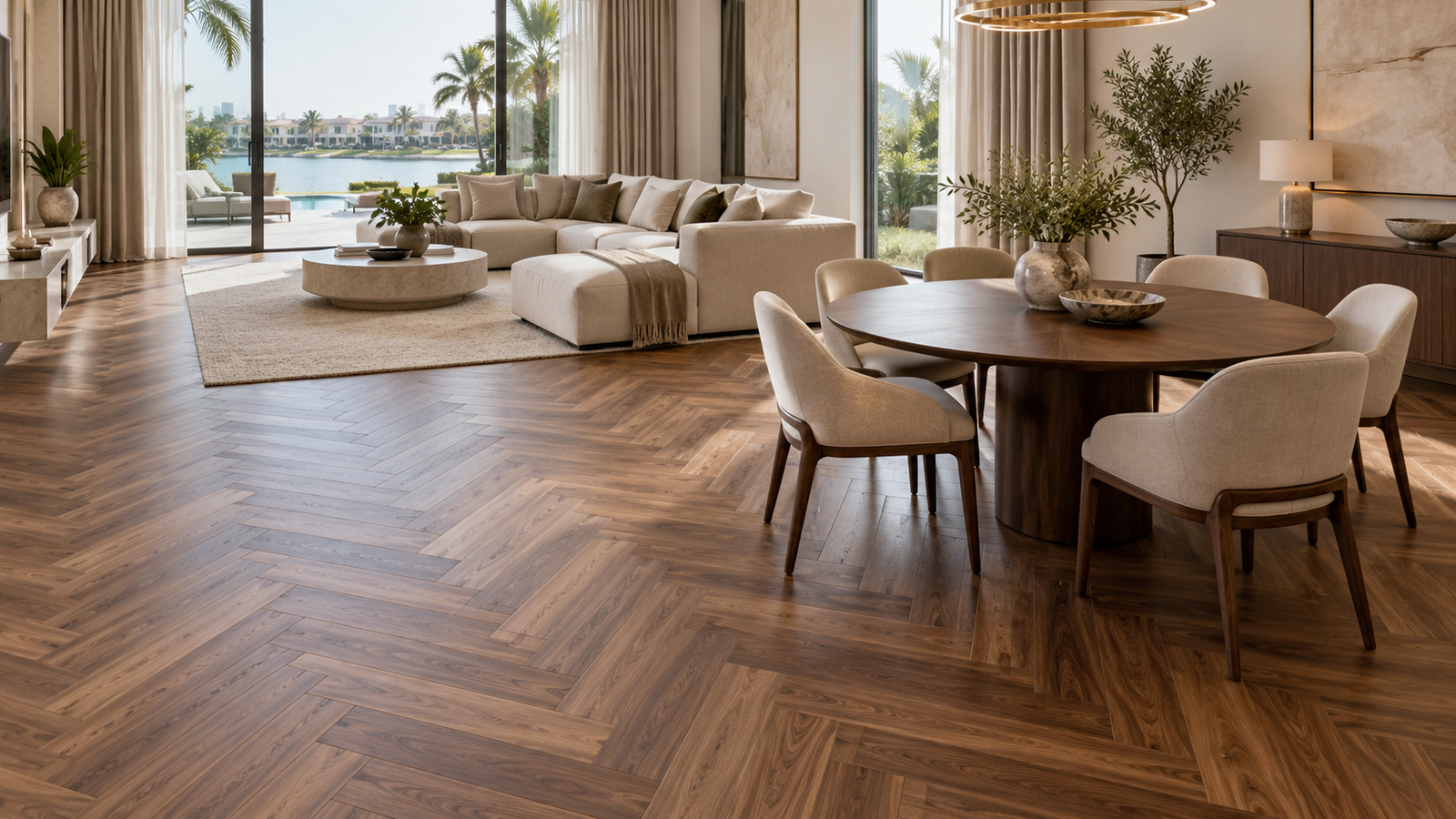
Herringbone is a flooring pattern in which rectangular pieces are arranged so that the short end of one plank meets the long side of another. Each piece sits at a right angle to its neighbour, creating a repeating zigzag effect. Although the pattern looks intricate, its appeal comes from the orderly arrangement of simple shapes.
The pattern is sometimes confused with chevron flooring. They are related designs, but the planks are cut and joined differently. In a herringbone layout, the ends of the planks are usually square, so the zigzag forms through their arrangement. Chevron flooring uses angled ends that meet to create a continuous point. Both styles can look attractive, but they produce different visual effects and may involve different material and installation requirements.
One reason herringbone remains popular is its ability to complement several decorating styles. In a contemporary Dubai apartment, light natural wood tones and slim furniture can create a clean, open appearance. In a villa with classic furniture, a medium brown finish may feel more traditional. A darker floor can also work in a large reception room when the walls, lighting and furniture prevent the space from feeling too heavy.
The pattern naturally draws the eye along the direction of its repeated lines. This can help define an open plan living area or create a visual route through a hallway. The direction in which the pattern runs matters, so it is worth reviewing a layout before installation begins.
No. The appearance is associated with premium interiors, but the pattern can be produced using different materials and finishes. Engineered wood, laminate and vinyl options may suit different budgets and maintenance expectations. The final cost depends on the chosen product, the complexity of the layout, the condition of the floor beneath it and the amount of preparation required.
For a practical overview of available floor types, explore the range of flooring options in the UAE. Consider the whole room before deciding. A beautiful pattern should support the way you use the space, not make everyday cleaning or furniture placement unnecessarily difficult.
The best style depends on the size of the room, its natural light, the furniture and the atmosphere you want to create. A pattern that looks striking in a large villa lounge may feel too busy in a narrow room if the plank size and colour are not chosen carefully.
Light oak shades are a reliable choice for apartments with neutral walls, simple furniture and open plan layouts. Cream, beige and pale grey finishes can work well with this colour family. Light floors also make dust and small surface marks less visually prominent than some very dark finishes, although every floor still needs regular cleaning.
If your apartment receives strong afternoon sunlight, ask to see a physical sample in the actual room. Artificial showroom lighting can make a finish look different from how it appears beside a window. Place the sample near the wall and furniture colours you intend to keep, then look at it during the day and under evening lighting.
Medium brown herringbone can create a comfortable, grounded appearance in larger living rooms, dining areas and bedrooms. It works particularly well when the room includes natural fabrics, warm lighting or wood furniture. A matte finish can soften the look, while a more pronounced grain gives the floor a stronger visual presence.
In a family villa, consider how the floor will look across connected spaces. If the living room, dining area and hallway are visually open to one another, a consistent finish can help the interior feel coordinated. Transitions to bedrooms or tiled areas should be planned rather than left until the final installation stage.
Walnut inspired brown, smoked wood effects and other deep tones can suit formal dining rooms, larger reception areas and selected commercial interiors. They often create a more dramatic effect, especially when paired with pale walls. However, dark finishes can show fine dust, footprints and certain scratches more clearly, depending on the surface texture and lighting.
For a balanced result, avoid selecting a dark colour only because it looks luxurious in a photograph. Check it in the actual space and consider how much natural light the room receives. The right choice is the one that remains attractive under ordinary daily conditions.
Material selection affects appearance, comfort, care, moisture tolerance and total project cost. Two floors may look similar from a distance but behave very differently once installed. Ask the supplier for the exact product specifications instead of choosing by colour alone.
Engineered wood flooring uses a real wood surface bonded to a layered core. It can provide genuine wood grain and variation, making it attractive to homeowners who want a natural material. The suitability of a particular product depends on its construction, surface thickness, installation system and manufacturer guidance.
Dubai interiors often rely on air conditioning for long periods. Changes in indoor temperature and humidity can affect wood based materials, so installation conditions and acclimatisation instructions should be followed carefully. Ask how the product should be maintained, what moisture conditions it permits and which cleaning products are appropriate. You can compare options through engineered wood flooring services.
Laminate flooring generally has a decorative surface designed to reproduce wood or other patterns, supported by a manufactured core. It can provide a convincing wood appearance and may be a practical choice for bedrooms, living rooms and selected rental properties when the product is suitable for the intended use.
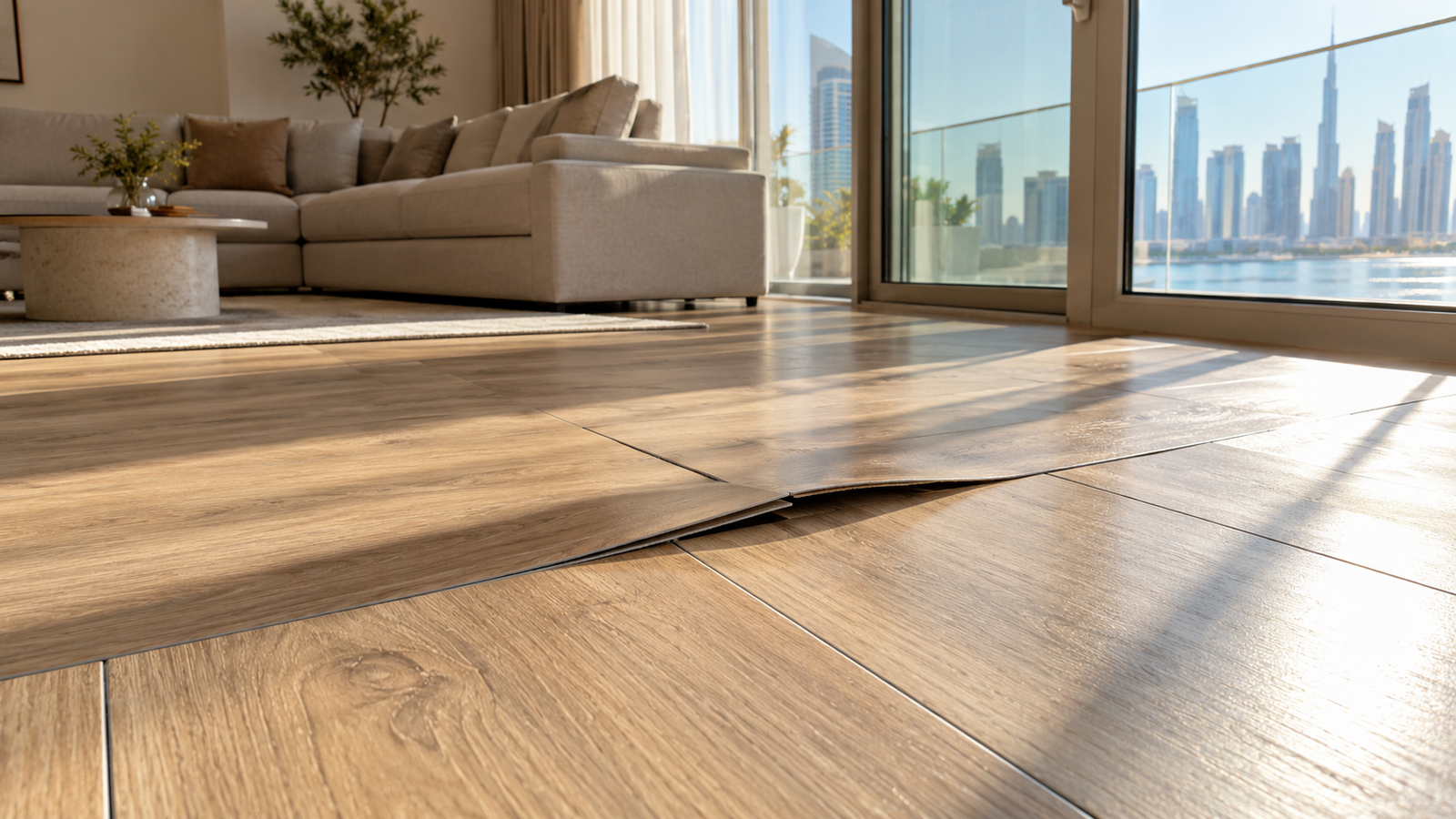
Not every laminate product has the same moisture resistance. Water left at joints or moisture coming from the subfloor can cause problems with products that are not designed for those conditions. Ask about the core, wear surface, edge protection and cleaning requirements before choosing it for a kitchen or another area where spills are more likely.
Explore laminate flooring options to understand the available finishes and construction types.
Vinyl flooring includes products designed to reproduce wood textures while offering a resilient surface. Luxury vinyl tile, commonly called LVT, is one category. Some vinyl products are available in plank formats and can be laid in a herringbone pattern when their dimensions and installation system allow it.
Stone plastic composite, known as SPC, is a rigid core flooring category. Its construction differs from flexible vinyl products, so installation instructions, underlay requirements and suitability for the room should be checked for the exact product. For a closer look, review SPC flooring options and vinyl flooring services.
The key is to match the product to the room rather than assuming every material marketed as waterproof, scratch resistant or suitable for Dubai will perform in the same way.
Herringbone vinyl flooring UAE buyers consider is often chosen for its combination of decorative appeal and everyday practicality. It can suit family homes, apartments and selected business interiors, provided the particular product is designed for the room and installed according to its instructions.
In a living room, herringbone vinyl can provide the look of a wood floor without requiring a natural timber surface. The repeated pattern gives the room structure, while a matte or lightly textured finish can keep the appearance relaxed. For bedrooms, lighter colours can create a calm atmosphere, while medium wood shades may work better with darker furniture.
Hallways need special attention because people walk through them frequently, sometimes carrying sand and dust from outdoors. A suitable wear layer and a consistent cleaning routine can help maintain the surface. Place a good entrance mat near the door and avoid dragging heavy furniture across the floor when moving items between rooms.
Some vinyl products are suitable for kitchens, but the exact product specification matters. A water resistant surface does not automatically mean that water can never reach the subfloor through joints, edges or poorly finished transitions. Leaks, standing water and moisture beneath the flooring must still be addressed quickly.
Before selecting a product for a kitchen, ask the supplier about its resistance to spills, the required subfloor preparation and the correct method for sealing or finishing edges where the installation system calls for it. For rooms where moisture is a major consideration, compare the product with the recommendations in this guide to waterproof flooring for Dubai homes. The best option depends on the room, the expected exposure to water and the manufacturer’s instructions.
Request a sample of the exact vinyl product in the herringbone format you plan to install. Some ranges offer a wood look in standard planks but have limited dimensions or colour options for patterned layouts. Confirm that the pieces are designed to form the intended pattern and that the installation method is appropriate for your subfloor.
Also ask about furniture protection, replacement plank availability and suitable cleaning products. These details may not seem important during selection, but they can make ownership much easier later.
Herringbone flooring Dubai price searches can produce confusing comparisons because quotes do not always cover the same materials and work. One estimate may include only the flooring product, while another may include preparation, installation, trims and removal of the existing floor. Before comparing amounts, ask every supplier to explain what is included.
The chosen material is one of the biggest factors affecting cost. Engineered wood, laminate and vinyl products differ in construction, surface finish and performance characteristics. Within each category, the thickness, wear layer, decorative design and quality of the locking or fixing system may also affect the price.
Natural wood surfaces can offer distinctive grain variation, while manufactured products may provide more consistent patterns and a different approach to care. A higher price does not automatically mean that a product is the right choice for your room. Match its features to the expected foot traffic, cleaning routine and moisture conditions.
For a broader overview of project expenses, use the Dubai flooring cost guide as a starting point and request a quotation for the specific product and layout you want.
Herringbone usually requires more careful layout work than a straightforward plank installation. The installer must establish a central reference line or another suitable starting point, maintain consistent alignment and manage cuts at walls, doorways and transitions. Small alignment errors can become noticeable because the pattern repeats across the room.
The condition of the subfloor can also affect the quote. Uneven areas may need levelling, while old adhesive, damaged sections or moisture concerns may require additional work. If the existing flooring has to be removed, confirm whether disposal and any repairs are included in the estimate.
The room’s shape can affect how much material is needed. An open rectangular room may be easier to plan than a space with several doorways, alcoves, columns or angled walls. Herringbone layouts can create more offcuts than a simple straight layout, so the supplier should calculate an appropriate material allowance for the chosen product and room.
Skirting, door bars, stair edges and transitions to tile also influence the final result. Ask for an itemised quote that separates the flooring, preparation, installation and finishing work. If you are comparing natural wood options, wood flooring prices in Dubai can provide additional context, although your exact quotation will depend on the selected product and site conditions.
A good installation begins well before the first plank is laid. The installer needs to understand the product requirements, inspect the room and plan how the pattern will meet its boundaries. Rushing these steps can lead to awkward cuts, uneven lines or visible gaps.
The floor beneath the new material must meet the product’s requirements for flatness, cleanliness and moisture conditions. A surface that looks acceptable at first glance may still have dips, raised joints or old adhesive that affects the installation. The correct preparation depends on whether the subfloor is concrete, an existing tiled surface or another approved base.
If the installation is taking place in an occupied Dubai apartment, discuss access to the property, furniture movement, lift booking rules and any building management requirements in advance. Some residential buildings have restricted working hours or require approval before renovation work begins. Planning these details can reduce delays.
The installer should establish the layout before committing to the full room. This includes deciding where the central line will run, how the pattern will look from the entrance and how the final rows will meet the walls. A centred pattern may be desirable in a formal room, while a hallway may need a layout that follows the main direction of movement.
Doorways deserve special attention because the pattern may continue between connected rooms or finish at a threshold. If multiple spaces are being covered, agree on the transition details before work starts. Ask the installer to show the planned starting point and explain where visible cuts are likely to fall.
There is no single installation time that applies to every herringbone project. A small, clear room with a prepared subfloor may take less time than a large villa with multiple rooms, furniture, complex borders or extensive levelling. The chosen material and installation system also affect the schedule.
Allow time for preparation and any product specific acclimatisation or adhesive curing requirements. Do not assume that the floor can be walked on or furnished immediately after installation. Your installer should provide practical instructions for the exact product, including when heavy furniture can be returned and when normal cleaning can begin.
For a project involving patterned layouts, use a team experienced in this type of work and review its professional flooring installation service. Ask for the scope of work in writing so that preparation, installation and finishing responsibilities are clear.
Dubai’s indoor environment can be very different from the conditions outside. Air conditioning is common for much of the year, while outdoor humidity, dust and heat vary by season and location. Flooring performance depends on the material, installation quality and how the room is used, so it is worth considering these conditions before choosing a product.
Wood and wood based flooring can respond to changes in temperature and moisture. A product may expand or contract within the limits of its construction, which is why the manufacturer’s requirements for storage, acclimatisation, expansion gaps and indoor conditions matter. Do not assume that every flooring type should be installed in the same way.
Direct sunlight through large windows can also affect a floor’s appearance over time. Depending on the product and finish, prolonged exposure may cause colour changes or uneven fading between sunlit and shaded areas. Curtains or blinds can help manage strong sunlight, especially in rooms with floor to ceiling glazing.
For more advice about selecting materials for local conditions, see how to choose flooring for UAE humidity and sand. The product specification should always take priority over general assumptions about how a particular material behaves.
Fine sand can enter a home on shoes, bags, pets and shopping items. If it remains underfoot, it can act like an abrasive as people walk across the surface. Regular sweeping or vacuuming with a suitable floor attachment helps remove grit before it causes unnecessary wear.
Use entrance mats where practical, and lift furniture rather than dragging it. Felt pads beneath chair and table legs can help reduce scratches. Avoid using abrasive pads or strong cleaning chemicals unless the manufacturer specifically approves them.
A consistent routine is usually better than occasional aggressive cleaning. For vinyl products, follow the guidance in this article about vinyl floor care in Dubai. Natural wood and laminate may need different products, so do not transfer cleaning advice from one floor type to another without checking compatibility.
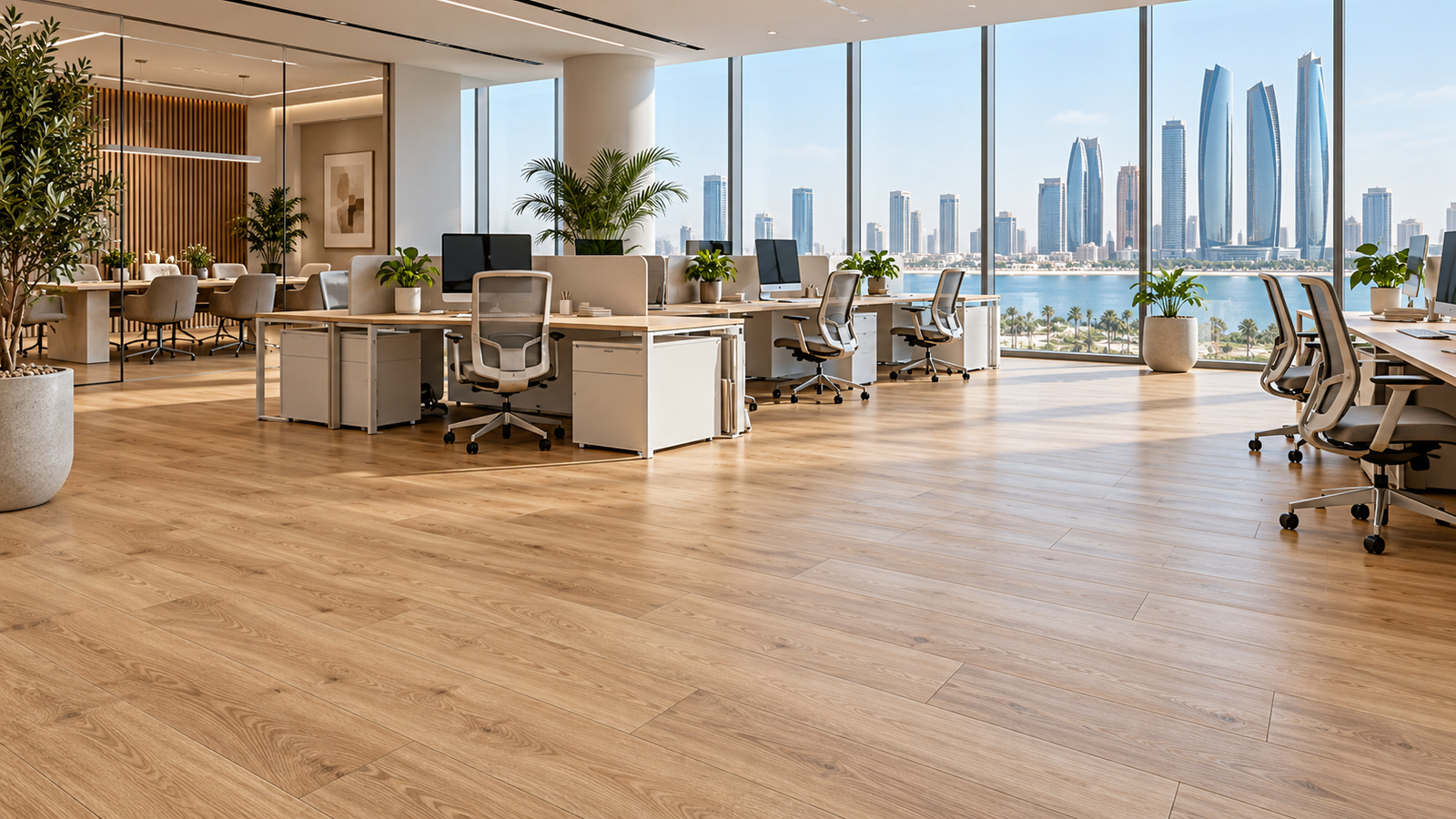
A family villa with children and frequent visitors has different needs from a quiet apartment used by one person. Rental homes may need a finish that is straightforward to maintain and easy to explain to tenants. A reception area or boutique may experience repeated foot traffic and regular cleaning by staff.
Consider these real conditions rather than choosing a floor based only on a styled photograph. Think about the number of people using the room, whether outdoor shoes are worn indoors, how often furniture is moved and whether spills are likely. The most suitable herringbone floor is one that looks right while remaining manageable for the people who live or work there.
A reliable supplier should help you select a product that suits your space, explain its limitations and provide a clear installation plan. Good advice is especially useful for herringbone because the pattern requires more attention to layout and finishing than a simple straight plank arrangement.
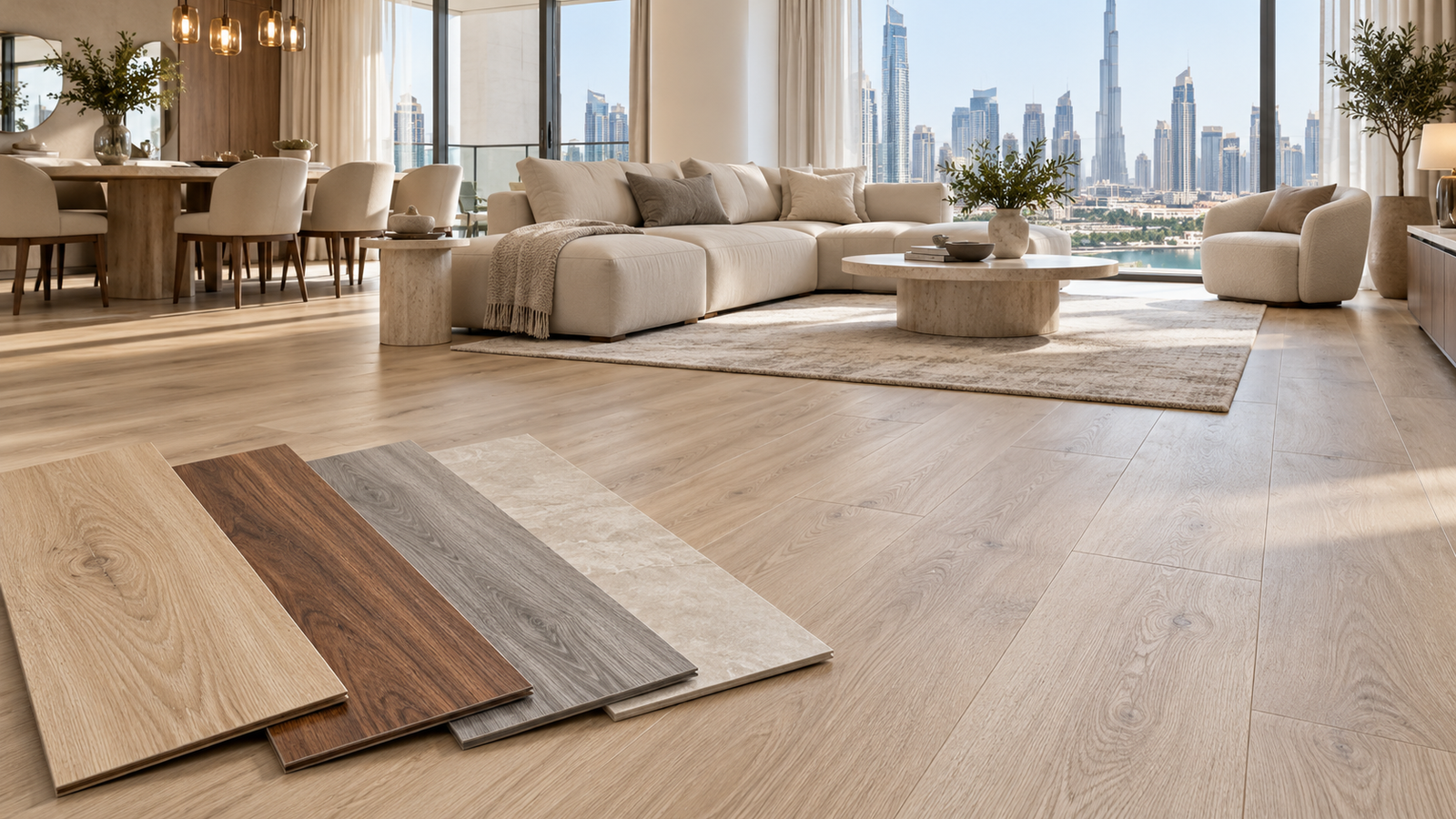
Start by requesting the product name, construction details, plank dimensions, wear surface information and installation instructions. Ask whether the material is intended for a herringbone layout and whether the required matching pieces are available. If the supplier uses a sample board, confirm that the sample represents the actual product you will receive.
Take samples to the property and view them in different lighting. Compare them with the wall paint, cabinetry, furniture and nearby tile. This simple step can prevent disappointment when a warm beige sample looks cooler under daylight or a dark brown appears heavier in a smaller room.
A lower quote may exclude subfloor preparation, skirting, transitions, old flooring removal or waste allowance. Another quote may include these items, making the total appear higher even when the underlying product price is similar. Ask for an itemised breakdown and confirm the quantity of material, installation method and expected schedule.
It is also sensible to ask how damaged planks will be handled, whether spare material can be ordered later and what aftercare instructions will be supplied. If you are comparing rigid core products with laminate, review the practical differences in this guide to SPC and laminate flooring. The comparison should focus on the exact products under consideration rather than broad claims about an entire category.
Ask who will carry out the installation and how the pattern will be set out. An experienced installer should be able to explain how the layout will meet walls, doorways and transitions. Request examples of completed patterned flooring work if available, and clarify who is responsible for site inspection and preparation.
Be cautious of promises that sound absolute, such as claims that a floor cannot scratch or that moisture will never cause a problem. All flooring products have limits. A dependable supplier explains those limits clearly and helps you make an informed choice.
For further guidance on evaluating your options, use this resource on choosing the best flooring company in Dubai. Look for clear product information, a written scope of work and realistic advice rather than relying on a low headline price alone.
Yes, herringbone flooring can suit Dubai apartments and villas when the material is selected for the room and installed according to its requirements. Consider air conditioning, sunlight, cleaning habits and possible moisture exposure before choosing a specific product.
The cost depends on the material, plank quality, dimensions, installation complexity and the amount of subfloor preparation needed. Request an itemised quotation based on your room measurements, because a product only price may not include installation, trims or removal of the existing floor.
It can cost more to install because the pattern requires careful setting out, consistent alignment and additional cutting around room edges. The difference depends on the product, the room shape and the preparation required, so ask the installer to price the actual layout rather than using a general estimate.
Installation time varies with the room size, flooring material, subfloor condition and complexity of the pattern. A prepared room with few obstacles is generally simpler than a property with several connected spaces, and the installer should explain any curing or acclimatisation time before you move furniture back.
It can be a practical option when you select a suitable product with the right wear surface and follow the recommended care instructions. For homes with children or pets, ask about scratch resistance, spill management and furniture protection, and compare the product with the needs of your household.
Some flooring systems may be installed over existing tiles if the manufacturer permits it and the surface meets the installation requirements. The tiles must be stable, clean and sufficiently even, and raised joints or damaged areas may need attention before work begins.
Performance depends on the specific material and the indoor conditions. Wood based products may respond to changes in moisture and temperature, so check the manufacturer’s guidance and make sure the room and subfloor are suitable before installation.
Neither pattern is automatically better; they simply create different visual effects. Herringbone uses rectangular pieces arranged at right angles, while chevron pieces have angled ends that meet at a point, so compare samples and installation quotations before choosing.
Remove dust and sand regularly, clean spills promptly and use a cleaning product approved for the material. Avoid soaking the floor or using abrasive tools, and follow the relevant care instructions for wood, laminate or vinyl rather than assuming the same method works for every surface.
Choose a supplier that provides clear specifications, suitable samples, a detailed quotation and a realistic installation plan. Ask how the pattern will be laid out, what preparation is included and what care instructions apply to the exact product you are buying.
The right herringbone floor should look good in the room you have, not only in a showroom or an online photograph. Start by deciding what matters most: natural wood character, easier day to day care, moisture tolerance, a particular colour or a set project budget. Once those priorities are clear, it becomes easier to narrow the options and compare products fairly.
For an apartment, consider how the pattern will look from the entrance and whether the colour complements the available natural light. In a villa, check how the floor will connect with adjoining rooms and existing finishes. If you are furnishing a rental property, think about cleaning requirements, replacement material availability and the type of wear the floor is likely to experience. You can also compare the practical considerations for villa and apartment flooring before making a final decision.
Before approving a quotation, confirm the exact product, colour, plank dimensions, installation method, subfloor preparation, finishing details and aftercare requirements. Check that the quotation describes the work clearly and identifies any items that are not included. Avoid making the decision on the material price alone, since preparation and installation can have a meaningful effect on the finished result.
It is also worth reviewing common flooring mistakes during renovation before work begins. A little planning can help you avoid choosing a product that does not suit the room, overlooking transitions or discovering unexpected preparation costs after the project has started.
Herringbone flooring Dubai projects can achieve a distinctive finish when the pattern, material and installation are planned together. The next practical step is to measure your room, collect a few samples that match your preferred style and request a quotation based on the actual site conditions. You can discuss suitable materials and installation requirements with the team at Urban Floors.
Category :
Share :
WhatsApp us