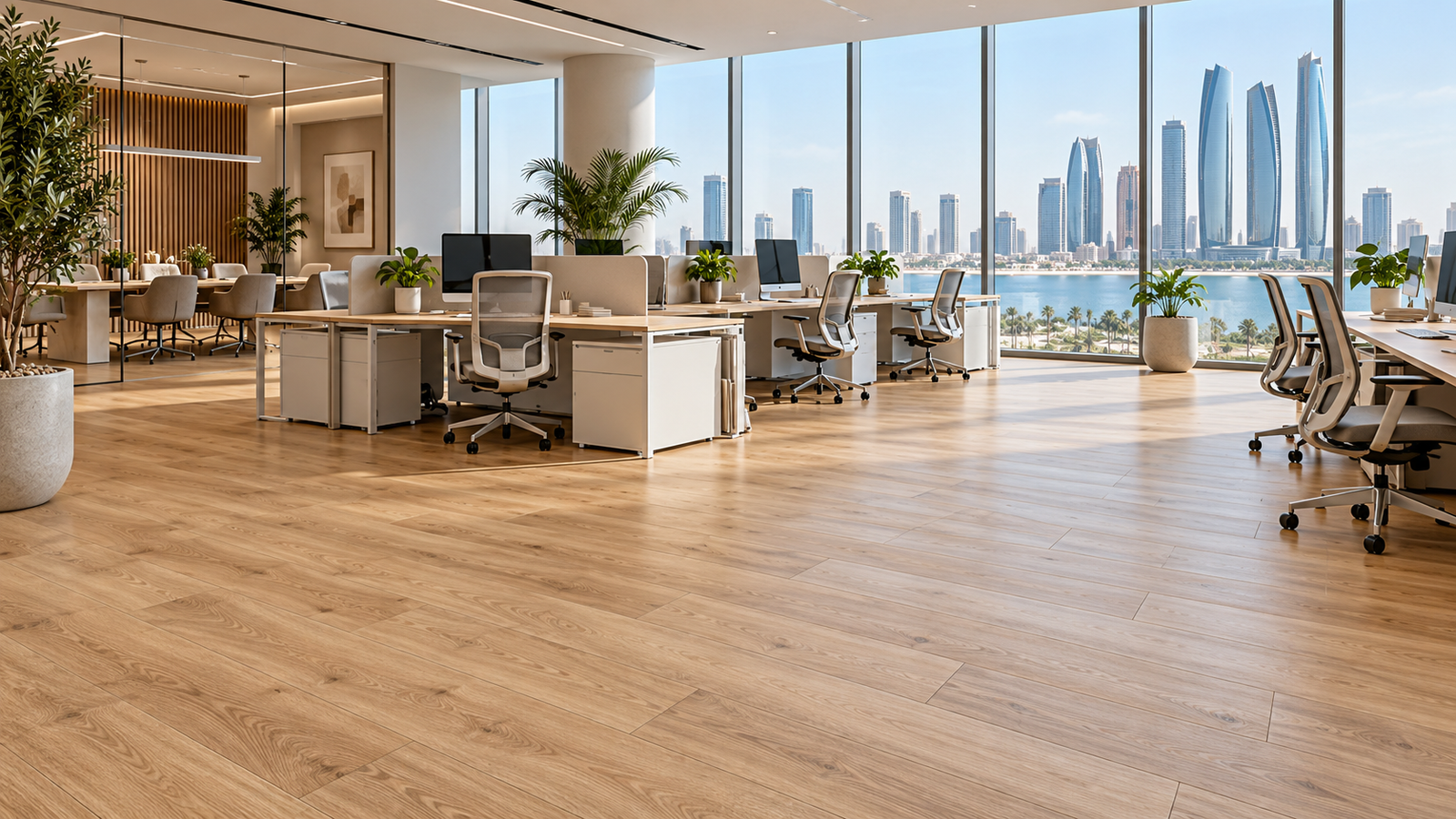

Renovation projects rarely go exactly to plan, but flooring mistakes tend to be some of the most expensive to fix after the fact. Unlike a wall color you can repaint in an afternoon, a flooring error often means ripping up an entire room material, labor, and lost time included and starting over.
Most flooring mistakes aren’t really about picking the “wrong” product. They’re about skipping a step, misjudging the climate, or trusting a quote that looked good on paper but left out half the story. In a market like the UAE, where heat, humidity, and fast-paced renovation timelines all add extra pressure, these mistakes show up more often and more expensively than in milder climates.
This guide walks through the most common flooring mistakes UAE homeowners and businesses make during renovation, why each one causes problems, and how to avoid repeating them.
Not every flooring type performs equally well in Dubai’s heat and humidity, and choosing based purely on appearance or price without factoring in climate is one of the most common — and costly — renovation mistakes.
How to avoid it: Choose fully waterproof, heat-stable materials like SPC or vinyl for sun-exposed rooms, kitchens, and bathrooms, and ask any supplier directly how their specific product performs under UAE conditions rather than relying on general marketing claims.
A beautiful floor installed over a poorly prepared subfloor is only ever a temporary fix. Uneven, damp, or unclean subfloors cause problems that often do not show up until months after installation.
How to avoid it: Insist on proper subfloor assessment and preparation before installation begins, including a flatness check and a moisture reading, even if it adds a day to the project timeline.
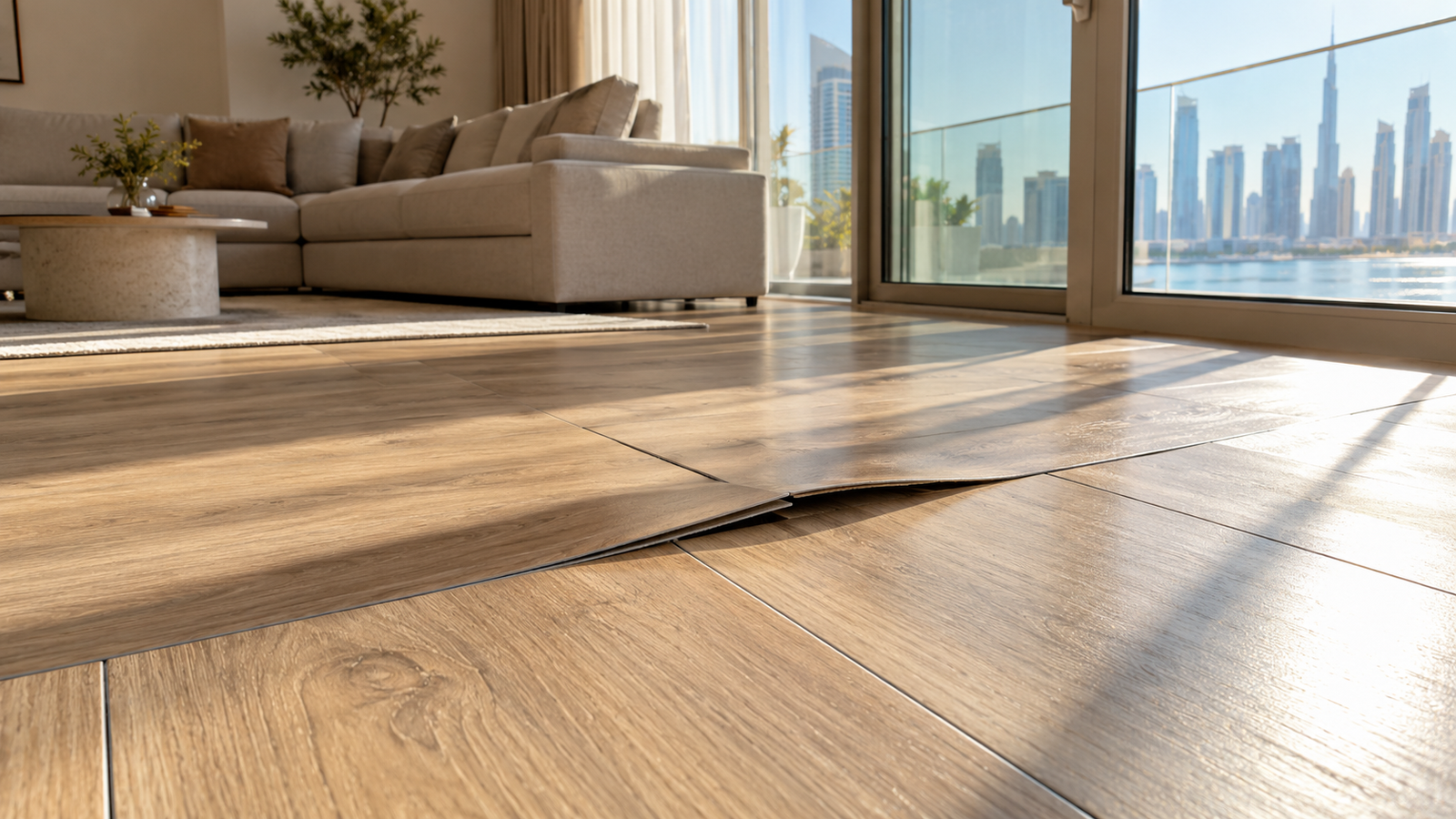
Flooring materials, particularly laminate and engineered wood, need time to adjust to a room’s temperature and humidity before installation. Skipping this step is one of the most common causes of gapping, buckling, or lifting after installation.
How to avoid it: Build acclimatization time typically 48 to 72 hours into the renovation schedule from the start, rather than treating it as an optional step that can be skipped under time pressure.
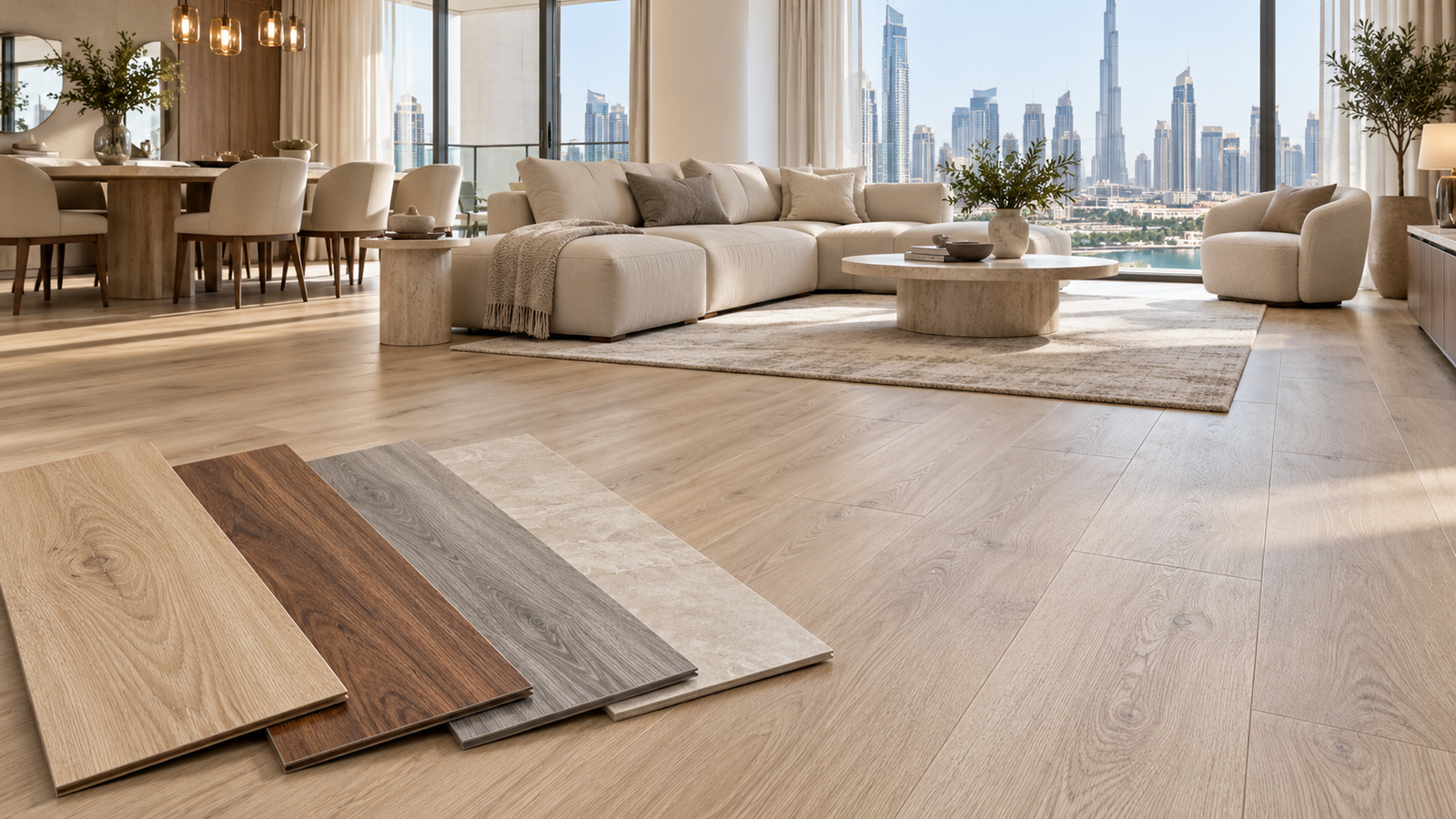
Not every flooring type suits every space, and a mismatch between material and room usage is one of the most preventable mistakes in any renovation.
How to avoid it: Match material to room function first, and aesthetic preference second. A flooring supplier who asks about how each room is used before recommending a product is generally more reliable than one who pushes a single material throughout.
One of the most common renovation budget-busters isn’t a bad flooring choice it’s a quote that didn’t tell the whole story. Costs that seem to appear “out of nowhere” partway through a project are almost always costs that were left off the original quote.
How to avoid it: Always request a fully itemized quote in writing before committing, and ask directly whether it includes installation, underlayment, old flooring removal, and finishing work.
Flooring materials like laminate, SPC, and engineered wood need room to expand and contract with temperature changes, especially in a climate with strong air conditioning contrast between indoor and outdoor environments.
How to avoid it: Confirm that installers are leaving the correct expansion gap — typically 8 to 12mm depending on the product and room size — around every fixed object in the room, not just the outer walls.
A lower price isn’t automatically a red flag, but accepting the cheapest quote without asking what’s different about it often leads to disappointment later in the renovation.
How to avoid it: If one quote is significantly lower than others for a similar-sounding product, ask directly about wear layer thickness, core material, and who is actually doing the installation before assuming it’s simply a better deal.
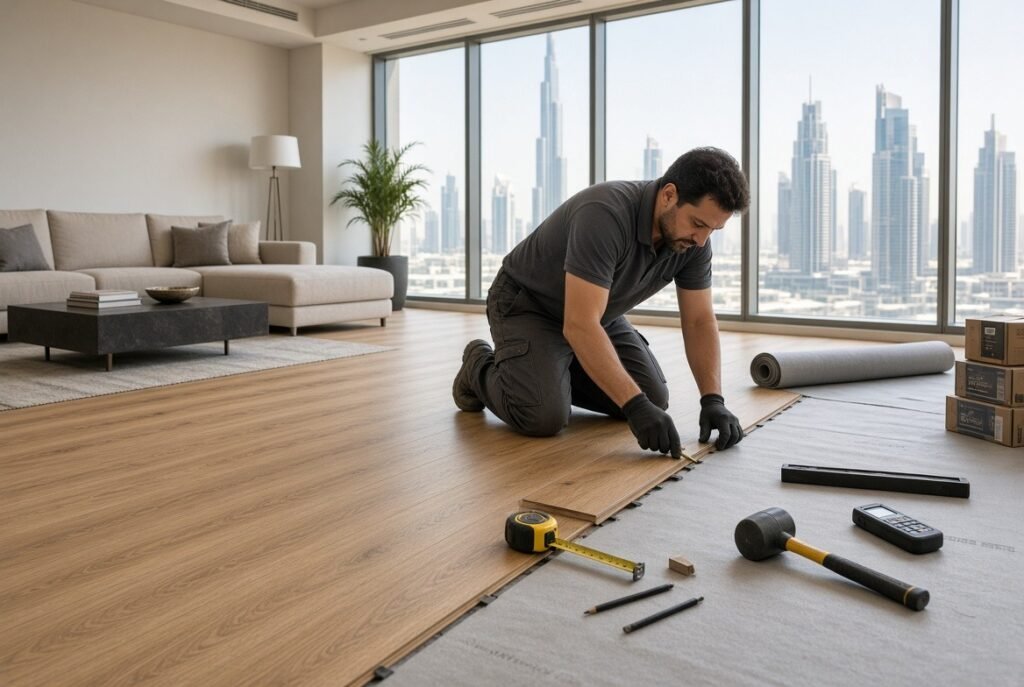
The material matters, but installation quality is often what actually determines how a floor performs and looks over time. Many renovation projects fail not because of the product, but because of rushed or inexperienced fitting.
How to avoid it: Ask whether the company uses trained, in-house installation teams, and confirm what happens if an issue arises after installation a company confident in its work will have a clear answer.
For businesses especially, flooring renovations that aren’t planned around operating hours can cause more disruption and cost than the renovation itself.
How to avoid it: For commercial projects, ask suppliers directly about after-hours or weekend scheduling options, and request a realistic timeline rather than an optimistic best-case estimate.
Some flooring choices look great on installation day but come with maintenance demands that don’t suit the household or business using the space.
How to avoid it: Ask about maintenance requirements before choosing a material, not after installation, particularly for high-traffic homes, rental properties, or commercial spaces where upkeep needs to be realistic and manageable.
Many homeowners only read the warranty fine print after a problem has already appeared, by which point it’s often too late to address gaps in coverage.
How to avoid it: Ask specifically what the warranty covers material, waterproofing, and installation workmanship and for how long, before signing off on any renovation project.
Renovations often come with real time pressure a move-in date, a tenant deadline, a business opening date but rushing the flooring decision itself tends to cause more delays than it saves.
How to avoid it: Build a realistic timeline that includes sampling, quote comparison, and proper installation from the outset, rather than treating flooring as the step that gets compressed when a renovation runs behind schedule.
Before committing to any flooring renovation in the UAE, run through this list:
What is the most common flooring mistake homeowners make in the UAE?
Choosing a material without considering UAE-specific climate factors like heat, humidity, and sun exposure is one of the most common and costly mistakes, often leading to warping, fading, or moisture damage that wasn’t accounted for during selection.
Why does subfloor preparation matter so much before installing new flooring?
An uneven or damp subfloor can cause hollow spots, premature wear, and long-term moisture issues that don’t become visible until months after installation, making proper subfloor checks one of the most important steps in any flooring project.
Can skipping acclimatization really cause problems with laminate or engineered wood flooring?
Yes. Installing flooring without allowing it to adjust to the room’s temperature and humidity is one of the leading causes of gapping, buckling, or lifting once the material settles into its normal indoor environment.
How can I avoid hidden costs when getting a flooring renovation quote?
Request a fully itemized quote in writing that clearly separates material, installation, underlayment, old flooring removal, and finishing details, and ask directly whether anything has been left out before committing to a supplier.
Is it a mistake to always choose the cheapest flooring quote?
Not necessarily, but accepting the cheapest quote without asking why it’s cheaper checking wear layer thickness, core material, and installer experience can lead to a floor that wears out or fails sooner than expected.
What expansion gap should be left when installing flooring in the UAE?
Typically 8 to 12mm around the perimeter of the room and around any fixed objects, though the exact figure depends on the specific product and manufacturer recommendations.
Why does it matter who installs the flooring, not just which material is chosen?
Installation quality significantly affects how a floor performs and looks over time, and rushed or inexperienced fitting can cause a well-chosen material to fail prematurely, regardless of how suitable the product itself was for the space.
Most flooring mistakes in UAE renovations aren’t dramatic, obvious errors they’re small oversights that compound over time: a skipped moisture check, an incomplete quote, a rushed acclimatization period. Individually, each one seems minor. Together, they’re responsible for the majority of flooring problems that show up months after a renovation is finished.
The good news is that every mistake on this list is entirely avoidable with the right preparation and a supplier willing to explain their process clearly rather than rushing you toward a decision. Asking the right questions upfront costs nothing and takes far less time than fixing a flooring problem after the fact.
At Urban Floors, we handle every step of the process properly from subfloor checks and acclimatization to transparent, itemized pricing and trained installation teams so UAE homeowners and businesses can renovate with confidence instead of guesswork. If you’re planning a flooring renovation and want it done right the first time, get your free consultation and quote today.