Renovating your floors sounds simple until you actually start searching. Type “flooring company in Dubai” into Google and you’ll get dozens of suppliers, each promising the lowest price, the fastest delivery, and the best quality. Somewhere between the WhatsApp quotes, the showroom visits, and the conflicting advice, most homeowners end up more confused than when they started.
Here’s the truth: not every flooring company in Dubai is built the same way. Some are just suppliers who drop off boxes and disappear. Others subcontract installation to whoever happens to be free that week. The right company handles your entire project from the first sample to the final skirting board and knowing what separates the two makes all the difference to how your floor looks five years from now.
This guide breaks down exactly what to look for, the questions to ask, the mistakes to avoid, and the red flags to watch out for, so you can choose a flooring company in Dubai with confidence instead of guesswork.
Why Choosing the Right Flooring Company in Dubai Actually Matters
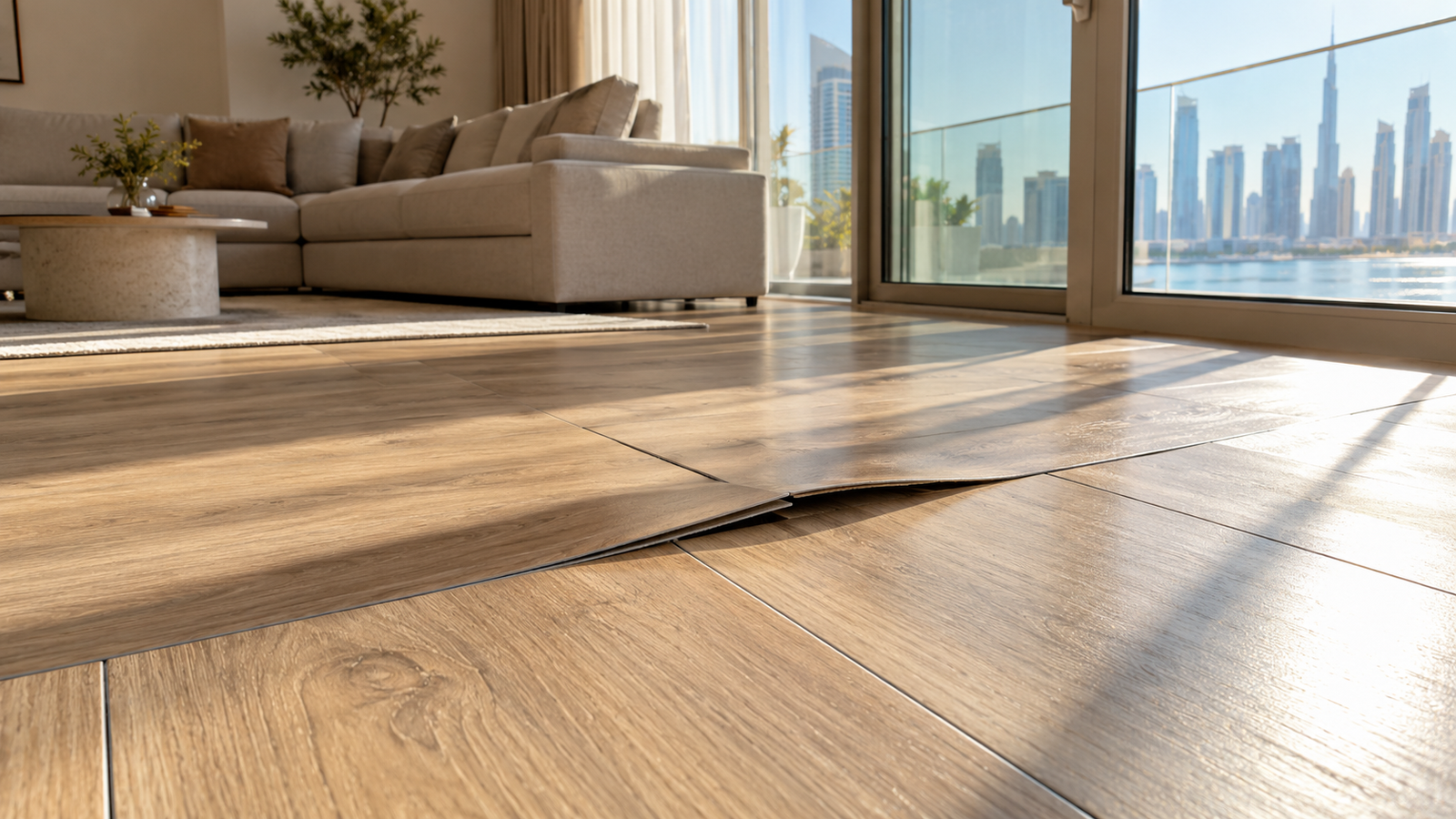
Flooring isn’t like paint. You can’t touch it up in an afternoon if something goes wrong. A poorly installed floor in Dubai’s climate can warp, peak at the seams, or discolor within months especially in rooms with heavy sun exposure or high foot traffic.
The Emirates’ heat and humidity are unforgiving on cheap materials and rushed installation. Consider what’s actually at stake when you choose the wrong company:
- Wasted money on materials that need to be ripped out and replaced within a couple of years
- Structural issues like subfloor damage if moisture wasn’t properly addressed before installation
- Lost time dealing with delayed deliveries, rescheduled installers, or disputes over unclear quotes
- Reduced property value if flooring looks dated, damaged, or poorly finished during a resale or rental inspection
- Ongoing frustration with warped planks, lifting edges, or gaps that a proper installation would have prevented
A company that understands local conditions will recommend the right product for the right room, not just whatever they have the most stock of. That single decision — material suited to the space versus material suited to the sale — is usually what separates a floor that lasts fifteen years from one that needs replacing in three.
Key Factors to Consider When Choosing a Flooring Company in Dubai
1. Range of Flooring Materials Offered
A flooring company that only sells one product type will always recommend that product, whether or not it’s actually right for your space. Look for a company offering a genuine range, such as:
- SPC flooring — dense, rigid core with excellent heat resistance and full waterproofing, ideal for sun-exposed rooms, kitchens, and high-traffic zones
- Vinyl flooring (LVT) — soft, quiet, and fully waterproof, popular in bedrooms, living rooms, and family spaces
- Laminate flooring — a realistic wood-grain finish with a scratch-resistant wear layer, suited to spaces that want a genuine timber look at a lower cost
- Engineered wood flooring — real timber veneer over a stable, layered core, offering the authentic feel of hardwood without the warping risk in humid conditions
Why does this matter? Every room has different needs. A sun-drenched living room with floor-to-ceiling windows needs a heat-stable, fully waterproof option like SPC. A bedroom where comfort underfoot matters more than rigidity might be better suited to a softer vinyl product. A company with the full range can match the material to the room instead of matching the room to whatever they happen to stock.
2. In-Home Sampling Before You Commit
Screen colors lie. What looks like a warm oak tone on a product photo can look completely different once it’s sitting under your home’s actual lighting, next to your furniture and wall color.
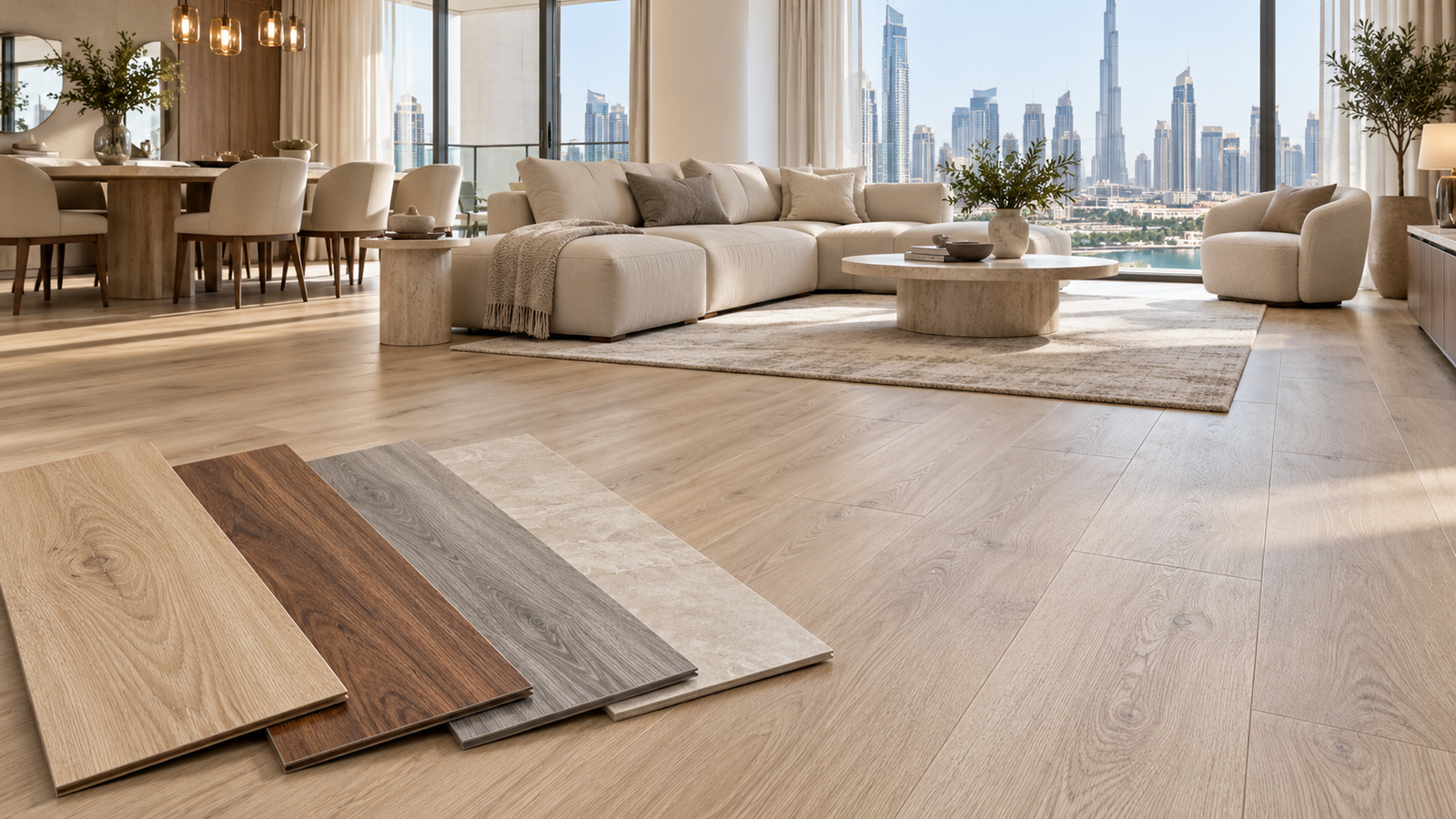
The best flooring companies in Dubai bring physical samples to your home before you decide, not after. This one step alone prevents the majority of buyer’s remorse in flooring projects. Here’s why in-home sampling matters so much:
- Lighting changes everything natural daylight, warm bulbs, and cool LED lighting can each make the same plank look like a different shade
- Texture is impossible to judge on-screen embossed wood grain, matte finishes, and glossy surfaces all photograph similarly but feel completely different underfoot
- Existing decor matters a sample held against your actual walls, cabinets, and furniture tells you far more than a catalog page ever could
- It filters out low-effort suppliers companies unwilling to visit your home are usually optimizing for a quick sale, not a result you’ll be happy with long term
If a company only offers a website gallery or asks you to visit a showroom across town, that’s worth factoring into your decision.
3. Transparent, Upfront Pricing
Ask any Dubai homeowner who has dealt with a shady contractor and they’ll tell you the same story: the quote that grows. What starts as an attractive per-square-meter price suddenly includes “installation fees,” “material handling charges,” and “subfloor prep costs” that only appear once the work has already started.
Before signing anything, ask directly whether the quote includes:
- Material cost per square meter
- Installation labor
- Underlayment or acoustic backing, if required
- Subfloor preparation or leveling, if your existing floor needs it
- Finishing details such as skirting boards, transition strips, and door thresholds
- Removal and disposal of your old flooring
A trustworthy flooring company gives you one number upfront that covers all of this, with no surprises once the crew arrives. If the answer to any of these is vague or “we’ll assess on-site and let you know,” treat that as a signal to get a second quote.
4. Skilled, Dedicated Installation Teams
This is where most flooring projects actually go wrong not in the material, but in the fitting. SPC, vinyl, laminate, and engineered wood each require slightly different installation techniques, subfloor preparation, and expansion gap allowances.
Ask whether the company uses its own trained floor fitters or subcontracts the job out to whoever is available. In-house teams tend to offer:
- Consistent quality across projects, since the same trained crew handles every installation
- Better accountability if something needs adjusting after the job is done
- Specialized knowledge of the exact materials the company sells, rather than generic flooring experience
- Cleaner finishing around doorways, edges, stairs, and transitions the details that make a floor look genuinely professional rather than rushed
Subcontracted teams aren’t automatically bad, but you lose a layer of accountability, and quality can vary significantly from one job to the next.
5. Fast, Reliable Delivery Timelines
Renovation timelines have a way of spiraling once materials get delayed. If a supplier doesn’t keep popular flooring ranges in stock, you could be waiting weeks for shipments to clear customs or arrive from overseas warehouses.
Ask how quickly materials can be delivered once you place an order, and confirm:
- Whether the specific color and finish you want is in stock locally
- What the estimated delivery window is if it needs to be ordered in
- Whether installation can be scheduled immediately after delivery, or if there’s another wait
- How they handle delays if a shipment is late
Companies that stock inventory locally can often deliver within 24 to 48 hours, which keeps your renovation on schedule instead of stalled halfway through a room that’s already been cleared of furniture.
6. Warranty Coverage That Actually Protects You
A flooring warranty should mean something beyond a line on an invoice. Before committing, ask specifically what’s covered, including:
- Color change and fading over time, particularly in sun-exposed rooms
- Waterproof performance, especially in kitchens, bathrooms, and utility areas
- Installation workmanship, covering issues like lifting, gapping, or uneven seams
- Duration of coverage — is it one year, five years, or longer?
- What voids the warranty — normal wear and tear is expected, but read the fine print on maintenance requirements
A company confident in its materials and its installation team will put that confidence in writing. If a business is reluctant to offer any warranty at all, treat that as a warning sign about how long the floor is actually expected to last.
7. Genuine Reviews and Completed Projects
Anyone can post a five-star testimonial on a homepage. What’s harder to fake is a consistent track record across neighborhoods, project types, and years of work. When evaluating reviews, look for:
- Reviews tied to specific, checkable details — a location, a project type, a timeline — rather than generic praise
- Photos or videos of real completed installations, not just stock imagery or product catalog shots
- A spread of projects across villas, apartments, offices, and retail spaces, showing the company can handle different environments
- Consistency in feedback around the same themes — pricing honesty, installation quality, communication — across multiple independent reviews
8. Area Coverage Across the UAE
Not every flooring company that markets itself in Dubai actually services the wider Emirates. If you’re based outside central Dubai, confirm coverage for your specific area, including:
- Abu Dhabi, Sharjah, and Ajman
- Ras Al Khaimah, Fujairah, and Umm Al Quwain
- Al Ain, Khor Fakkan, and Kalba
- Any additional delivery or installation charges for locations outside the main service zone
How Dubai’s Climate Should Shape Your Flooring Decision
Any flooring company worth hiring should be asking about your space before recommending a product, not the other way around. Dubai’s climate creates a few specific challenges that a generic supplier especially one importing a one-size-fits-all catalog may not account for:
- Intense, prolonged sun exposure through floor-to-ceiling windows and glass doors, common in modern villas and apartments, which can cause lower-quality materials to warp, fade, or expand unevenly
- High ambient humidity, particularly during summer months, which affects moisture-sensitive materials like solid hardwood far more than composite or rigid-core options
- Air conditioning and temperature swings between indoor and outdoor spaces, which put ongoing stress on flooring seams and expansion gaps
- Sand and dust, which demand a wear layer tough enough to resist scratching from daily foot traffic and cleaning
A company familiar with these conditions will walk your space, note which rooms get direct sun, ask how the room is used day to day, and recommend a product suited to that specific environment — rather than pushing whichever range they have the most stock of that month.
Red Flags That Signal a Flooring Company to Avoid
Just as there are signs of a trustworthy company, there are consistent warning signs worth watching for:
- Pressure to decide on the spot. A legitimate company understands flooring is a significant investment and won’t rush you into signing before you’ve compared samples or pricing.
- No physical address or showroom. Businesses operating purely through social media ads with no verifiable location are harder to hold accountable if something goes wrong.
- Reluctance to put pricing in writing. Verbal quotes that change once work begins are one of the most common complaints in the flooring industry.
- Vague answers about installation teams. If a company can’t clearly say who is doing the fitting work, that uncertainty usually shows up in the final result.
- No warranty, or a warranty with excessive conditions. Extremely restrictive terms are sometimes a sign the company doesn’t expect the flooring to perform well long term.
- Reviews that all sound identical. Genuinely satisfied customers tend to mention different details a specific room, a specific installer, a specific timeline rather than repeating near-identical phrasing.
- Unusually low pricing with no explanation. If a quote is significantly below every other company you’ve spoken to, ask directly what’s different about the material thickness, wear layer, or installation process — there’s usually a reason.
Factors That Influence Flooring Cost in Dubai
Understanding what actually drives pricing helps you evaluate whether a quote is fair, rather than just comparing raw numbers. Key cost factors include:
- Material type and quality tier budget SPC and premium engineered wood sit at very different price points even within the same square footage
- Wear layer thickness — thicker wear layers cost more but last significantly longer in high-traffic areas
- Room size and layout complexity spaces with many corners, doorways, or stairs take longer to install and typically cost more in labor
- Subfloor condition an uneven or damaged subfloor may need leveling or repair before installation can begin
- Underlayment or acoustic backing required in some apartment buildings to meet noise regulations, and not always included by default
- Removal of existing flooring disposing of old tiles, carpet, or flooring is sometimes billed as a separate line item
Getting a clear, itemized breakdown of these factors makes it far easier to compare quotes accurately rather than being swayed by the lowest number alone.
Questions to Ask Before Hiring a Flooring Company in Dubai
Before signing off on any quote, run through this checklist:
- Does the quote include both material and installation, with no hidden fees?
- Can I see and touch a physical sample in my own home before ordering?
- Who is doing the installation — an in-house team or a subcontractor?
- How soon can materials be delivered once I confirm my order?
- What exactly does the warranty cover, and for how long?
- Do you serve my specific area across the UAE, not just central Dubai?
- What happens if I’m not satisfied with the finished installation?
- Can you provide references or examples of similar projects you’ve completed?
A company that answers all of these clearly, without hesitation or vague deflection, is usually one worth trusting with your floors.
Common Mistakes Homeowners Make When Choosing a Flooring Company
- Choosing based on price alone. The cheapest quote often excludes installation, underlayment, or finishing work — costs that resurface later and end up costing more overall.
- Skipping the in-home sample step. Committing to a color and finish from a website photo alone is one of the most common causes of post-installation regret.
- Not asking who installs the floor. A great product installed poorly will still fail — uneven seams, gaps at the edges, and lifting are almost always installation issues, not material defects.
- Overlooking the climate factor. Not every flooring type handles Dubai’s heat and humidity equally well. A supplier who doesn’t ask about sun exposure and room usage before recommending a product isn’t giving you tailored advice.
- Ignoring the warranty fine print. Assuming “warranty included” covers everything, without checking what specifically is protected and for how long.
- Not comparing multiple quotes. Accepting the first quote without a second or third for comparison makes it hard to know if pricing is genuinely fair.
- Forgetting to ask about disposal. Old flooring removal is sometimes billed separately, which can be an unwelcome surprise on the final invoice.
- Rushing the decision. Flooring is a long-term investment; taking an extra few days to compare samples, pricing, and reviews is almost always worth it.
How to Compare Multiple Flooring Quotes the Right Way
Once you’ve gathered a few quotes, avoid the temptation to simply compare bottom-line numbers. Instead:
- Break each quote down into material cost, labor cost, and any additional charges
- Confirm that every quote is for the same product tier and thickness — comparing budget SPC to premium engineered wood isn’t a fair comparison
- Check whether delivery and installation timelines match across quotes
- Ask each company the same warranty questions so you’re comparing coverage apples to apples
- Factor in communication and responsiveness — a company that’s slow to answer questions before you’ve paid anything is unlikely to improve afterward
Frequently Asked Questions
How do I choose the best flooring company in Dubai?
Look for a company that offers a genuine range of flooring materials, brings physical samples to your home, provides transparent upfront pricing, uses trained in-house installers, and backs its work with a clear warranty covering color change, waterproofing, and installation quality.
What is the average cost of flooring installation in Dubai?
Costs vary depending on material and project size, but most reputable companies price both material and installation together, with SPC and vinyl generally falling in a similar mid-range bracket and engineered wood typically priced higher due to real timber content.
Should I choose SPC, vinyl, laminate, or engineered wood flooring for my home?
The right choice depends on the room. SPC suits sun-exposed, high-traffic, or wet areas due to its rigidity and full waterproofing. Vinyl offers a softer, quieter feel for bedrooms and living spaces. Laminate gives an authentic wood look at a lower cost. Engineered wood suits homeowners who want genuine timber with better stability than solid hardwood in humid conditions.
How long does flooring installation typically take?
Timelines depend on the size of the space and the material chosen, but most residential rooms can be measured, delivered, and installed within a few days once a company has stock on hand, compared to weeks if materials need to be shipped in.
Do flooring companies in Dubai offer free samples?
Many reputable companies do, and it’s worth prioritizing those that bring samples directly to your home rather than requiring a showroom visit, since lighting and existing decor significantly affect how a floor will actually look once installed.
What should be included in a flooring warranty?
A solid warranty should cover color change and fading, waterproof performance, and installation workmanship, with a clearly stated duration and conditions that don’t rely on vague or overly restrictive maintenance requirements.
Is it cheaper to buy flooring materials separately from installation?
It can appear cheaper upfront, but sourcing materials and installers separately often leads to disputes over responsibility if something goes wrong, and rarely comes with the same warranty protection as a single accountable company handling both.
Do flooring companies in Dubai serve areas outside the city, like Abu Dhabi or Sharjah?
Coverage varies by company, so it’s worth confirming directly whether a business services your specific emirate, as some suppliers focus only on central Dubai despite marketing themselves UAE-wide.
Final Thoughts: Choosing a Flooring Company That Gets It Right the First Time
The best flooring company in Dubai isn’t necessarily the one with the biggest showroom or the loudest ads — it’s the one that treats your home like it matters. That means:
- Bringing real samples to your door instead of relying on catalog photos
- Pricing honestly from the start, with installation and finishing included
- Using trained installers who take pride in clean, precise finishes
- Standing behind their work with a warranty that actually means something
- Serving your specific area across the UAE, not just the most convenient neighborhoods
At Urban Floors, this is exactly how we approach every project — supplying and installing SPC, vinyl, laminate, and engineered wood flooring across the UAE, with free home samples, transparent pricing, and installation teams trained specifically for the materials we sell. If you’re ready to see real samples in your own space and get honest, upfront pricing, get your free quote today.