
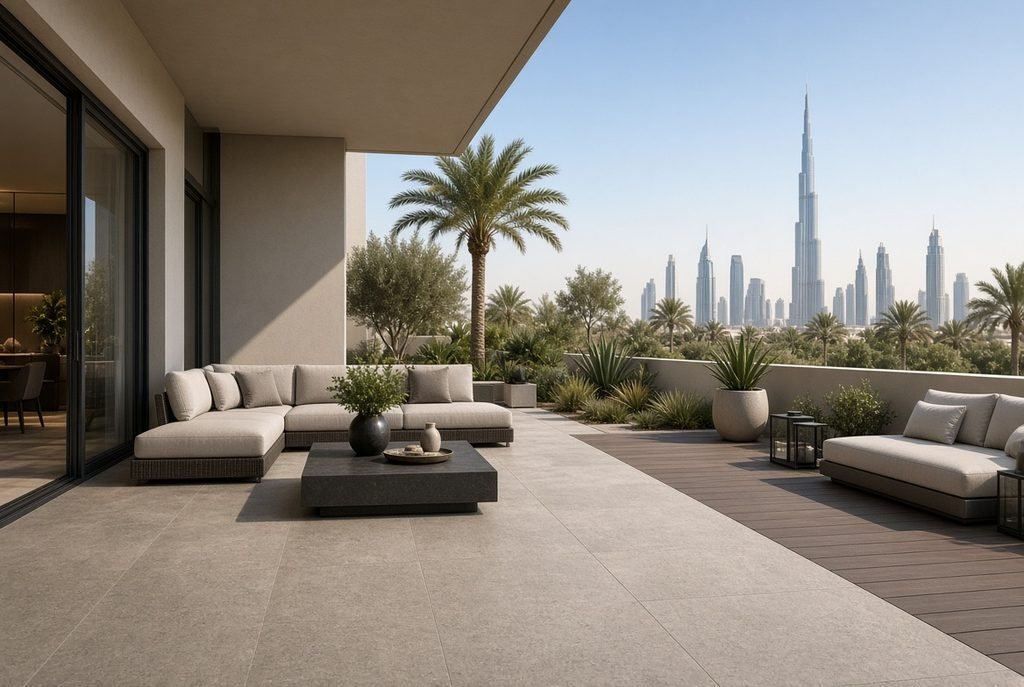
Outdoor flooring in Dubai needs to handle intense heat, strong sunlight, dust, occasional moisture, and heavy foot traffic while still looking attractive. The best options include outdoor tiles, porcelain, composite decking, natural stone, and suitable SPC or vinyl products for covered areas. The right choice depends on whether the flooring is for a terrace, balcony, garden, poolside, rooftop, restaurant, or commercial outdoor space.
Outdoor flooring refers to flooring materials specifically selected for exterior areas that are exposed to weather, sunlight, temperature changes, moisture, and regular use.
In Dubai, outdoor flooring requires more careful selection than indoor flooring because the local environment can be demanding. A material that performs well inside an air conditioned villa may not be suitable for an uncovered terrace or rooftop.
Good outdoor flooring should offer:
For many Dubai properties, porcelain tiles, outdoor ceramic tiles, natural stone, composite decking, and other purpose built exterior materials are among the most practical choices.
Dubai has a hot desert climate, which means outdoor flooring can experience significant thermal stress throughout the year.
Outdoor surfaces can become considerably hotter than the surrounding air when exposed to direct sunlight. Some materials can become uncomfortable to walk on and may expand or contract as temperatures change.
Continuous exposure to ultraviolet radiation can cause some flooring materials, finishes, and colors to fade over time.
Fine desert dust and sand can accumulate on outdoor floors. When people walk across the surface, these particles can act as abrasives and gradually affect the finish.
Although Dubai is generally dry, rain can occur. Outdoor flooring should therefore be able to handle temporary moisture without creating unnecessary maintenance problems.
Outdoor flooring for hotels, restaurants, offices, villas, and retail properties may experience much higher foot traffic than a private balcony.
There is no single flooring material that is ideal for every outdoor space. The best option depends on the location, exposure, traffic, maintenance requirements, and design expectations.
Porcelain is one of the strongest options for outdoor flooring when the correct exterior grade product is selected.
It can provide a combination of durability, low maintenance, attractive designs, and resistance to moisture.
Porcelain can work particularly well around villas, terraces, balconies, restaurants, and hospitality properties.
The surface finish should be selected carefully for areas that become wet.
Natural stone can create a premium appearance for luxury villas, hotels, landscaped areas, and outdoor entertaining spaces.
Common choices include:
Natural stone has a distinctive appearance because every piece can have variations in texture and color.
However, maintenance requirements depend on the specific stone. Some natural stones may require sealing and regular care to protect their appearance.
Composite decking is another attractive option for terraces, balconies, poolside areas, rooftops, and outdoor seating spaces.
It is designed to provide the appearance of timber while reducing some of the maintenance associated with traditional wood.
For Dubai properties, it is important to choose a product specifically designed for strong sunlight and high temperatures.
Outdoor ceramic tiles can provide an affordable and attractive solution for patios, balconies, and other exterior areas.
However, not every ceramic tile is suitable for outdoor installation.
The product should be selected according to:
Using an indoor tile outdoors simply because it looks attractive can create long term performance problems.
Pavers are particularly useful for gardens, pathways, courtyards, driveways, and larger outdoor areas.
They can create a structured appearance while allowing individual sections to be repaired or replaced more easily than some continuous flooring systems.
For high traffic areas, choose a material with appropriate strength and surface characteristics.
Outdoor decking can transform terraces, rooftops, balconies, and garden seating areas into more comfortable living spaces.
Wood decking can provide a warm natural appearance, while composite alternatives can offer a more consistent finish and lower maintenance.
For Dubai, the material should be selected specifically for:
You can also explore suitable outdoor decking flooring options for Dubai terraces and exterior spaces.
Villas often have several different outdoor areas, including terraces, balconies, gardens, pool surroundings, patios, and outdoor kitchens.
Each area can require a different flooring approach.
A terrace can benefit from porcelain, natural stone, or composite decking depending on the desired appearance.
Slip resistance should be one of the main priorities around swimming pools. A highly polished surface may not be appropriate for areas that frequently become wet.
Pavers, stone, and textured outdoor tiles can create durable walking surfaces while complementing landscaping.
Composite decking or textured porcelain can create a comfortable and visually attractive entertainment area.
For indoor areas of the same property, you can also compare suitable villa flooring options based on the different requirements of villas and apartments.
Balconies have unique requirements because they are exposed to sunlight, dust, wind, and occasional rain while often having limited space.
The flooring should be:
Large format porcelain can create a spacious appearance, while decking can introduce a warmer outdoor character.
Before installation, the existing balcony surface should be inspected for drainage and condition.
Dubai rooftops can experience intense direct sunlight and extreme surface temperatures.
This makes material selection particularly important.
A rooftop flooring system should consider:
The flooring should never compromise an existing waterproofing system.
A professional installer should inspect the substrate and drainage before installation.
Outdoor dining areas need flooring that combines appearance with practical performance.
Restaurant flooring can experience:
Slip resistance and easy cleaning should therefore be considered alongside appearance.
You can also compare different restaurant flooring options when planning an indoor and outdoor commercial space.
Hotels require flooring that can maintain a premium appearance while handling constant use.
Outdoor areas may include:
For these spaces, durability and appearance need to work together.
Porcelain, stone, and purpose designed decking systems are commonly considered for hospitality environments.
Choosing the right flooring becomes easier when you evaluate the actual conditions of the space.
Is the flooring exposed to direct sunlight throughout the day?
If yes, prioritize materials designed to resist fading and thermal stress.
Poolside areas and outdoor kitchens have different requirements from covered balconies.
Areas exposed to water should have suitable slip resistance and moisture performance.
A private villa terrace may have relatively low traffic, while a hotel or restaurant may have hundreds of visitors.
Choose the flooring according to actual usage.
Some materials require sealing, specialized cleaning, or periodic maintenance.
If you want a low maintenance outdoor space, select a material accordingly.
Outdoor flooring should complement:
A consistent design can make the entire property feel more connected.
Heat is one of the biggest considerations when selecting exterior flooring.
Dark surfaces generally absorb more solar radiation and can become extremely hot under direct sunlight.
Material selection, color, surface texture, and shade can all affect comfort.
For frequently used outdoor spaces, consider:
The goal is not only to select a durable material but also to create an outdoor space that remains practical to use.
SPC flooring can be highly durable and moisture resistant, but standard indoor SPC should not automatically be treated as an outdoor flooring solution.
Direct exposure to intense Dubai sunlight, extreme temperatures, and weather conditions requires a product specifically rated for exterior use.
For covered balconies or enclosed outdoor areas, the situation may be different depending on the specific product and installation conditions.
For indoor applications, you can explore SPC flooring UAE and compare its benefits with purpose built exterior flooring.
Even durable outdoor flooring requires regular maintenance because of dust, sand, sunlight, and daily use.
Remove sand and dust before they accumulate.
Food, drinks, oil, and other substances should not be left on the surface unnecessarily.
Use cleaning products appropriate for the flooring material.
Check grout lines, joints, edges, and transitions periodically.
Make sure water can move away from the surface properly after cleaning or rainfall.
A regular inspection after periods of intense heat can help identify cracks, movement, surface damage, or loose sections.
A material designed for controlled indoor conditions may not perform properly when exposed to direct sunlight and weather.
A beautiful smooth surface can become dangerous when wet.
The cheapest option may require more maintenance or replacement sooner.
Poor drainage can lead to standing water and long term installation problems.
Exterior flooring may require installation methods different from indoor flooring.
An uneven or damaged base can affect the performance and appearance of the finished floor.
The cost of outdoor flooring in Dubai varies considerably depending on the material, quality, installation method, area size, substrate condition, and project complexity.
The initial material price is only one part of the total cost.
You may also need to consider:
For a realistic budget, request an itemized quotation after the outdoor area has been assessed.
You can also review this Dubai flooring cost guide to understand the broader factors affecting flooring prices.
Even high quality outdoor flooring can perform poorly if installation is incorrect.
Professional installation should consider:
A professional installer can also identify potential problems before the flooring is installed.
Urban Floors provides professional flooring installation across the UAE with attention to preparation, fitting, finishing, and project requirements.
Before choosing outdoor flooring, check:
These questions can help prevent expensive flooring mistakes.
The best outdoor flooring depends on the specific application.
| Outdoor Area | Suitable Options |
|---|---|
| Villa terrace | Porcelain, stone, composite decking |
| Balcony | Porcelain, decking |
| Poolside | Slip resistant porcelain, stone |
| Garden paths | Pavers, stone, outdoor tiles |
| Rooftop | Porcelain, decking, suitable pavers |
| Outdoor restaurant | Porcelain, stone, commercial exterior flooring |
| Hotel terrace | Porcelain, stone, composite decking |
| Outdoor seating | Decking, porcelain, stone |
| Courtyard | Porcelain, pavers, natural stone |
The most important factor is not simply choosing the most attractive flooring. It is selecting a material that matches the exposure, traffic, moisture level, maintenance expectations, and installation conditions of the space.
Porcelain, natural stone, suitable pavers, and composite decking are among the strongest options for Dubai outdoor spaces. The best choice depends on heat exposure, moisture, traffic, and the type of area.
Porcelain tiles, natural stone, and composite decking can all work well for Dubai terraces when the correct exterior grade product and installation system are selected.
Yes. Direct sunlight and high temperatures can affect flooring materials, especially products that are not designed for exterior use. Heat resistance and UV performance should be considered before installation.
A slip resistant outdoor material is important around pools. Suitable porcelain and natural stone products can provide attractive and durable surfaces when properly selected and installed.
Composite decking can be suitable for Dubai outdoor spaces when the product is specifically designed to withstand strong sunlight, heat, and exterior conditions.
Regular sweeping, appropriate cleaning, quick removal of spills, checking joints, and maintaining proper drainage can help extend the life and appearance of outdoor flooring.
Standard indoor SPC should not automatically be used in exposed outdoor areas. Direct sunlight, heat, and weather exposure require a product specifically rated for those conditions.
Outdoor flooring costs vary according to material, area size, surface preparation, installation, waterproofing, drainage, and finishing requirements. A site assessment and itemized quotation provide a more accurate project cost.